Research Unit Neurobiology of Diabetes, Helmholtz Zentrum München, Neuherberg, Germany.
Institute for Diabetes and Obesity, Helmholtz Zentrum München, Neuherberg, Germany.
Brain Behav. 2021 Jan;11(1):e01928. doi: 10.1002/brb3.1928. Epub 2020 Nov 1.
Dusp8 is the first GWAS-identified gene that is predominantly expressed in the brain and has previously been linked with the development of diabetes type 2 in humans. In this study, we unravel how Dusp8 is involved in the regulation of sucrose reward behavior.
Female, chow-fed global Dusp8 WT and KO mice were tested in an observer-independent IntelliCage setup for self-administrative sucrose consumption and preference followed by a progressive ratio task with restricted sucrose access to monitor seeking and motivation behavior. Sixty-three human carriers of the major C and minor T allele of DUSP8 SNP rs2334499 were tested for their perception of food cues by collecting a rating score for sweet versus savory high caloric food.
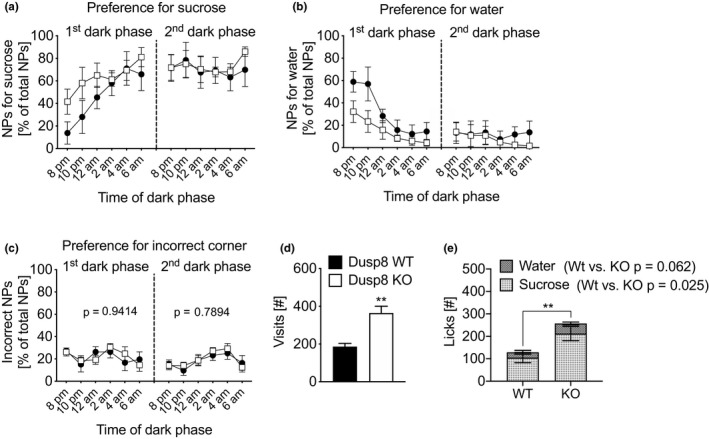
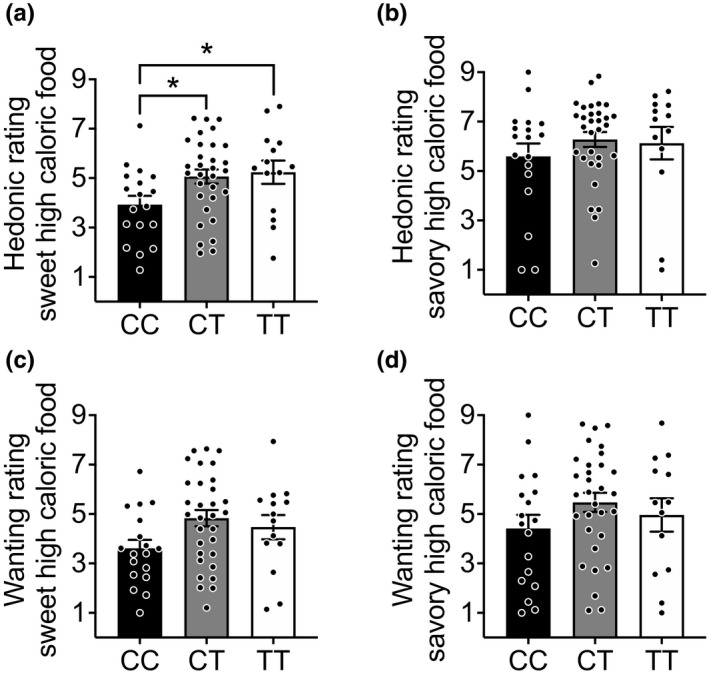
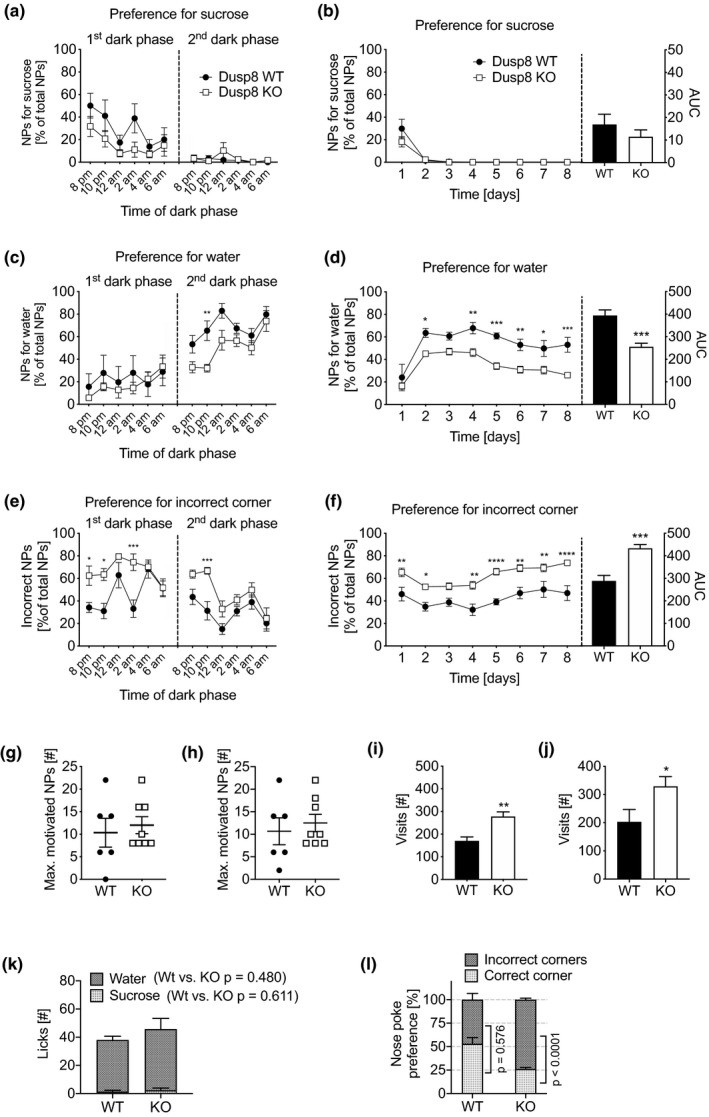
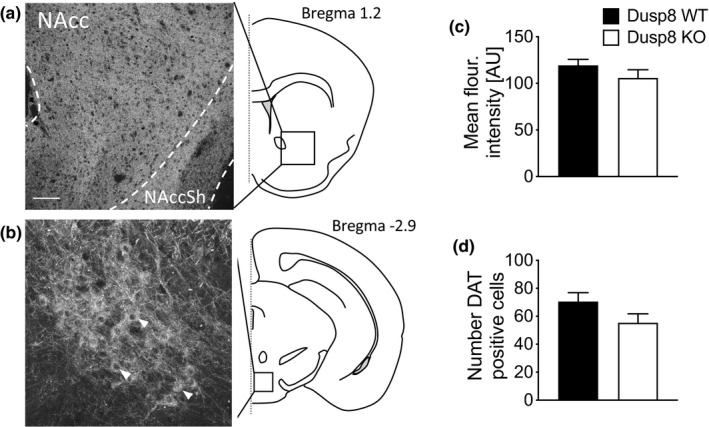
Dusp8 KO mice showed a comparable preference for sucrose, but consumed more sucrose compared to WT mice. In a progressive ratio task, Dusp8 KO females switched to a "trial and error" strategy to find sucrose while control Dusp8 WT mice kept their previously established seeking pattern. Nonetheless, the overall motivation to consume sucrose, and the levels of dopaminergic neurons in the brain areas NAcc and VTA were comparable between genotypes. Diabetes-risk allele carriers of DUSP8 SNP rs2334499 preferred sweet high caloric food compared to the major allele carriers, rating scores for savory food remained comparable between groups.
Our data suggest a novel role for Dusp8 in the perception of sweet high caloric food as well as in the control of sucrose consumption and foraging in mice and humans.
Dusp8 是首个全基因组关联研究鉴定的主要在大脑中表达的基因,先前与人类 2 型糖尿病的发展有关。在这项研究中,我们揭示了 Dusp8 如何参与调节蔗糖奖赏行为。
雌性、常规饮食喂养的 Dusp8 全局 WT 和 KO 小鼠在独立于观察者的 IntelliCage 装置中接受自我管理的蔗糖消耗和偏好测试,随后进行渐进比率任务,限制蔗糖摄入以监测寻求和动机行为。63 名携带 DUSP8 SNP rs2334499 主要 C 和次要 T 等位基因的人类携带者通过收集对甜与咸高热量食物的评分来测试他们对食物线索的感知。
Dusp8 KO 小鼠对蔗糖表现出相似的偏好,但比 WT 小鼠消耗更多的蔗糖。在渐进比率任务中,Dusp8 KO 雌性小鼠转而采用“试错”策略来寻找蔗糖,而对照 Dusp8 WT 小鼠则保持其先前建立的寻求模式。然而,两种基因型之间的总体蔗糖消费动机以及 NAcc 和 VTA 脑区的多巴胺能神经元水平相当。DUSP8 SNP rs2334499 的糖尿病风险等位基因携带者更喜欢甜高热量食物,而不是主要等位基因携带者,两组对咸食的评分保持相当。
我们的数据表明 Dusp8 在甜高热量食物的感知以及在小鼠和人类中蔗糖消耗和觅食的控制中具有新的作用。