Choi Jihye, Gong Jeong-Ryeol, Hwang Chae Young, Joung Chang Young, Lee Soobeom, Cho Kwang-Hyun
Laboratory for Systems Biology and Bio-inspired Engineering, Department of Bio and Brain Engineering, Korea Advanced Institute of Science and Technology (KAIST), Daejeon, South Korea.
Front Genet. 2020 Oct 8;11:570546. doi: 10.3389/fgene.2020.570546. eCollection 2020.
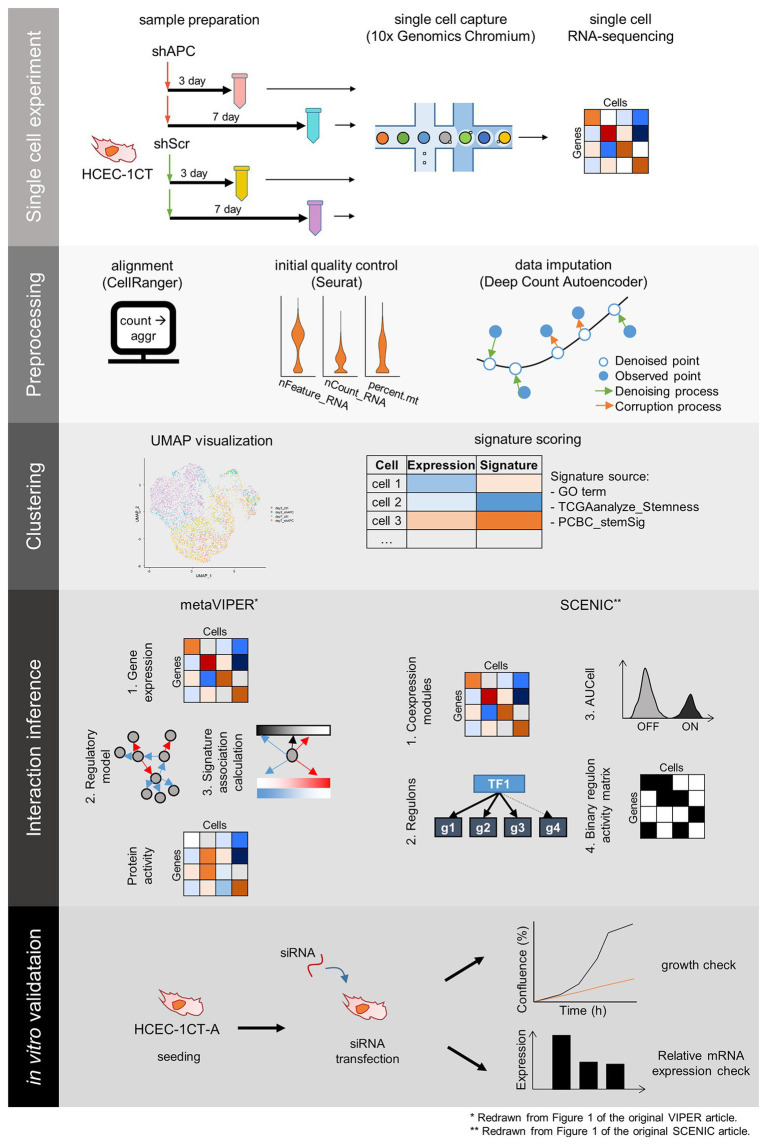
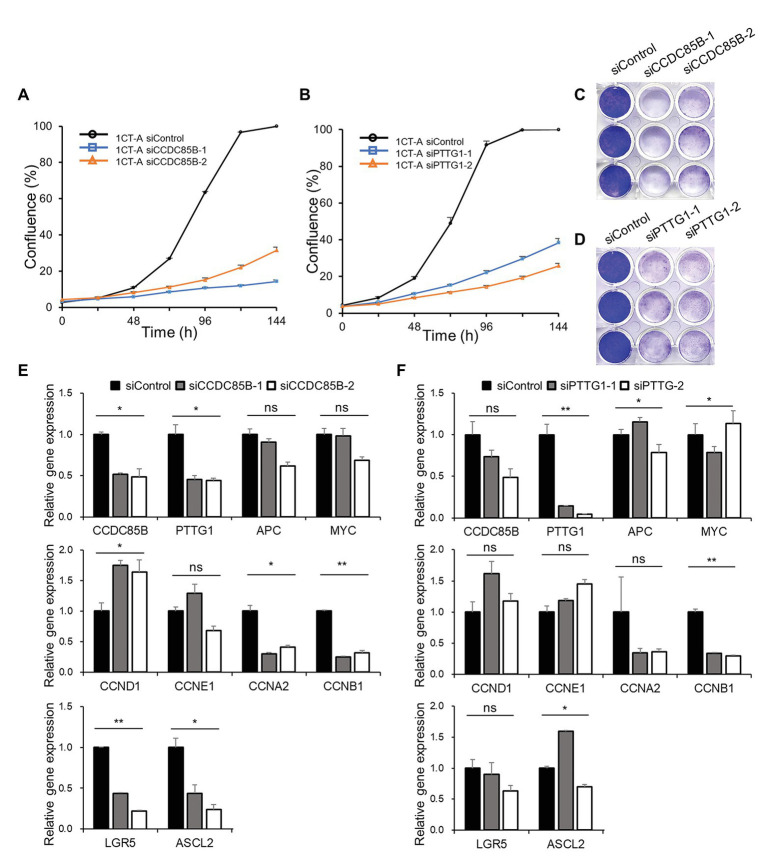
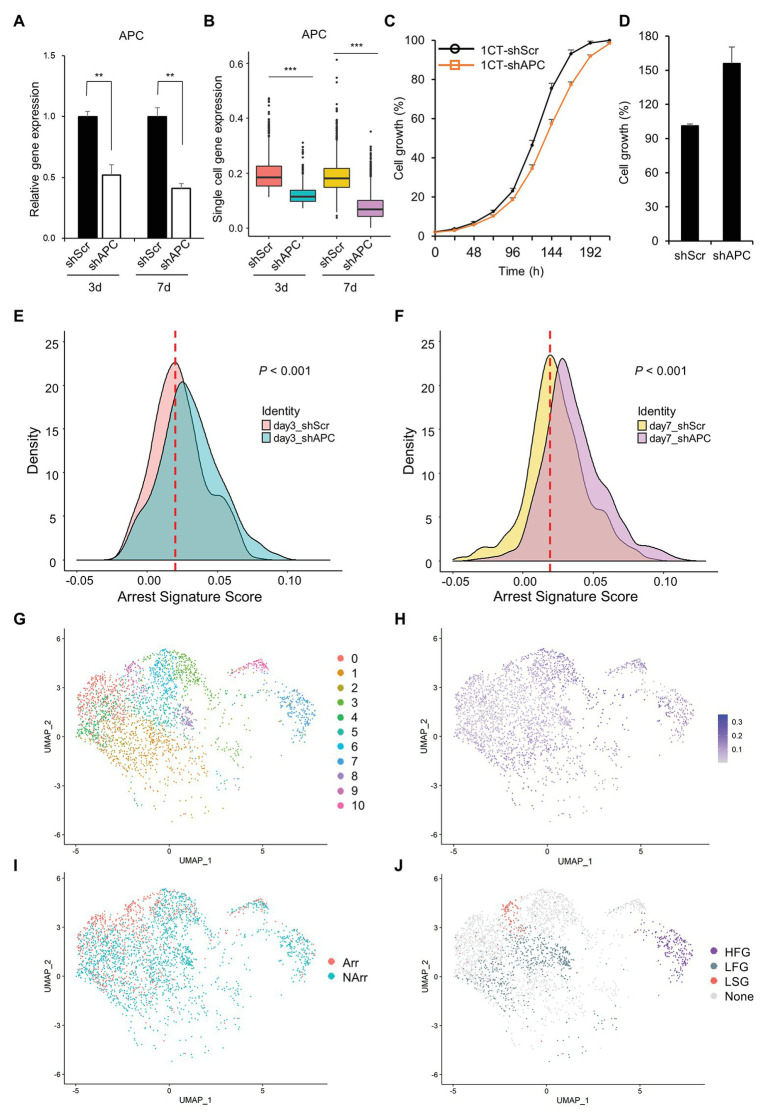
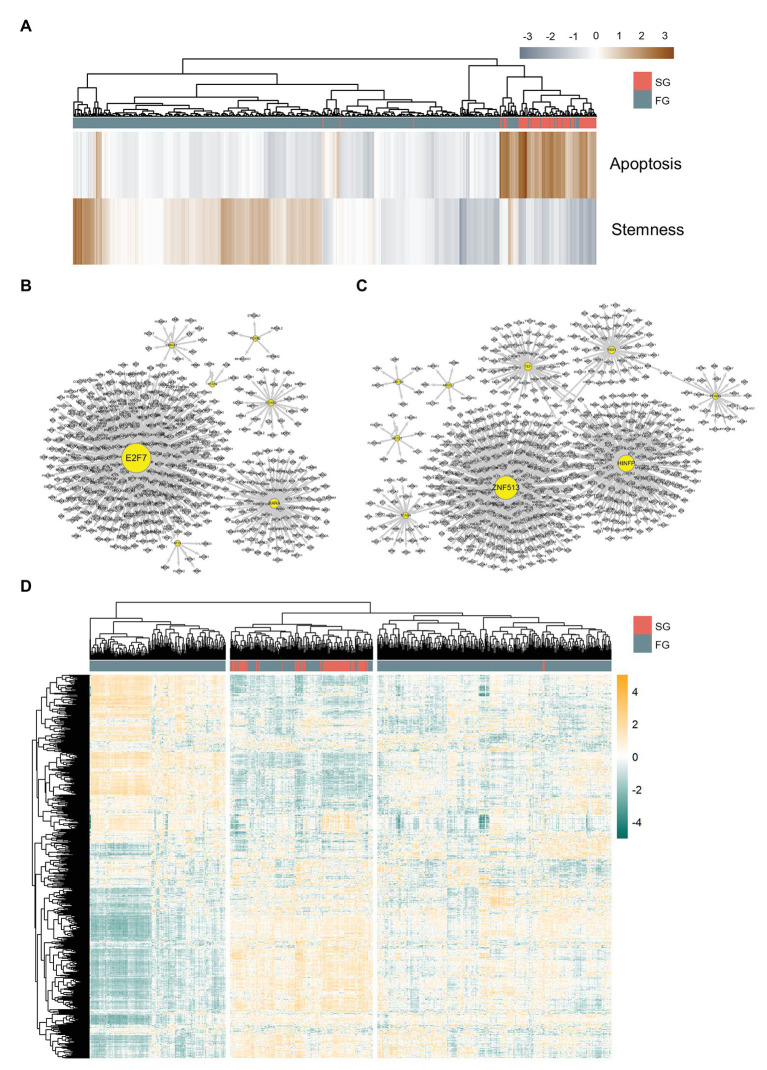
Colorectal cancer (CRC) has been most extensively studied for characterizing genetic mutations along its development. However, we still have a poor understanding of CRC initiation due to limited measures of its observation and analysis. If we can unveil CRC initiation events, we might identify novel prognostic markers and therapeutic targets for early cancer detection and prevention. To tackle this problem, we establish the early CRC development model and perform transcriptome analysis of its single cell RNA-sequencing data. Interestingly, we find two subtypes, fast growing vs. slowly growing populations of distinct growth rate and gene signatures, and identify CCDC85B as a master regulator that can transform the cellular state of fast growing subtype cells into that of slowly growing subtype cells. We further validate this by experiments and suggest CCDC85B as a novel potential therapeutic target that may prevent malignant CRC development by suppressing stemness and uncontrolled cell proliferation.
在结直肠癌(CRC)的发展过程中,对其基因突变特征的研究最为广泛。然而,由于观察和分析手段有限,我们对CRC的起始阶段仍知之甚少。如果我们能够揭示CRC起始事件,或许就能识别出新的预后标志物以及用于早期癌症检测和预防的治疗靶点。为解决这一问题,我们建立了早期CRC发展模型,并对其单细胞RNA测序数据进行转录组分析。有趣的是,我们发现了两种亚型,即具有不同生长速率和基因特征的快速生长型与缓慢生长型群体,并确定CCDC85B为一个主要调节因子,它能够将快速生长型亚型细胞的细胞状态转变为缓慢生长型亚型细胞的状态。我们通过实验进一步验证了这一点,并提出CCDC85B作为一种新的潜在治疗靶点,它可能通过抑制干性和失控细胞增殖来预防恶性CRC的发展。