Gui Liang, Zhu Ying-Wei, Xu Qiang, Huang Ju-Ju, Hua Ping, Wu Gao-Jue, Lu Jian, Ni Jing-Bin, Tang Hong, Zhang Li-Li
Department of Vascular Surgery, Beijing Hospital, National Center of Gerontology; Institute of Geriatric Medicine, Chinese Academy of Medical Science, Beijing 100730, P.R. China.
Department of Gastroenterology, The Affiliated Wuxi No. 2 People's Hospital of Nanjing Medical University, Wuxi, Jiangsu 214002, P.R. China.
Oncol Lett. 2020 Dec;20(6):361. doi: 10.3892/ol.2020.12225. Epub 2020 Oct 14.
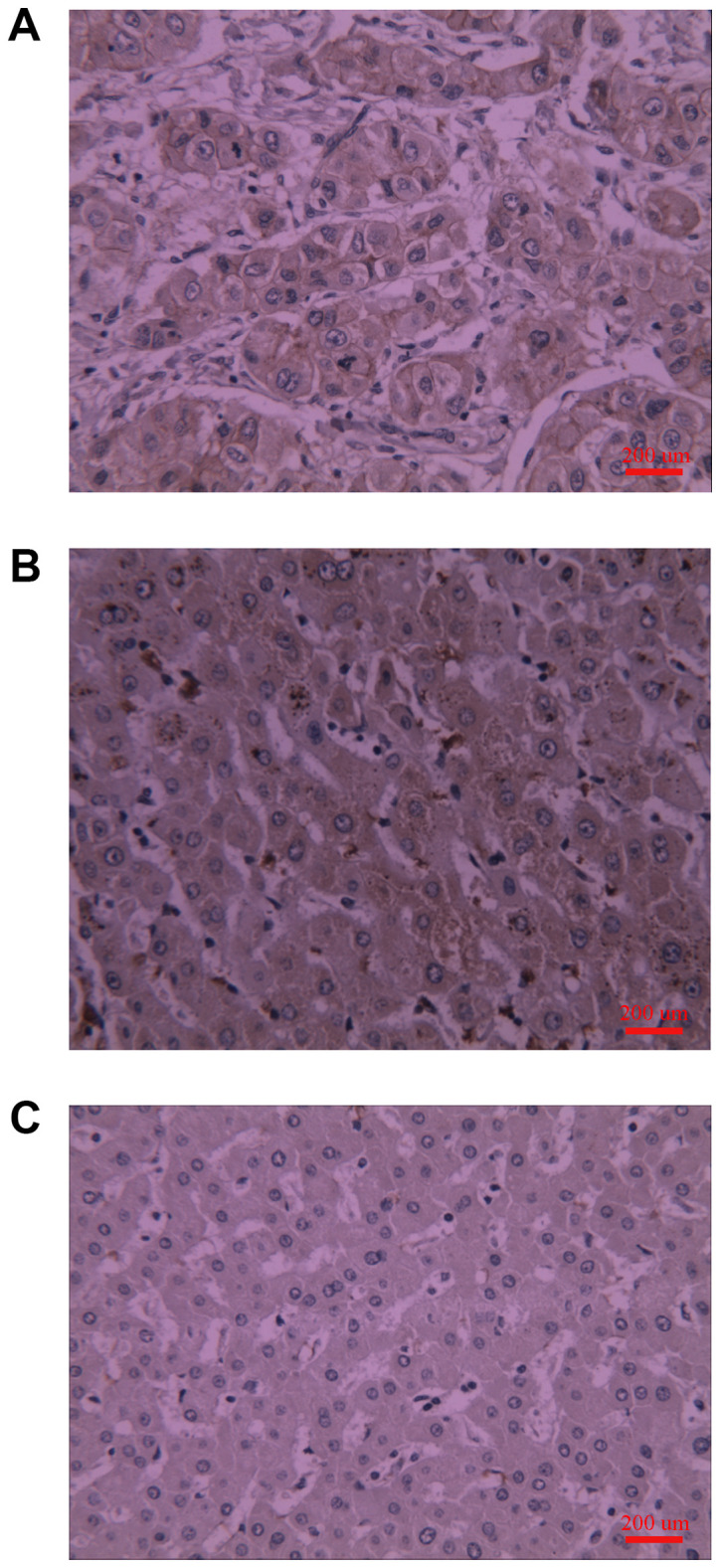
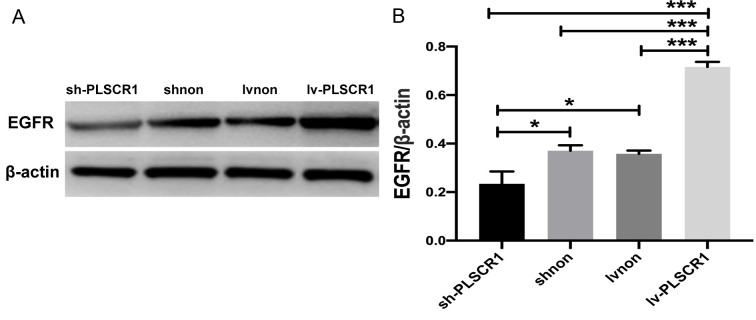
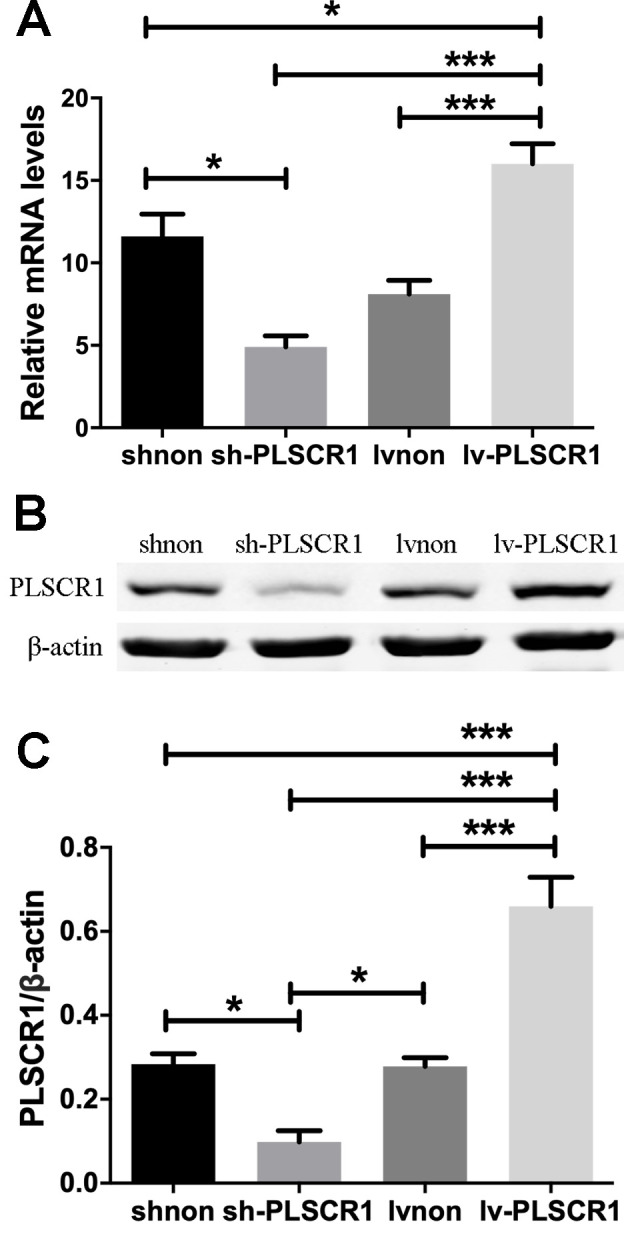
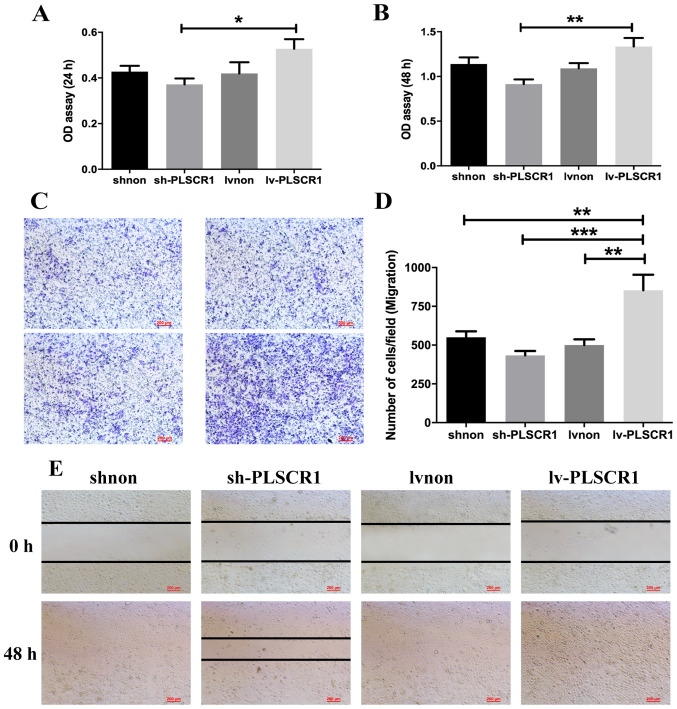
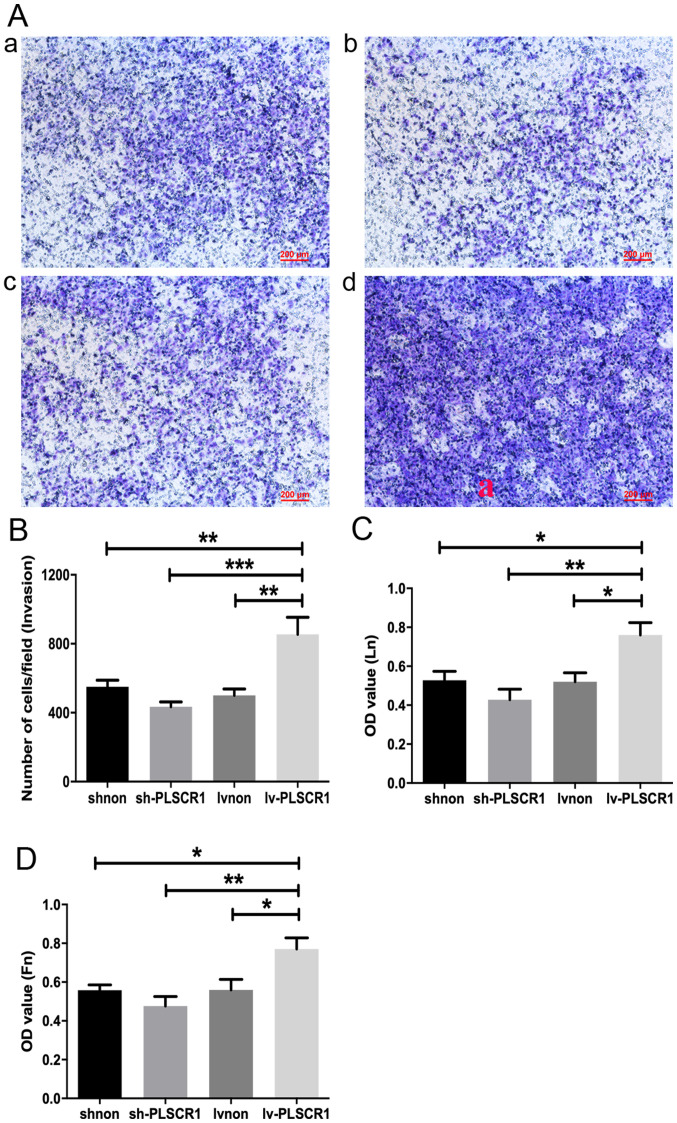
Phospholipid scramblase 1 (PLSCR1) serves a function in the pathogenesis and progression of various types of cancer. However, the role of PLSCR1 in human primary liver cancer remains unknown. The aim of the present study was to evaluate the expression of PLSCR1 in primary liver cancer and analyse the clinical significance. In addition, the present study detected and compared the biological behaviours of HepG2 cells with different levels of activated PLSCR1 or silenced PLSCR1. PLSCR1 expression in primary liver cancer tissue samples was examined using immunohistochemistry. Cultured HepG2 cells were infected with lentiviruses to suppress or activate PLSCR1 expression. Reverse transcription-quantitative PCR and western blotting were performed to analyse the effects of silencing or activating PLSCR1 in cell lines at the mRNA and protein levels, respectively. The effects of PLSCR1 expression on cell proliferation, adhesion, migration and invasion were subsequently determined using Cell Counting Kit 8, adhesion, and Transwell migration and invasion assays. PLSCR1 expression in primary liver cancer tissue samples was higher compared with that in adjacent non-cancerous liver tissue samples and normal tissue samples, and positively correlated with the clinical stage. PLSCR1 was effectively downregulated or overexpressed in HepG2 cells using small interfering RNA and lentivirus techniques, respectively. PLSCR1 upregulation promoted cell proliferation, invasion and migration, while PLSCR1 downregulation inhibited these effects. PLSCR1 is highly expressed in primary liver cancer and associated with the clinical stage. Downregulating the expression of PLSCR1 significantly inhibited the proliferation, adhesion, migration and invasion of cancer cells, suggesting that PLSCR1 may be a potential therapeutic target for preventing the progression of primary liver cancer.
磷脂翻转酶1(PLSCR1)在各类癌症的发病机制及进展过程中发挥作用。然而,PLSCR1在人类原发性肝癌中的作用尚不清楚。本研究旨在评估PLSCR1在原发性肝癌中的表达情况,并分析其临床意义。此外,本研究检测并比较了具有不同激活水平或沉默水平的PLSCR1的HepG2细胞的生物学行为。采用免疫组织化学法检测原发性肝癌组织样本中PLSCR1的表达。用慢病毒感染培养的HepG2细胞以抑制或激活PLSCR1的表达。分别进行逆转录定量PCR和蛋白质印迹法,以分析在细胞系中沉默或激活PLSCR1在mRNA和蛋白质水平的影响。随后使用细胞计数试剂盒8、黏附实验以及Transwell迁移和侵袭实验来确定PLSCR1表达对细胞增殖、黏附、迁移和侵袭的影响。与相邻的非癌性肝组织样本和正常组织样本相比,原发性肝癌组织样本中PLSCR1的表达更高,且与临床分期呈正相关。分别使用小干扰RNA和慢病毒技术在HepG2细胞中有效下调或上调了PLSCR1。上调PLSCR1促进细胞增殖、侵袭和迁移,而下调PLSCR1则抑制这些作用。PLSCR1在原发性肝癌中高表达且与临床分期相关。下调PLSCR1的表达可显著抑制癌细胞的增殖、黏附、迁移和侵袭,这表明PLSCR1可能是预防原发性肝癌进展的潜在治疗靶点。