Schaenman Joanna, Zhou Xinkai, Guo Rong, Rossetti Maura, Liang Emily C, Lum Erik, Abdalla Basmah, Bunnapradist Suphamai, Pham Phuong-Thu T, Danovitch Gabriel, Karlamangla Arun, Reed Elaine, Horvath Steve, Elashoff David
Department of Medicine, Division of Infectious Diseases, David Geffen School of Medicine at UCLA, Los Angeles, CA.
Division of General Internal Medicine and Health Services Research, David Geffen School of Medicine at UCLA, Los Angeles, CA.
Transplant Direct. 2020 Jul 15;6(8):e576. doi: 10.1097/TXD.0000000000001020. eCollection 2020 Aug.
Older kidney transplant recipients demonstrate increased rates of infection but decreased rates of rejection compared with younger recipients, suggesting that older transplant patients are functionally overimmunosuppressed. We hypothesized that this is a consequence of reduction in immunological activity due to biological aging and that an immune biological age, as determined by DNA methylation (DNAm), would be associated more strongly with incidence of infection than chronological age.
DNAm analysis was performed on peripheral blood mononuclear cell collected from 60 kidney transplant recipients representing older (≥age 60 y) and younger (aged 30-59 y) patients 3 months after transplantation. DNAm age was calculated based on methylation status of a panel of CpG sites, which have been previously identified as indicative of biological age.
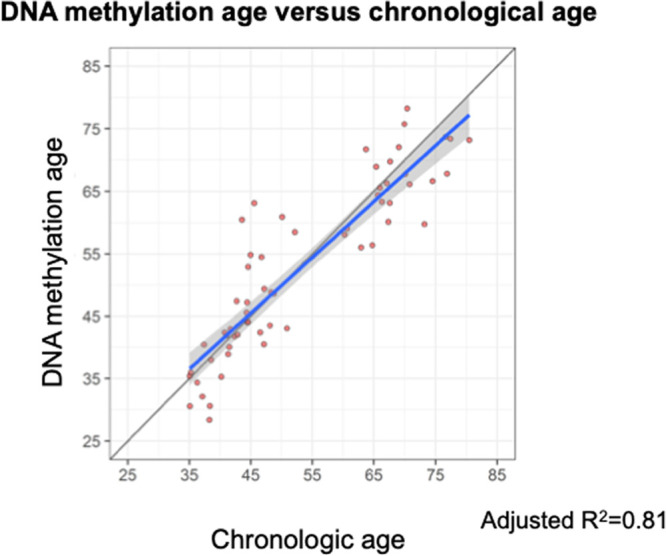
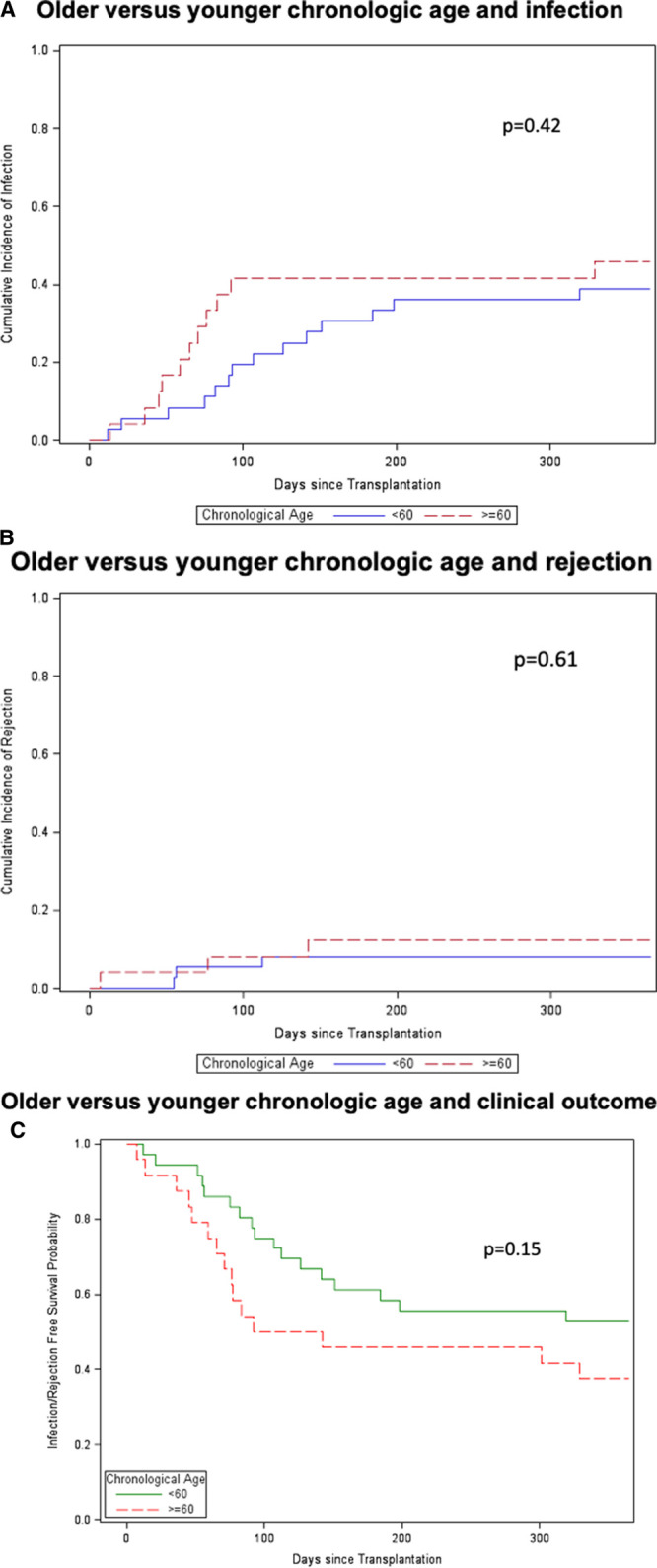
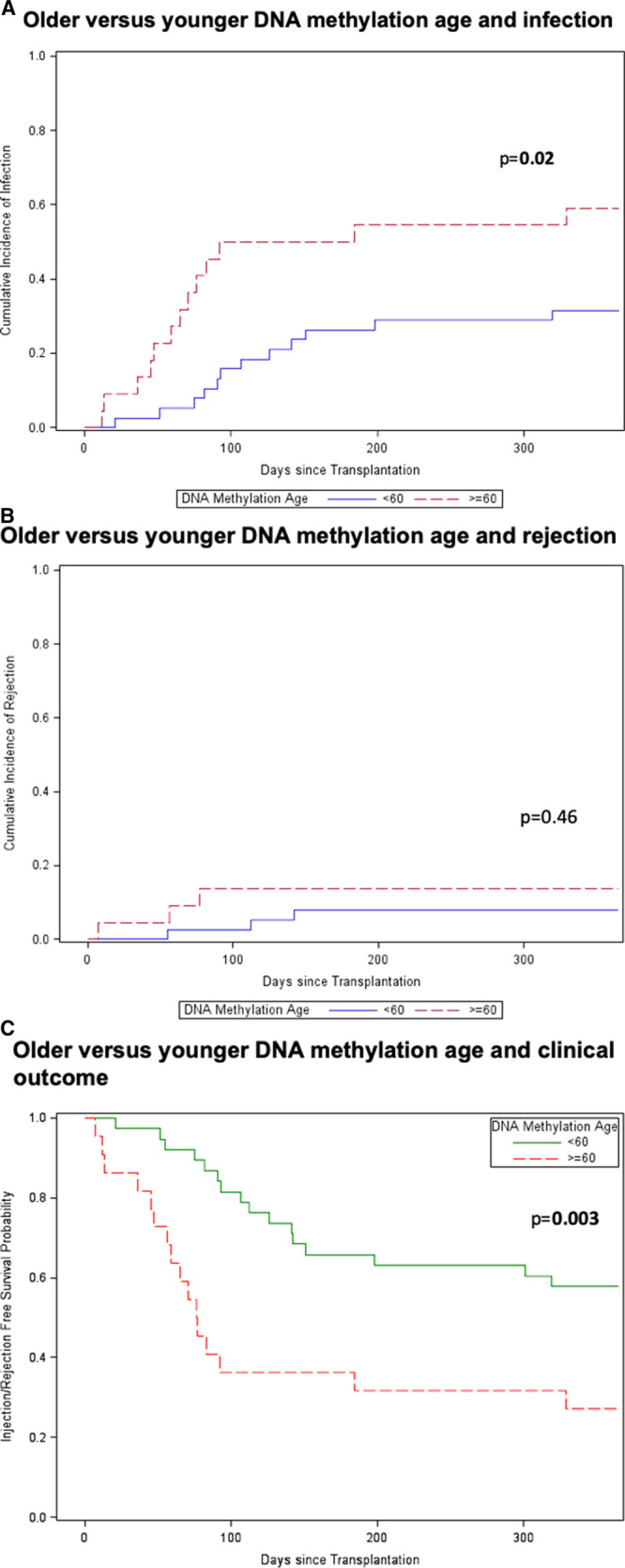
Correlation was seen between chronological and DNAm age; however, there were many patients with significant differences (either acceleration or slowing) between DNAm age and chronological age. A statistically significant association was seen between increased DNAm age and incidence of infection in the first year after kidney transplantation, whereas no significant association was seen between chronological age and infection.
Assessment of DNAm age holds promise as an approach for patient evaluation and individualization of immune suppression regimens. This analysis may provide insights into the immunological mechanism behind increased incidence of infection observed in older transplant patients. The ability to measure biological age would allow for patient risk stratification and individualization of immunosuppression, improving outcomes for the growing numbers of older patients undergoing kidney transplantation.
与年轻的肾移植受者相比,老年肾移植受者感染率增加但排斥率降低,这表明老年移植患者在功能上免疫抑制过度。我们推测这是生物衰老导致免疫活性降低的结果,并且由DNA甲基化(DNAm)确定的免疫生物学年龄与感染发生率的关联比实际年龄更强。
对60名肾移植受者移植后3个月采集的外周血单个核细胞进行DNAm分析,这些受者代表老年(≥60岁)和年轻(30 - 59岁)患者。基于一组先前已被确定为指示生物年龄的CpG位点的甲基化状态计算DNAm年龄。
实际年龄与DNAm年龄之间存在相关性;然而,有许多患者的DNAm年龄与实际年龄之间存在显著差异(加速或减慢)。肾移植后第一年,DNAm年龄增加与感染发生率之间存在统计学上的显著关联,而实际年龄与感染之间未发现显著关联。
评估DNAm年龄有望作为一种患者评估方法和免疫抑制方案个体化的方法。该分析可能为老年移植患者中观察到的感染发生率增加背后的免疫机制提供见解。测量生物年龄的能力将允许对患者进行风险分层和免疫抑制个体化,改善越来越多接受肾移植的老年患者的预后。