Chen Feiyu, Zhong Zhangfeng, Tan Hor Yue, Guo Wei, Zhang Cheng, Cheng Chien-Shan, Wang Ning, Ren Junguo, Feng Yibin
School of Chinese Medicine, Li Ka Shing Faculty of Medicine, The University of Hong Kong, Hong Kong S.A.R., P. R. China.
Institute of Basic Medical Sciences, Xiyuan Hospital, China Academy of Chinese Medical Sciences, Beijing, P. R. China.
Clin Transl Med. 2020 Oct;10(6):e190. doi: 10.1002/ctm2.190.
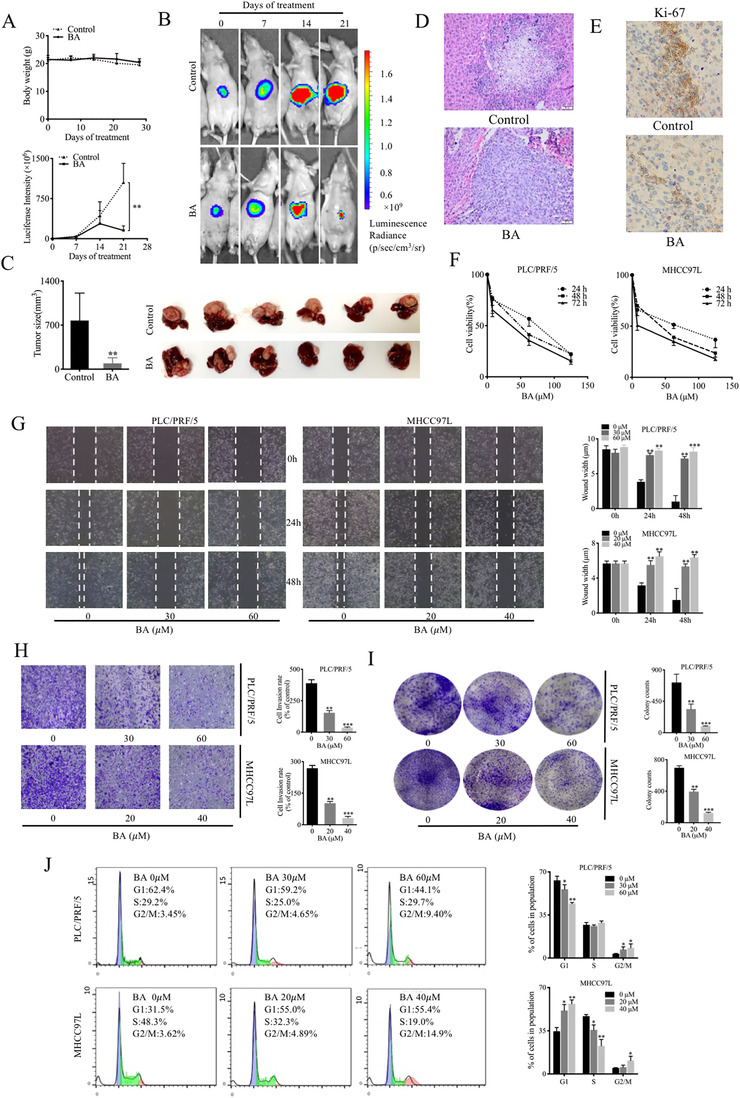
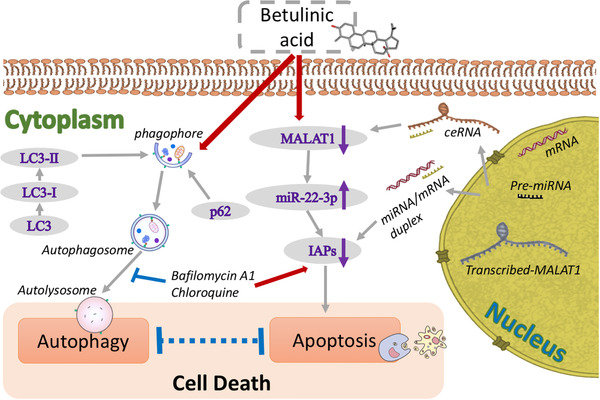
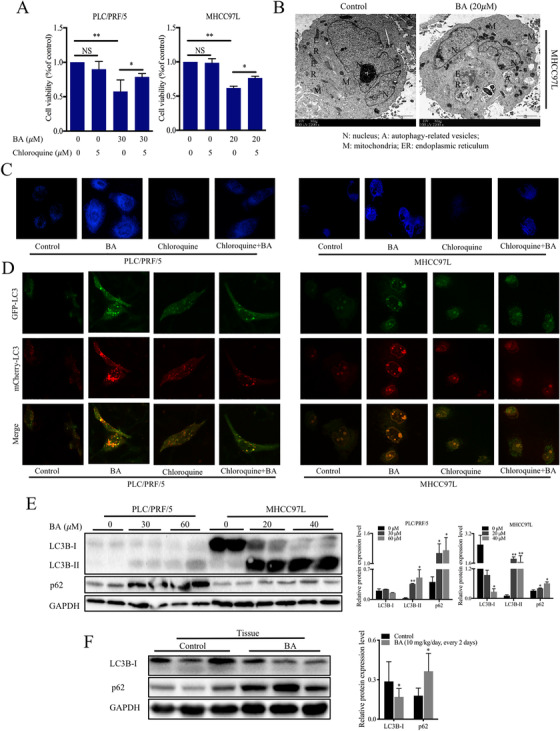
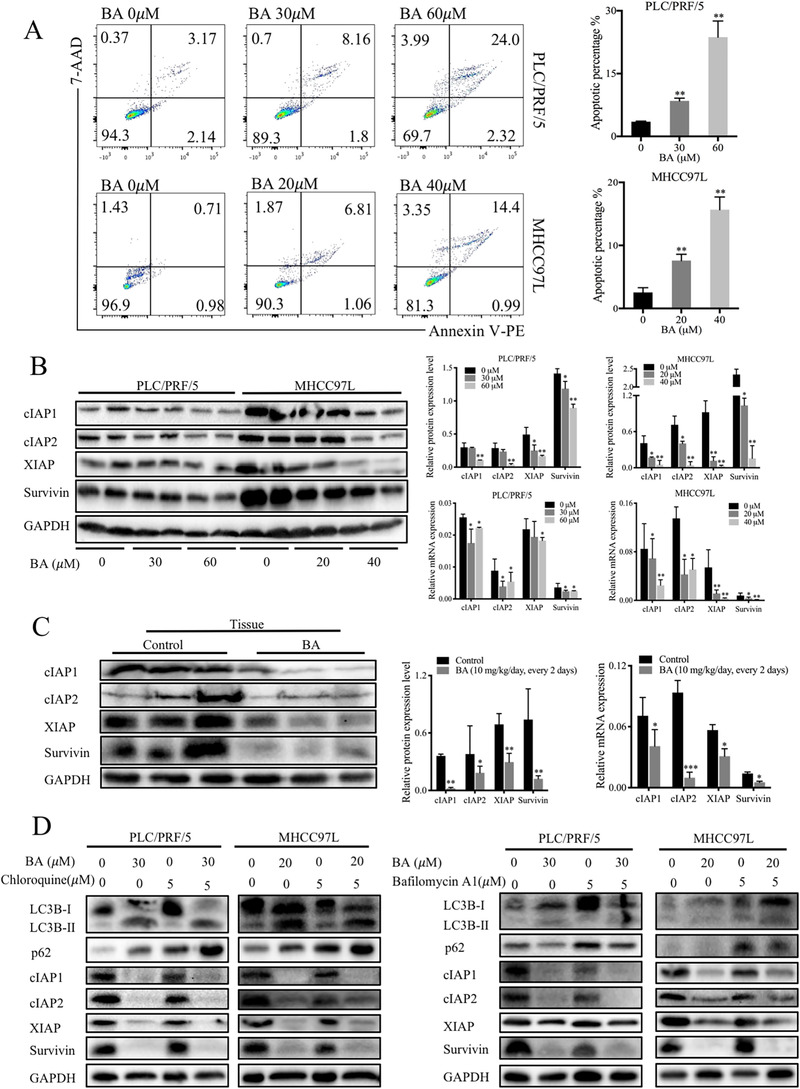
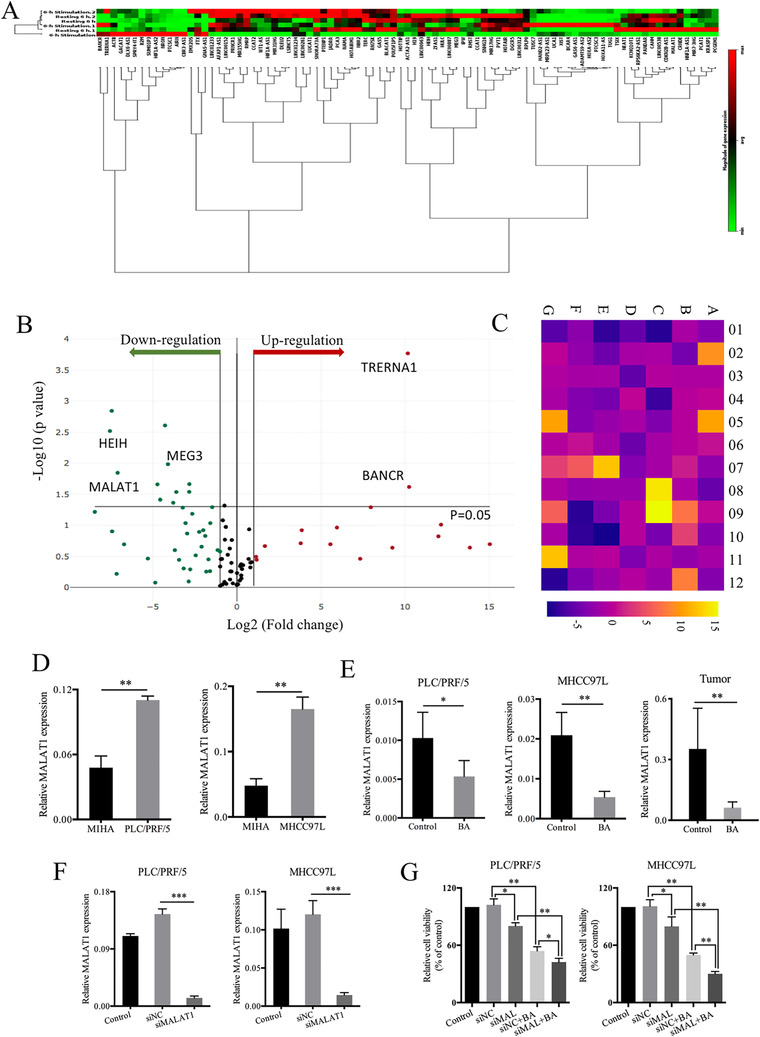
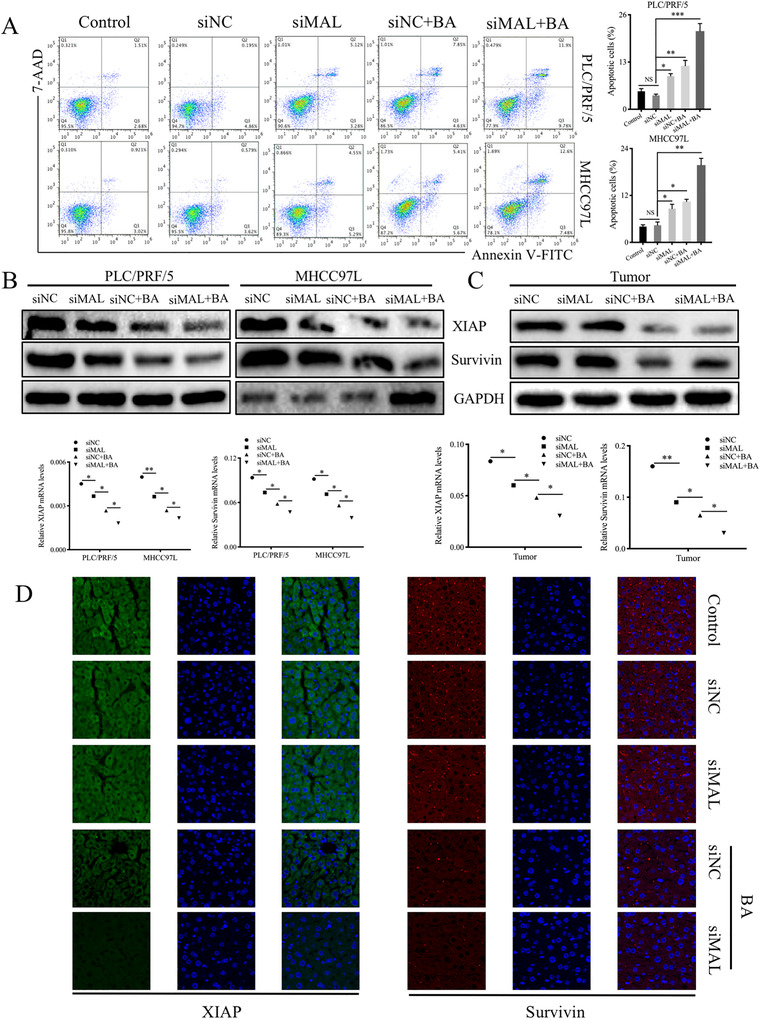
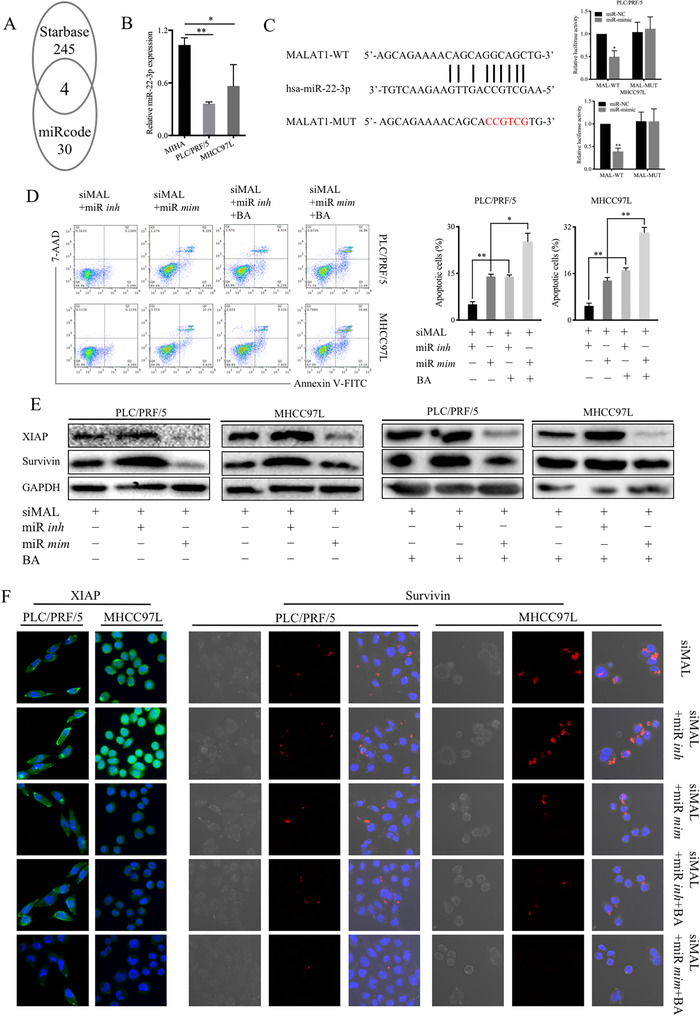
Betulinic acid (BA) is a natural product extracted from a broad range of medicinal and edible herbal plants. Previous studies showed that BA induces cell death in tumors derived from multiple tissues; however, the underlying mechanism remains obscure. The present study aimed to study the effects of BA on autophagy and apoptosis of hepatocellular carcinoma (HCC). Human HCC cell lines and orthotopic HCC implanted mice were employed to examine the BA-induced tumor suppression; RT long noncoding RNA (lncRNA) PCR array and database analysis were used to explore the possible mechanisms; validation of pathways was performed using siRNA and miRNA inhibitors. The results indicated that BA regulated autophagy and induced apoptosis in HCC. The degradation of inhibitor of apoptosis proteins (IAPs), the conversion of LC3-I to LC3-II, and p62 accumulation were enhanced by BA, thereby suggesting that the downregulation of IAPs and autophagic cell death are induced by BA. The addition of autophagy and lysosomal inhibitors indicated that BA induced autophagy-independent apoptosis via degradation of IAPs. Moreover, RT lncRNA PCR array and database analysis suggested that BA downregulated the levels of lncRNA MALAT1, which is considered to be an oncogene. Further investigations demonstrated that lncRNA MALAT1 functioned as a ceRNA (competing endogenous RNA) to contribute to BA-mediated degradation of IAPs by sponging miR-22-3p. Therefore, BA could be developed as a potential anticancer agent for HCC.
桦木酸(BA)是一种从多种药用和食用草本植物中提取的天然产物。先前的研究表明,BA可诱导源自多种组织的肿瘤细胞死亡;然而,其潜在机制仍不清楚。本研究旨在探讨BA对肝癌(HCC)自噬和凋亡的影响。采用人肝癌细胞系和原位植入肝癌的小鼠来检测BA诱导的肿瘤抑制作用;利用RT长链非编码RNA(lncRNA)PCR芯片和数据库分析来探索可能的机制;使用siRNA和miRNA抑制剂对相关通路进行验证。结果表明,BA可调节HCC的自噬并诱导其凋亡。BA增强了凋亡抑制蛋白(IAPs)的降解、LC3-I向LC3-II的转化以及p62的积累,从而表明BA可诱导IAPs的下调和自噬性细胞死亡。添加自噬和溶酶体抑制剂表明,BA通过IAPs的降解诱导非自噬依赖性凋亡。此外,RT lncRNA PCR芯片和数据库分析表明,BA下调了lncRNA MALAT1的水平,lncRNA MALAT1被认为是一种癌基因。进一步研究表明,lncRNA MALAT1作为一种竞争性内源性RNA(ceRNA),通过结合miR-22-3p促进BA介导的IAPs降解。因此,BA有望开发成为一种潜在的HCC抗癌药物。