Manav Rachna Dental College, Sector 43, Suraj Kund, Badkhal Road, Faridabad, Haryana, 121004, India.
Prog Orthod. 2020 Nov 2;21(1):40. doi: 10.1186/s40510-020-00340-6.
Non-extraction treatment protocol has gained a lot of popularity over extraction for orthodontic treatment. Interproximal enamel reduction is one such method that makes it possible to do orthodontic treatment without extractions. This procedure, which can be done by various techniques, leads to a rise in the temperature of the pulp of the teeth. Previously, studies have been done which have evaluated the temperature changes inside the pulp chamber of extracted teeth, during interproximal enamel reduction. However, no documented literature exists that has evaluated these changes in the live pulp of the teeth whilst interproximal enamel reduction (IPR) is being performed. Therefore, this study aimed to evaluate the temperature changes inside the live pulp of the teeth during various interproximal enamel reduction techniques in vivo.
Evaluation of temperature rise in the pulp during various interproximal enamel reduction techniques, done in vivo.
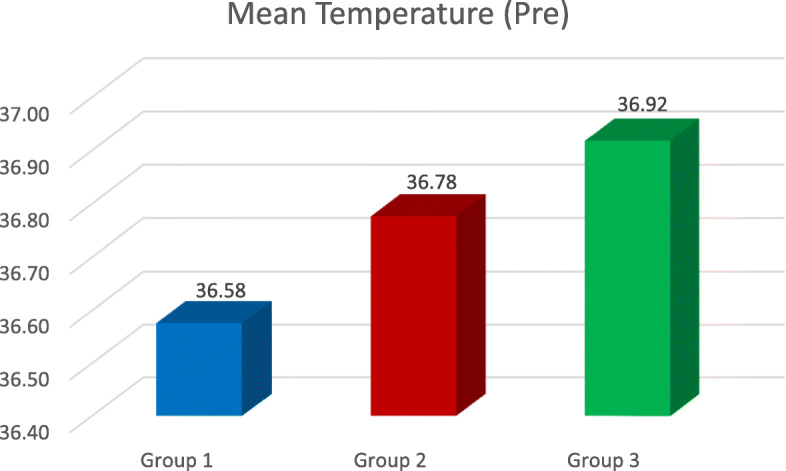
The study was performed on patients for whom extraction of premolars had been advised for their orthodontic treatment. Fifty-one premolar teeth were randomly divided into three groups of IPR, i.e. using airotor and bur, handheld metal strip and orthodontic IPR kit (oscillating system). IPR was performed on the mesial and distal sides after access opening, temperature change was recorded during IPR and the readings were compared. The Shapiro-Wilk test was utilized for checking whether the data satisfied the requirement of normal distribution.
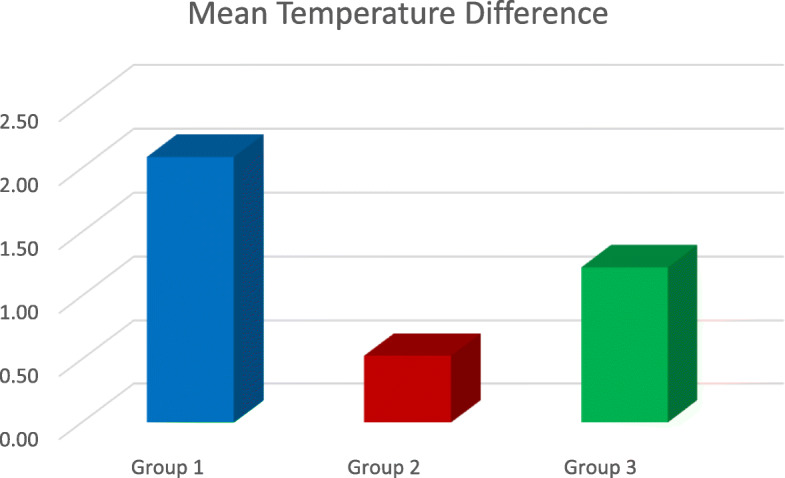
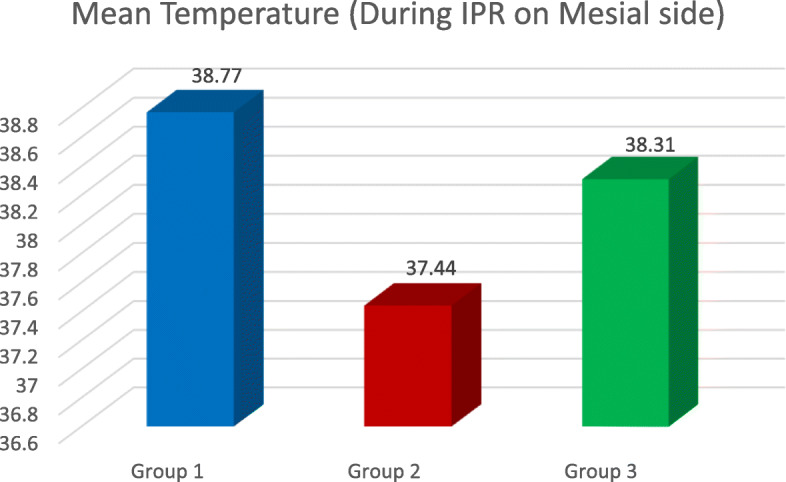
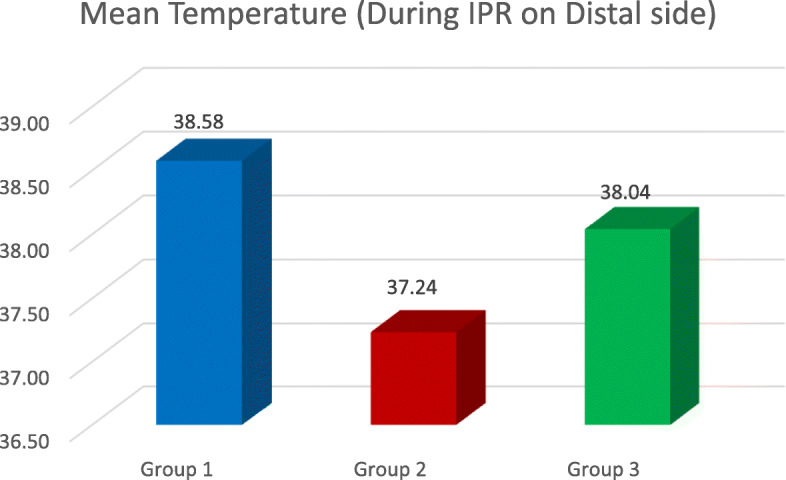
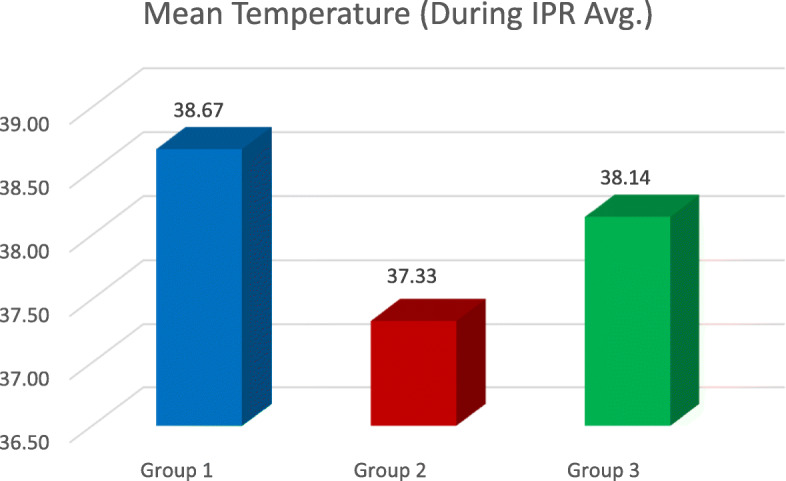
The highest temperature rise was seen in group 1 in which interproximal enamel reduction was performed using airotor and bur. The minimum temperature rise was observed in group 2 in which interproximal enamel reduction was done using the handheld metal strip, whereas the temperature rise observed in group 3, in which interproximal enamel reduction was done using IPR kit, was between the range of group 1 and group 3. The temperature change was in the following order-group 1 (2.08 °C) > group 3 (1.22 °C) > group 2 (0.52 °C).
None of the methods used to perform interproximal enamel reduction caused a temperature increase more than 5.5 °C, beyond which pulp necrosis may occur. Therefore, all three methods used in the study for IPR were found to be safe.
非拔牙治疗方案在正畸治疗中越来越受欢迎。邻面去釉是一种可以在不拔牙的情况下进行正畸治疗的方法。这种方法可以通过各种技术来完成,会导致牙齿牙髓温度升高。以前的研究已经评估了在邻面去釉过程中,拔牙后牙齿牙髓腔内的温度变化。然而,没有文献记录评估在进行邻面去釉(IPR)时活髓牙齿内的这些变化。因此,本研究旨在评估在体内各种邻面去釉技术中活髓牙齿内的温度变化。
评估在体内进行各种邻面去釉技术时牙髓温度的升高。
这项研究是在因正畸治疗而被建议拔除前磨牙的患者中进行的。51 颗前磨牙随机分为三组,即使用旋转器械和车针、手动金属条和正畸邻面去釉套件(振荡系统)进行 IPR。在开口后进行近远中侧 IPR,记录 IPR 期间的温度变化,并进行比较。使用 Shapiro-Wilk 检验检查数据是否满足正态分布的要求。
使用旋转器械和车针进行邻面去釉时,组 1 的温度上升最高。使用手动金属条进行邻面去釉时,组 2 的温度上升最低,而使用 IPR 套件进行邻面去釉时,组 3 的温度上升介于组 1 和组 3 之间。温度变化的顺序如下:组 1(2.08°C)>组 3(1.22°C)>组 2(0.52°C)。
在本研究中使用的三种邻面去釉方法中,没有一种方法导致的温度升高超过 5.5°C,超过这个温度可能会导致牙髓坏死。因此,研究中使用的三种邻面去釉方法都被认为是安全的。