Karolenko Caitlin, Muriana Peter
Robert M. Kerr Food & Agricultural Products Center, Oklahoma State University, Stillwater, OK 74078, USA.
Department of Animal and Food Sciences, Oklahoma State University, Stillwater, OK 74078, USA.
Foods. 2020 Oct 29;9(11):1570. doi: 10.3390/foods9111570.
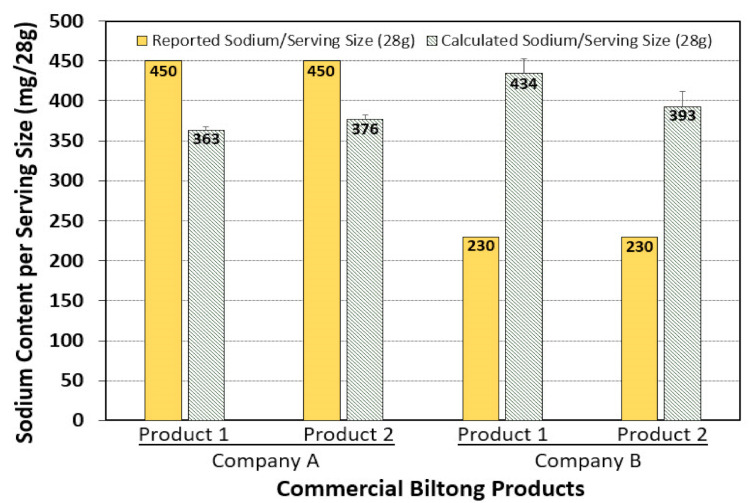
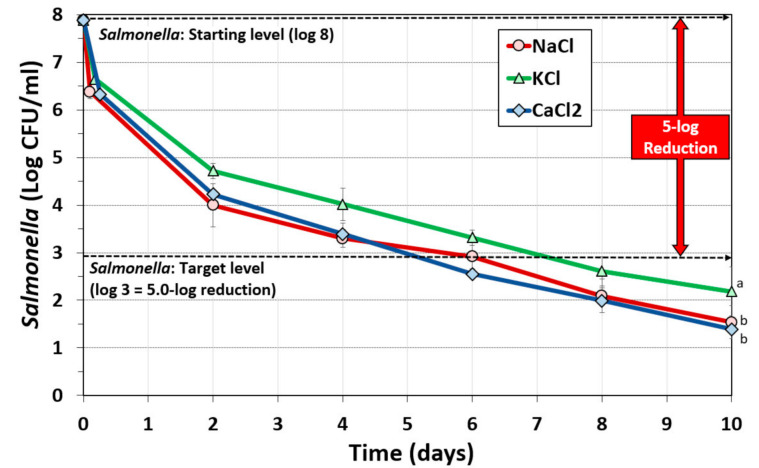
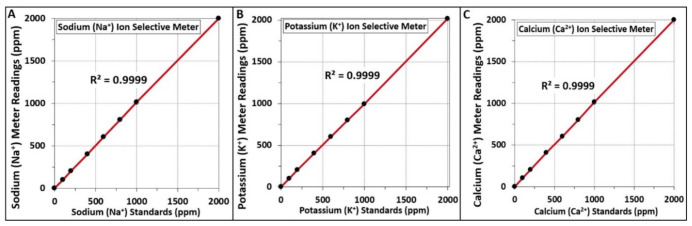
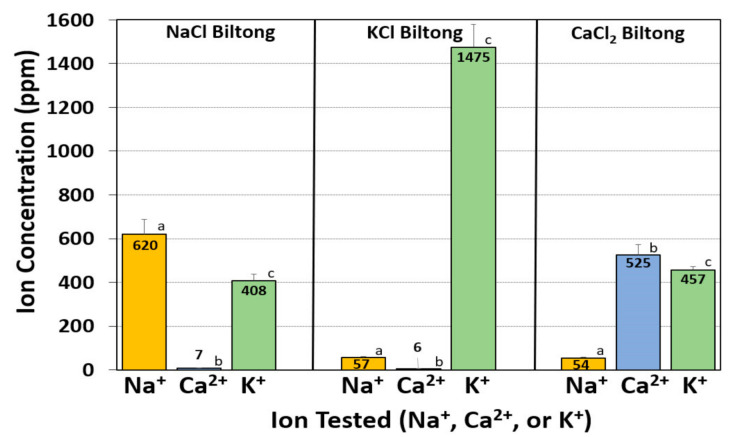
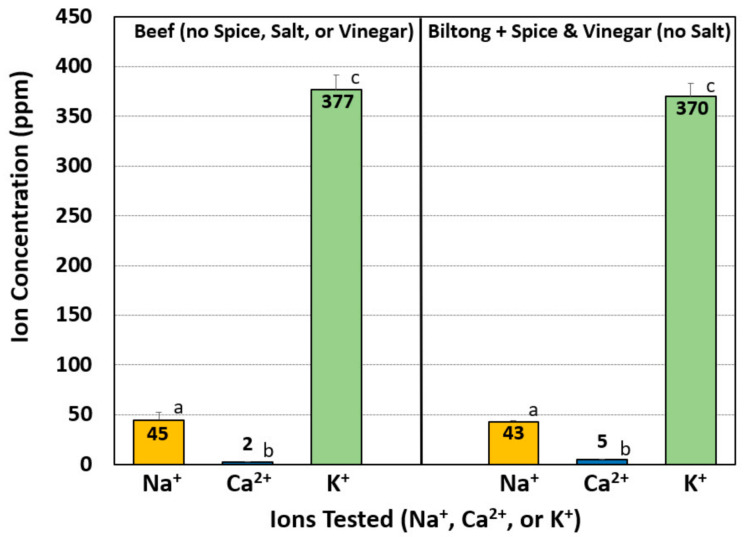
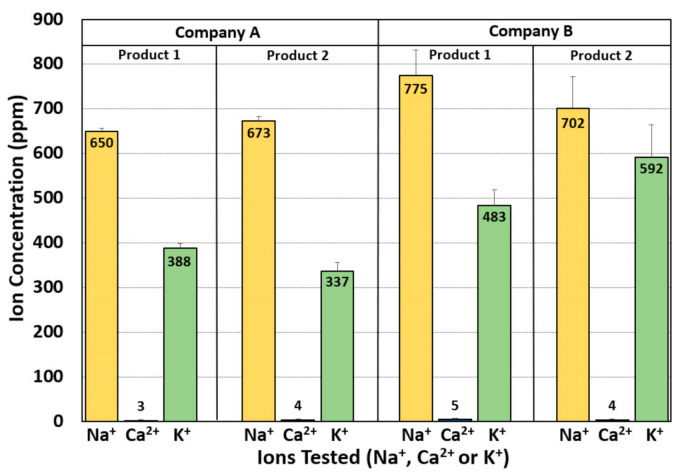
Salt (sodium chloride, NaCl) is commonly used in ready-to-eat (RTE) meat products such as biltong, a South African style dried beef product for flavor, enhanced moisture loss, and reduction of microbial growth. However, increased consumption of high sodium content foods is commonly associated with high blood pressure and heart disease. This study evaluated the use of alternative salts, potassium chloride (KCl) and calcium chloride (CaCl) in the biltong marinade to achieve a ≥ 5-log reduction of , a pathogen of concern in beef products. Beef pieces (1.9 cm × 5.1 cm × 7.6 cm) were inoculated with a five-serovar mixture of ( Thompson 120, Enteritidis H3527, Typhimurium H3380, Heidelberg F5038BG1, and Hadar MF60404), vacuum-tumbled in a traditional biltong marinade of salt, spices, and vinegar containing either NaCl, KCl or CaCl (2.2% concentration) followed by an 8-10 day drying period at 23.9 °C (75 °F) and 55% relative humidity. Microbial enumeration of was conducted following inoculation, after marination, and after 2, 4, 6, 8, and 10 days of drying in a humidity/temperature chamber. Biltong produced with CaCl, NaCl, or KCl achieved a > 5-log reduction of after 6, 7, and 8 days, respectively. The reduction trends with biltong made with NaCl or CaCl were not significantly different ( < 0.05) while both were significantly different from that made with KCl ( > 0.05). Sodium, calcium, and potassium ion concentrations were measured using ion-specific electrode meters following biltong processing and drying. As expected, the biltong made with the corresponding salt had the most abundant ion in the sample. Regardless of the salt used in the marinade, the potassium ion levels were moderately elevated in all samples. This was determined to be from potassium levels naturally present in beef rather than from other ingredients. Sampling of several commercial brands of biltong for sodium content showed that some were significantly above the allowable level of claims made on package ingredient statements. The substitution of NaCl with KCl or CaCl during biltong processing can also provide a 5-log reduction of to produce a safe product that can be marketed as a more healthy low-sodium food alternative that may appeal to consumers who need to reduce their blood pressure and are conscientious of sodium levels in their diet.
盐(氯化钠,NaCl)常用于即食(RTE)肉类产品,如肉干,这是一种南非风味的牛肉干产品,用于调味、增加水分流失以及减少微生物生长。然而,高钠含量食品的消费增加通常与高血压和心脏病有关。本研究评估了在肉干腌制中使用替代盐,氯化钾(KCl)和氯化钙(CaCl),以实现对[某种病原体,原文未明确写出英文名称]减少≥5个对数,[该病原体]是牛肉产品中令人关注的病原体。将牛肉块(1.9厘米×5.1厘米×7.6厘米)接种[某种病原体]的五血清型混合物(汤普森120、肠炎沙门氏菌H3527、鼠伤寒沙门氏菌H3380、海德堡沙门氏菌F5038BG1和哈达尔沙门氏菌MF60404),在含有NaCl、KCl或CaCl(浓度2.2%)的盐、香料和醋的传统肉干腌料中进行真空翻滚,随后在23.9°C(75°F)和55%相对湿度下干燥8 - 10天。在接种后、腌制后以及在湿度/温度箱中干燥2、4、6、8和10天后,对[某种病原体]进行微生物计数。用CaCl、NaCl或KCl制作的肉干分别在6、7和8天后实现了[某种病原体]减少>5个对数。用NaCl或CaCl制作的肉干的[某种病原体]减少趋势没有显著差异(P<0.05),而两者与用KCl制作的肉干均有显著差异(P>0.05)。在肉干加工和干燥后,使用离子特异性电极计测量钠、钙和钾离子浓度。正如预期的那样,用相应盐制作的肉干在样品中具有最丰富的离子。无论腌料中使用何种盐,所有样品中的钾离子水平均适度升高。这被确定是来自牛肉中天然存在的钾含量,而非其他成分。对几个商业品牌的肉干进行钠含量抽样显示,有些显著高于包装成分声明中所宣称的允许水平。在肉干加工过程中用KCl或CaCl替代NaCl也可以实现[某种病原体]减少5个对数,从而生产出一种安全的产品,该产品可以作为一种更健康的低钠食品替代品进行销售,可能会吸引那些需要降低血压且关注饮食中钠含量的消费者。