College of Animal Science and Technology, Key Laboratory of Animal Origin Food Production and Safety Guarantee of Jiangsu Province, Jiangsu Collaborative Innovation Center of Meat Production and Processing, Quality and Safety Control, Joint International Research Laboratory of Animal Health and Food Safety, National Experimental Teaching Demonstration Center of Animal Science, Nanjing Agricultural University, Nanjing 210095, P.R. China.
School of Food Science and Pharmaceutical Engineering, Nanjing Normal University, Nanjing 210097, P.R. China.
Poult Sci. 2020 Nov;99(11):5827-5837. doi: 10.1016/j.psj.2020.07.042. Epub 2020 Aug 13.
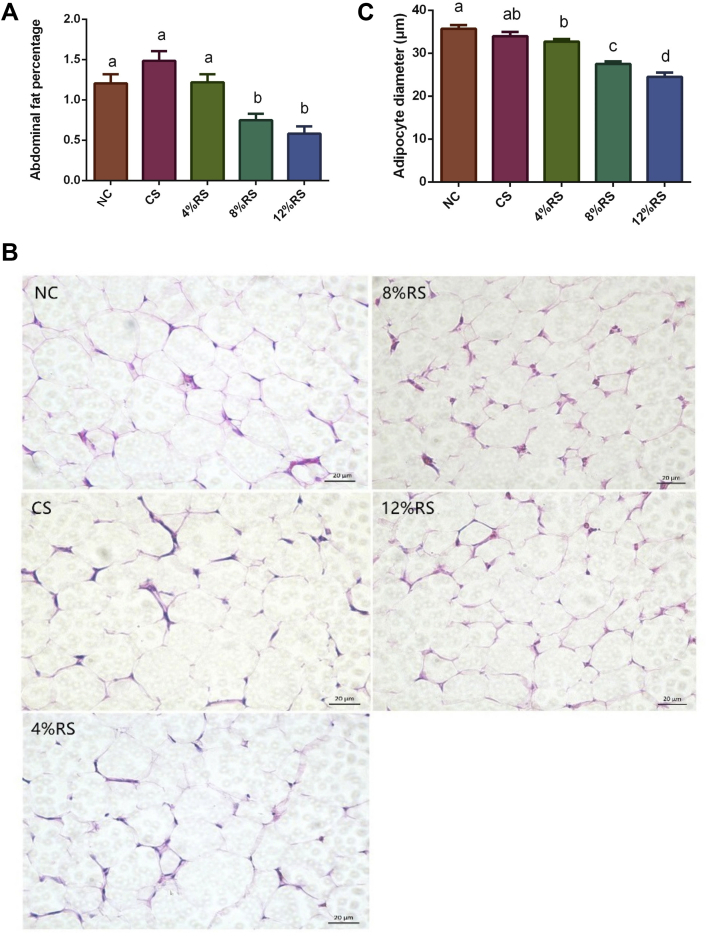
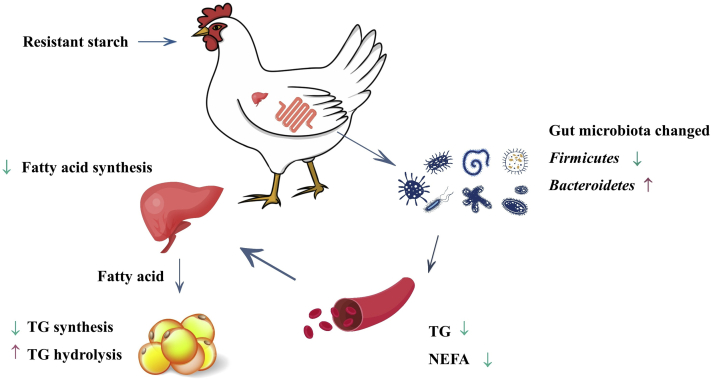
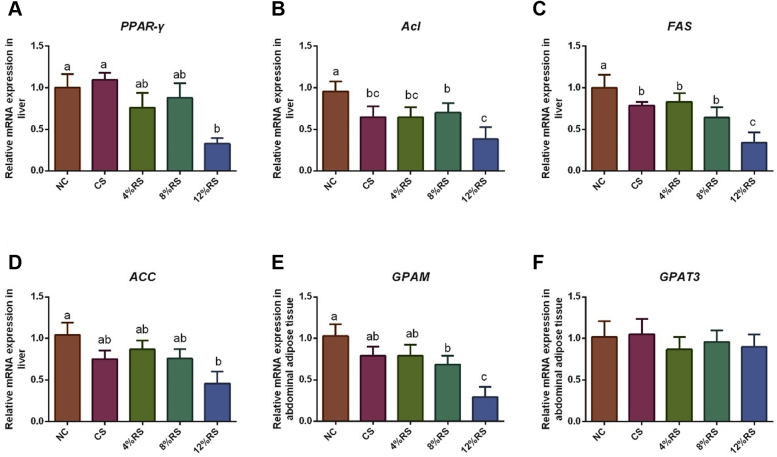
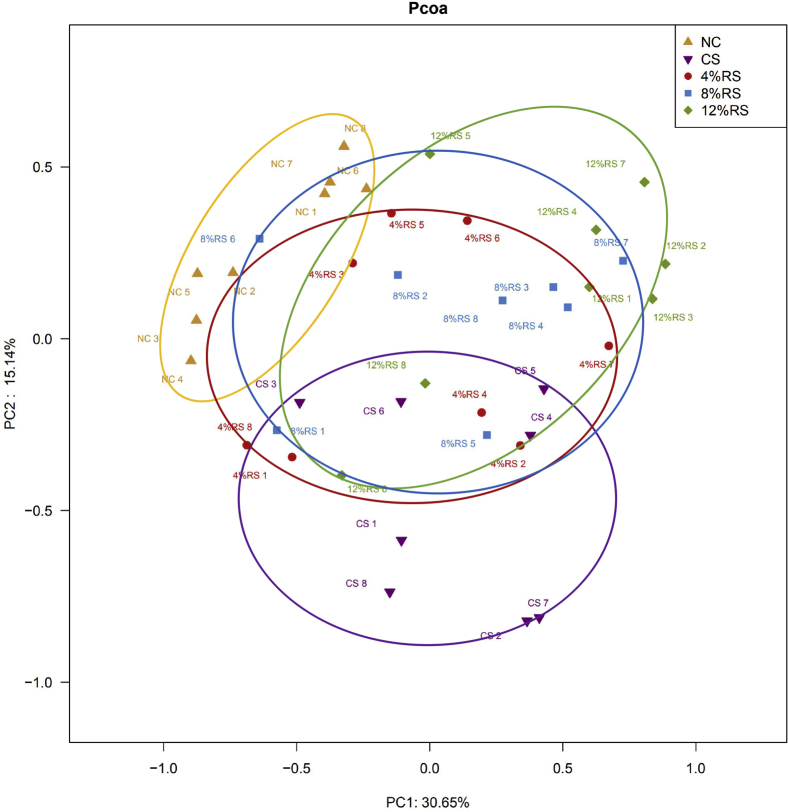
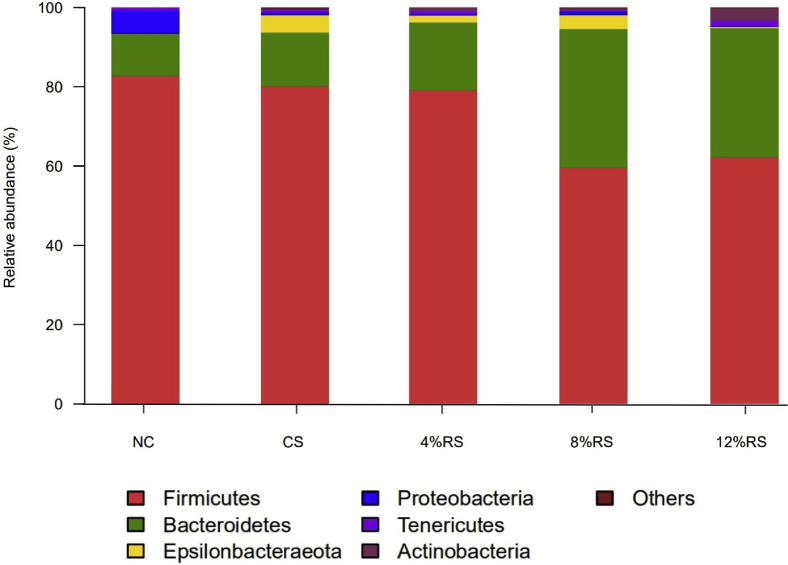
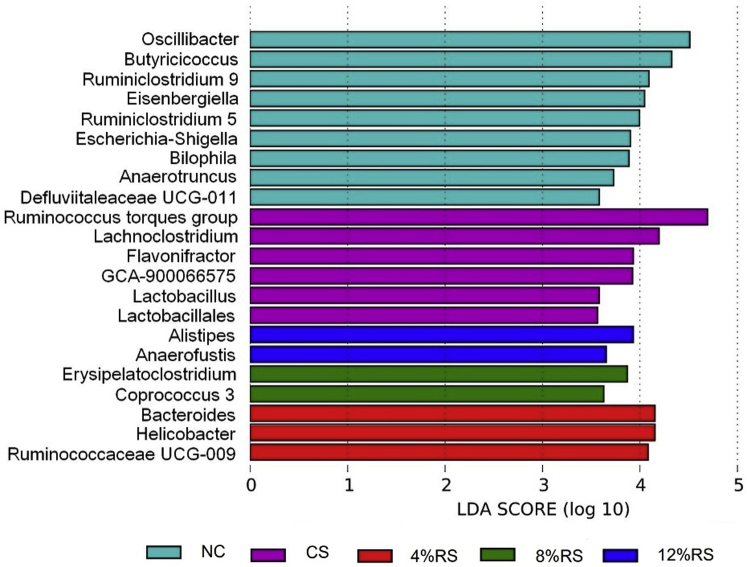
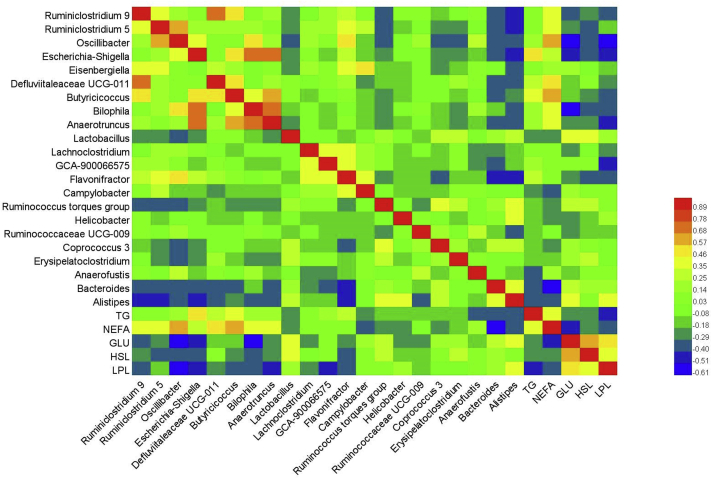
This study investigated the effects of dietary corn-resistant starch on lipid metabolism of broilers and its potential relationship with cecal microbiota modulation. A total of three hundred twenty 1-day-old male broilers were randomly assigned into 5 dietary treatments: 1 normal corn-soybean (NC) diet, 1 corn-soybean-based diet supplementation with 20% corn starch (CS), and 3 corn-soybean-based diets supplementation with 4, 8, and 12% corn resistant starch (RS) (identified as 4%RS, 8%RS, and 12%RS, respectively). Each group had 8 replicates with 8 broilers per replicate. The experiment lasted 21 d. The results showed that the abdominal fat percentage were lower in birds from 8%RS and 12%RS groups (0.75 and 0.58%, respectively) than those from NC and CS groups (1.20 and 1.28%, respectively; P < 0.05). The birds from 8%RS and 12%RS groups exhibited lower concentrations of blood triglyceride and nonestesterified fatty acid than those in the NC and CS groups (P < 0.05). Moreover, birds fed diets supplementation with 12% RS decreased the relative mRNA expressions of peroxisome proliferator-activated receptor gamma, ATP citrate-lyase, fatty acid synthase, and acetyl-CoA carboxylase in liver, and glycerol-3-phosphate acyltransferase in abdominal adipose tissue (P < 0.05). Microbiota analysis revealed that birds fed diets supplementation with 8 and 12% RS decreased the abundance of cecal Firmicutes by 23.08 and 20.47% and increased the proportion of Bacteroidetes by 24.33 and 21.92%, respectively, compared with the NC group (P < 0.05). In addition, correlation analysis revealed that many Firmicutes members had highly positive relationship with blood lipid levels and fat storage capacity, which might contribute to the lower abdominal fat phenotype. Overall, broilers receiving diets containing a higher concentration of RS harbor less Firmicutes, which decreased liver fatty acid synthesis and suppress abdominal fat deposition of birds during the starter phase. These findings provide a profound understanding about the relationship between gut microbial composition and lipid metabolism in broilers.
本研究旨在探讨日粮抗性淀粉对肉鸡脂代谢的影响及其与盲肠微生物群调节的潜在关系。将 320 只 1 日龄雄性肉鸡随机分为 5 种日粮处理组:1 种正常玉米-豆粕(NC)日粮,1 种玉米-豆粕基础日粮添加 20%玉米淀粉(CS),和 3 种玉米-豆粕基础日粮分别添加 4%、8%和 12%玉米抗性淀粉(RS)(分别鉴定为 4%RS、8%RS 和 12%RS)。每组有 8 个重复,每个重复有 8 只肉鸡。试验持续 21 d。结果表明,8%RS 和 12%RS 组肉鸡的腹脂率(0.75%和 0.58%)低于 NC 和 CS 组(1.20%和 1.28%;P<0.05)。8%RS 和 12%RS 组肉鸡的血液甘油三酯和非酯化脂肪酸浓度也低于 NC 和 CS 组(P<0.05)。此外,饲喂 12%RS 日粮的肉鸡肝脏中过氧化物酶体增殖物激活受体γ、柠檬酸裂解酶、脂肪酸合酶和乙酰辅酶 A 羧化酶以及腹部脂肪组织中甘油-3-磷酸酰基转移酶的相对 mRNA 表达降低(P<0.05)。微生物组分析显示,与 NC 组相比,8%RS 和 12%RS 日粮组盲肠厚壁菌门的丰度分别降低了 23.08%和 20.47%,拟杆菌门的比例分别增加了 24.33%和 21.92%(P<0.05)。此外,相关性分析表明,许多厚壁菌门成员与血液脂质水平和脂肪储存能力呈高度正相关,这可能是导致腹脂率降低的原因。综上所述,饲喂高浓度 RS 的肉鸡盲肠中厚壁菌门数量较少,这降低了肉鸡在生长前期肝脏脂肪酸的合成,抑制了腹部脂肪的沉积。这些发现为了解肉鸡肠道微生物组成与脂代谢之间的关系提供了更深入的认识。