Biswas Moanaro, Marsic Damien, Li Ning, Zou Chenhui, Gonzalez-Aseguinolaza Gloria, Zolotukhin Irene, Kumar Sandeep R P, Rana Jyoti, Butterfield John S S, Kondratov Oleksandr, de Jong Ype P, Herzog Roland W, Zolotukhin Sergei
Herman B Wells Center for Pediatric Research, Department of Pediatrics, Indiana University School of Medicine, Indianapolis, IN 46202, USA.
Department of Pediatrics, Division of Cellular and Molecular Therapy, University of Florida, Gainesville, FL 32610, USA.
Mol Ther Methods Clin Dev. 2020 Oct 4;19:347-361. doi: 10.1016/j.omtm.2020.09.019. eCollection 2020 Dec 11.
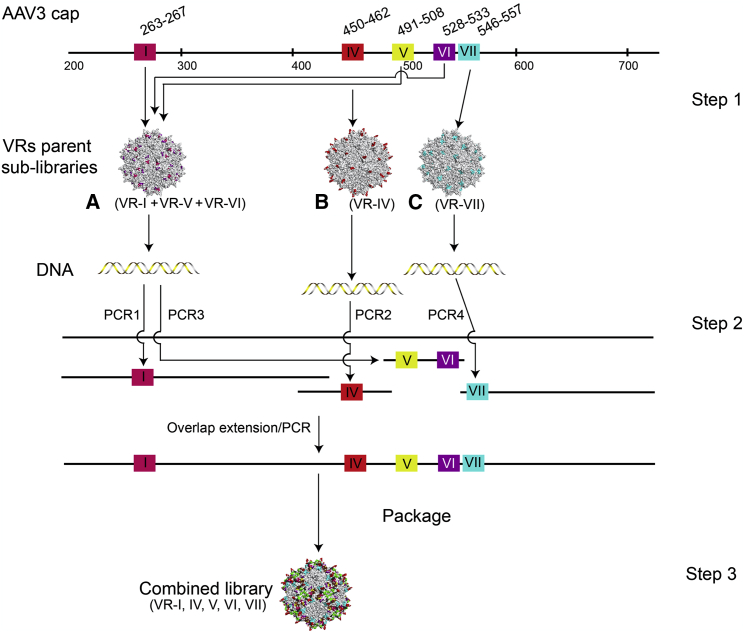
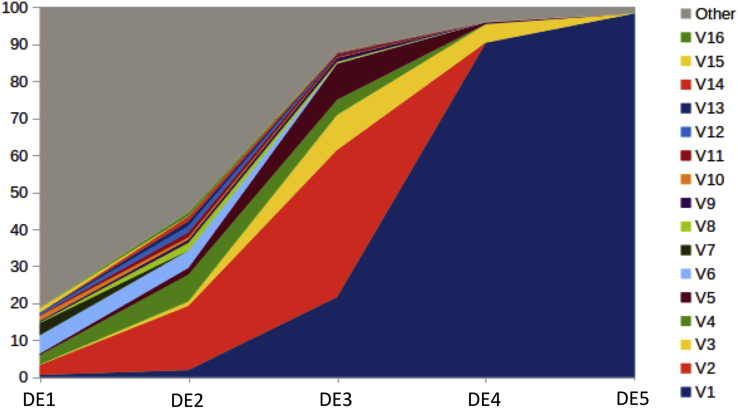
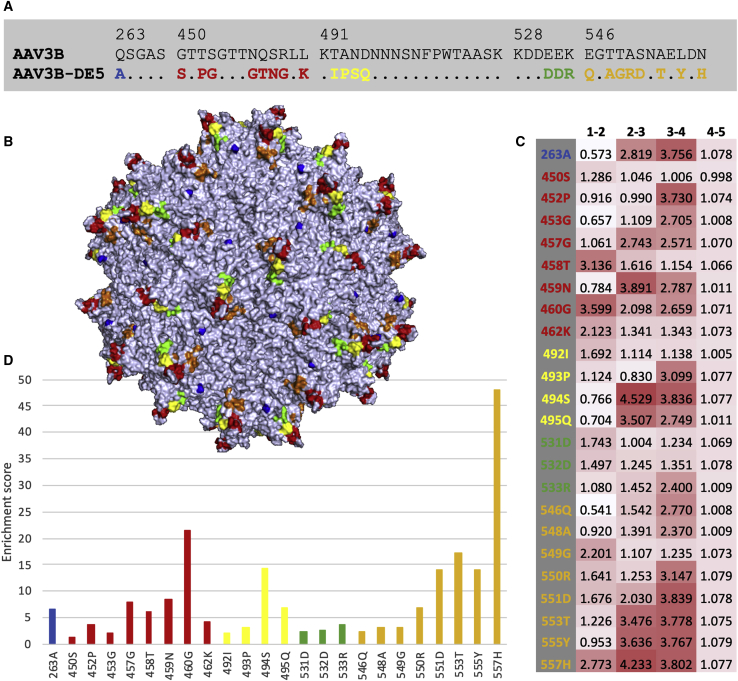
Limitations to successful gene therapy with adeno-associated virus (AAV) can comprise pre-existing neutralizing antibodies to the vector capsid that can block cellular entry, or inefficient transduction of target cells that can lead to sub-optimal expression of the therapeutic transgene. Recombinant serotype 3 AAV (AAV3) is an emerging candidate for liver-directed gene therapy. In this study, we integrated rational design by using a combinatorial library derived from AAV3B capsids with directed evolution by selection for liver-targeted AAV variants. The AAV3B-DE5 variant described herein was undetectable in the original viral library but gained a selective advantage upon passaging in human hepatocarcinoma spheroid cultures. AAV3B-DE5 contains 24 capsid amino acid substitutions compared with AAV3B, distributed among all five variable regions, with strong selective pressure on VR-IV, VR-V, and VR-VII. , AAV3B-DE5 demonstrated improved human hepatocyte tropism in a liver chimeric mouse model. Importantly, this variant exhibited reduced seroreactivity to human intravenous immunoglobulin (i.v. Ig), as well as individual serum samples from 100 healthy human donors. Therefore, molecular evolution using a combinatorial library platform generated a viral capsid with high hepatocyte tropism and enhanced evasion of pre-existing AAV neutralizing antibodies.
腺相关病毒(AAV)基因治疗成功的限制因素可能包括对载体衣壳预先存在的中和抗体,其可阻断细胞进入,或者靶细胞的转导效率低下,这可能导致治疗性转基因的表达不理想。重组3型AAV(AAV3)是肝脏定向基因治疗的一个新兴候选物。在本研究中,我们通过使用源自AAV3B衣壳的组合文库进行理性设计,并通过选择肝脏靶向的AAV变体进行定向进化。本文所述的AAV3B-DE5变体在原始病毒文库中无法检测到,但在人肝癌球状体培养物中传代后获得了选择性优势。与AAV3B相比,AAV3B-DE5包含24个衣壳氨基酸替换,分布在所有五个可变区域,对VR-IV、VR-V和VR-VII有强烈的选择压力。在肝脏嵌合小鼠模型中,AAV3B-DE5表现出改善的人肝细胞嗜性。重要的是,该变体对人静脉注射免疫球蛋白(i.v. Ig)以及来自100名健康人类供体的个体血清样本的血清反应性降低。因此,使用组合文库平台进行分子进化产生了一种具有高肝细胞嗜性并增强了对预先存在的AAV中和抗体逃避能力的病毒衣壳。