University of Missouri-Kansas City/Center for Behavioral Medicine, Kansas City.
Truman Medical Centers, Kansas City, Missouri.
JAMA Netw Open. 2020 Nov 2;3(11):e2024303. doi: 10.1001/jamanetworkopen.2020.24303.
Suicide by firearm is a major cause of mortality in young Missouri residents. Changes in statewide firearm policy may have contributed to changes in suicide rates.
To evaluate if changes in Missouri permit-to-purchase (PTP) and concealed carry firearm laws were associated with changes in rates of suicide by firearms in young Missouri residents.
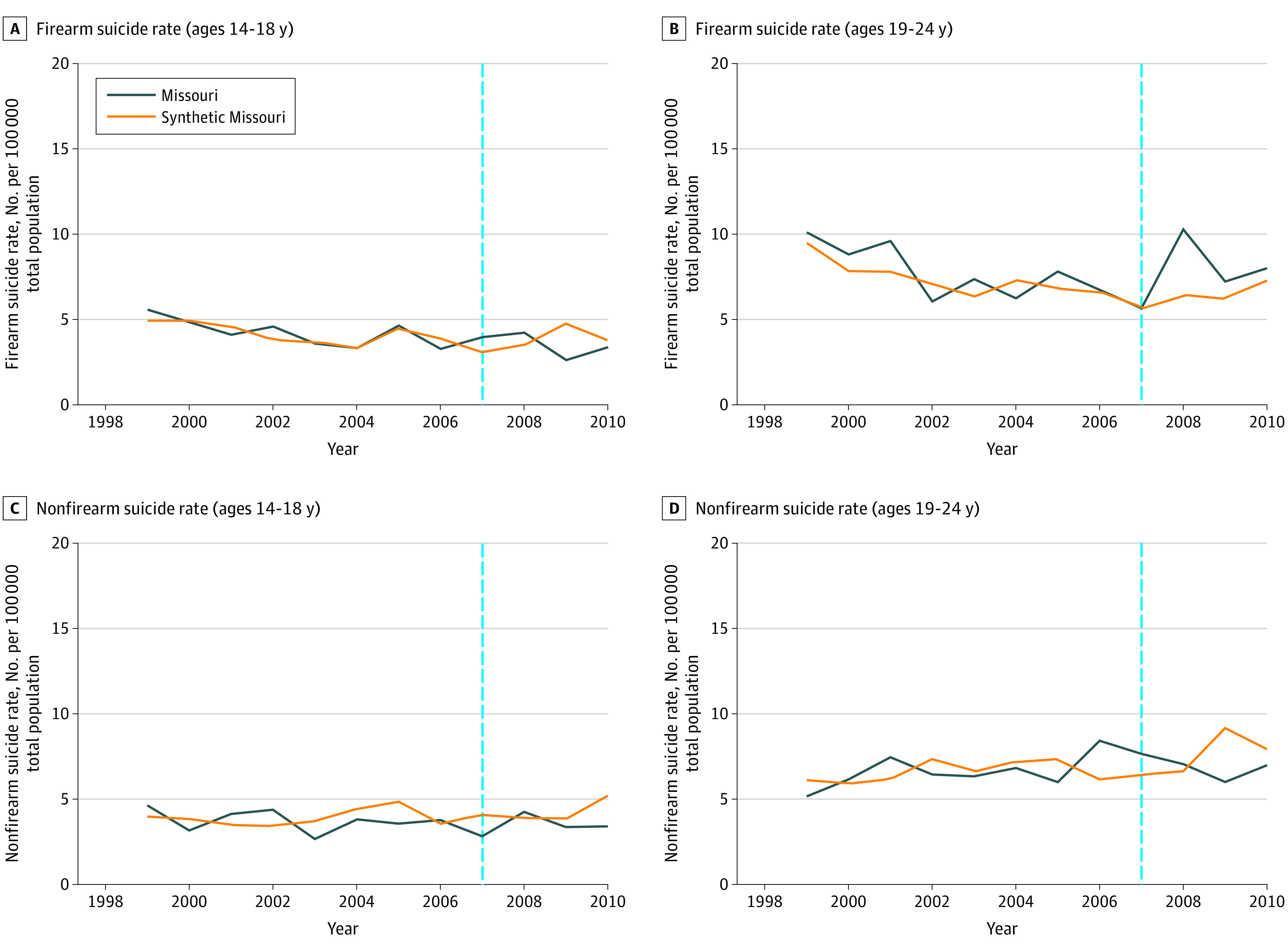
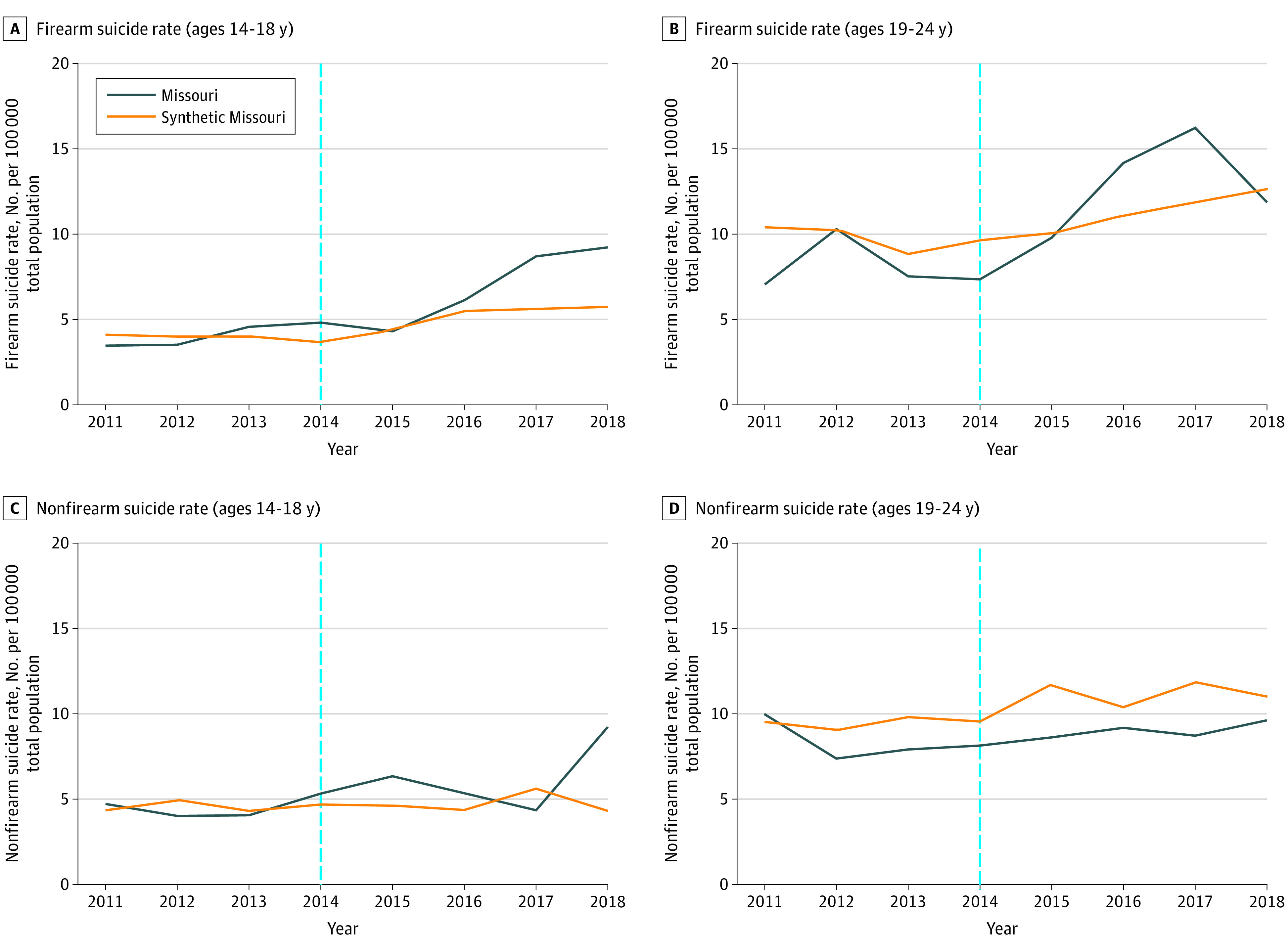
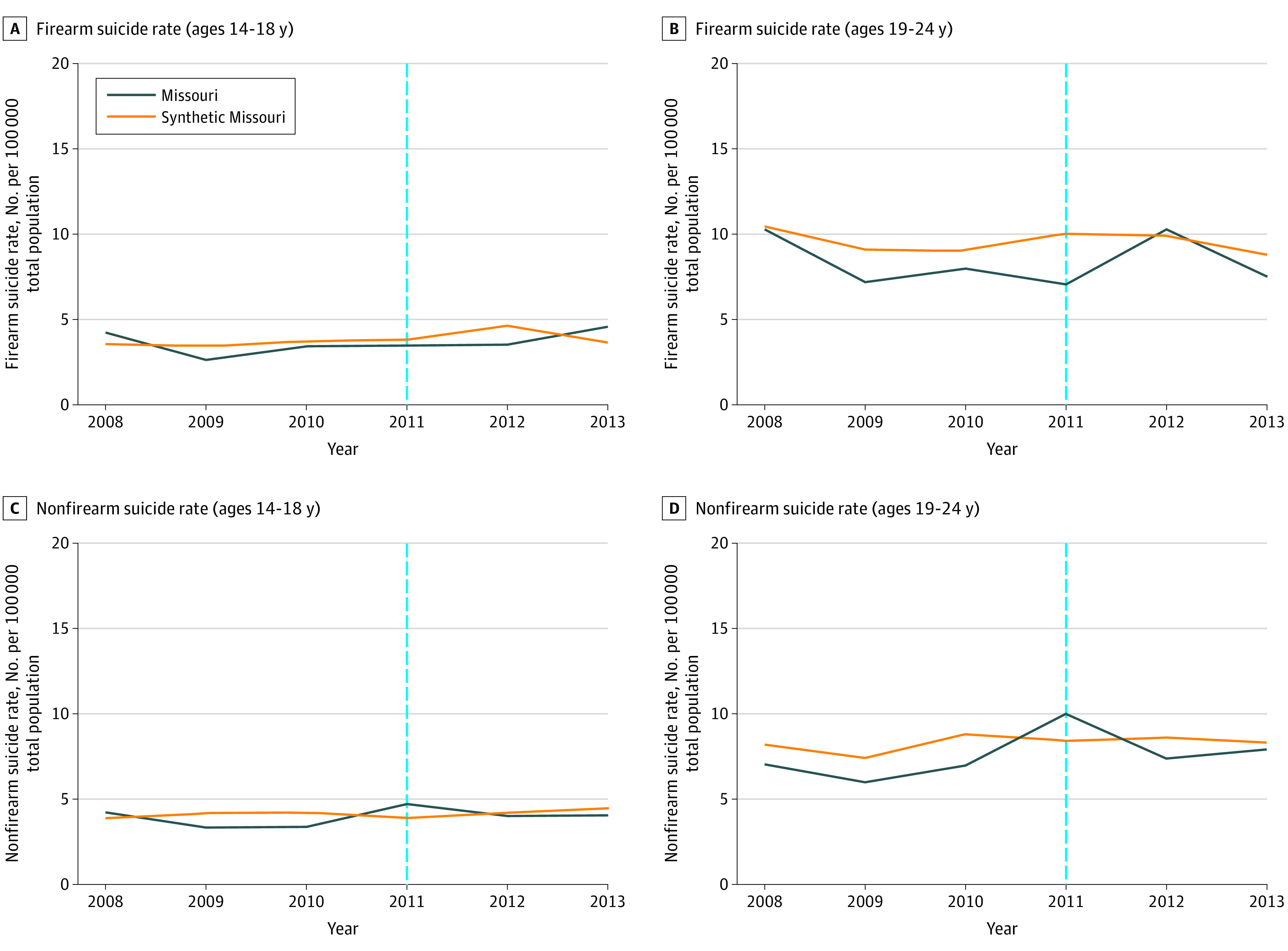
DESIGN, SETTINGS, AND PARTICIPANTS: This cross-sectional study examined rates of suicide by firearm in Missouri among adolescents (ages 14-18 years) and young adults (ages 19-24 years) from January 1999 to December 2018, following changes to state PTP and concealed carry law, in comparison with a donor state pool with existing firearm laws (13 states in PTP pool; 42 states in concealed carry pool) that did not make changes during this period. This study used a quasiexperimental, synthetic control design at the state level that defined Missouri as the treated state and treatment as changes in firearm laws.
Legislative changes to Missouri's PTP and concealed carry firearm laws.
Age-adjusted annual rates of firearm-related suicide mortality per 100 000 people for adolescents (aged 14-18 years) and young adults (aged 19-24 years).
Repeal of the PTP law was associated with a 21.8% increase in firearm suicide rates in young adults aged 19 to 24 years in Missouri. Lowering the minimum age of concealed carry to 19 years in Missouri was associated with a 32.0% increase in firearm suicide rates and a 29.7% increase in nonfirearm suicide rates in adolescents aged 14 to 18 years, and a 7.2% increase in firearm suicide rates in young adults aged 19 to 24 years.
Increases in rates of suicide by firearms in adolescents and young adults were seen following repeal of Missouri's PTP law and lowering of the minimum age for concealed carry in 2014. Changes in Missouri's firearm policies may be an important contributor to rates of suicide by firearm in young Missouri residents.
枪支自杀是密苏里州年轻居民死亡的主要原因。全州范围内枪支政策的变化可能导致自杀率的变化。
评估密苏里州购买许可证(PTP)和隐蔽携带枪支法律的变化是否与密苏里州年轻居民枪支自杀率的变化有关。
设计、地点和参与者:这项横断面研究调查了 1999 年 1 月至 2018 年 12 月期间,密苏里州青少年(14-18 岁)和年轻成年人(19-24 岁)中枪支自杀的比率,与同期未发生变化的有现有枪支法的捐赠州池(PTP 池中的 13 个州;隐蔽携带池中的 42 个州)相比。这项研究在州一级使用了一种准实验、合成对照设计,将密苏里州定义为治疗州,将治疗定义为枪支法的变化。
密苏里州 PTP 和隐蔽携带枪支法律的变化。
每 100000 人年龄调整的青少年(14-18 岁)和年轻成年人(19-24 岁)与枪支有关的自杀死亡率的年度比率。
取消 PTP 法与密苏里州 19 至 24 岁年轻人枪支自杀率上升 21.8%有关。将密苏里州隐蔽携带的最低年龄降低到 19 岁与青少年(14-18 岁)的枪支自杀率上升 32.0%和非枪支自杀率上升 29.7%,以及年轻人(19-24 岁)的枪支自杀率上升 7.2%有关。
在 2014 年取消密苏里州的 PTP 法和降低隐蔽携带的最低年龄后,青少年和年轻成年人枪支自杀率上升。密苏里州枪支政策的变化可能是密苏里州年轻居民枪支自杀率的一个重要因素。