Papageorgiou Maria, Paraskevopoulou Adamantini, Pantazi Foteini, Skendi Adriana
Department of Food Science and Technology, International Hellenic University, POB 141, GR-57400 Thessaloniki, Greece.
Laboratory of Food Chemistry and Technology, School of Chemistry, Aristotle University of Thessaloniki, 54124 Thessaloniki, Greece.
Foods. 2020 Nov 2;9(11):1586. doi: 10.3390/foods9111586.
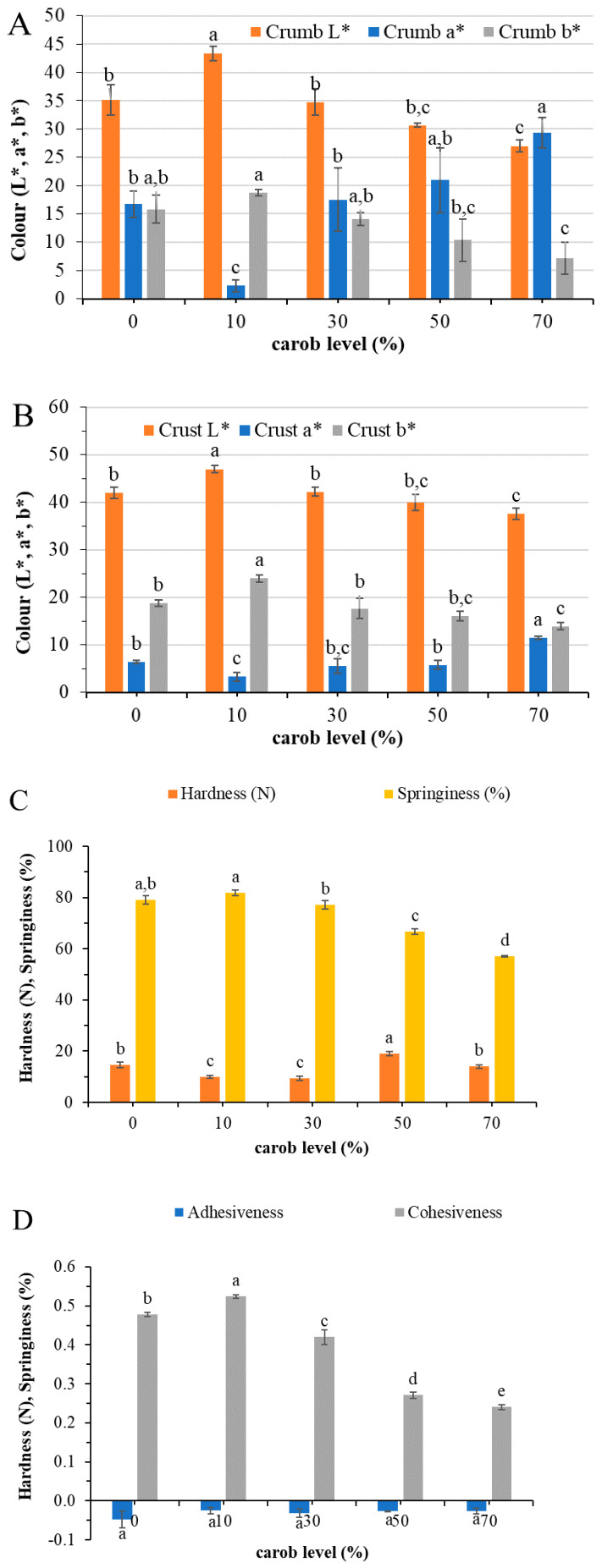
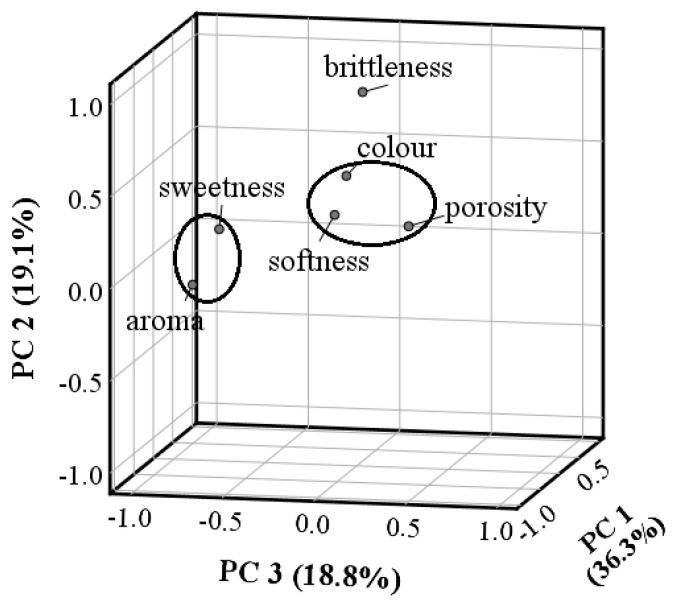
Carob flour has been used in the production of a wide range of functional food formulations such as bakery goods either as a natural sweetener or food ingredient that, when roasted, exerts a chocolate/cocoa-reminiscent flavor and color. The aim of the present study was twofold; firstly to study the effect of an increasing incorporation of roasted carob flour (0-70% flour basis) on the quality and sensory attributes of a conventional cocoa cake recipe and secondly to investigate the obtained volatile fraction responsible for the aroma by means of headspace solid phase microextraction (HS-SPME) technique coupled to gas chromatography/mass spectrometry (GC/MS) while comparing it with the control, cocoa-containing cake recipe. Thirty and fifty percent carob flour incorporation rendered cakes with acceptable texture and sensory attributes, comparable to the control cake recipe containing 20% cocoa. Similarity to cocoa aroma was attributed to a great number of odor active compounds mainly belonging to aldehydes, lactones, furan/pyran derivatives, and pyrrole derivatives.
角豆粉已被用于生产多种功能性食品配方,如烘焙食品,它既可以作为天然甜味剂,也可以作为食品配料,经过烘焙后,会散发出类似巧克力/可可的风味和颜色。本研究有两个目的:一是研究增加烘焙角豆粉的添加量(以面粉为基础,添加量为0-70%)对传统可可蛋糕配方的品质和感官特性的影响;二是通过顶空固相微萃取(HS-SPME)技术结合气相色谱/质谱(GC/MS)分析,研究产生香气的挥发性成分,并与对照的含可可蛋糕配方进行比较。添加30%和50%的角豆粉制成的蛋糕具有可接受的质地和感官特性,与含有20%可可的对照蛋糕配方相当。与可可香气的相似性归因于大量主要属于醛类、内酯类、呋喃/吡喃衍生物和吡咯衍生物的气味活性化合物。