Cejalvo Teresa, Gargini Ricardo, Segura-Collar Berta, Mata-Martínez Pablo, Herranz Beatriz, Cantero Diana, Ruano Yolanda, García-Pérez Daniel, Pérez-Núñez Ángel, Ramos Ana, Hernández-Laín Aurelio, Martín-Soberón María Cruz, Sánchez-Gómez Pilar, Sepúlveda-Sánchez Juan M
Instituto de investigación I+12, Hospital 12 de Octubre, 28041 Madrid, Spain.
Neurooncology Unit, Instituto de Salud Carlos III-UFIEC, 28220 Madrid, Spain.
Cancers (Basel). 2020 Nov 2;12(11):3230. doi: 10.3390/cancers12113230.
Gliomas remain refractory to all attempted treatments, including those using immune checkpoint inhibitors. The characterization of the tumor (immune) microenvironment has been recognized as an important challenge to explain this lack of response and to improve the therapy of glial tumors.
We designed a prospective analysis of the immune cells of gliomas by flow cytometry. Tumors with or without () mutations were included in the study. The genetic profile and the presence of different molecular and cellular features of the gliomas were analyzed in parallel. The findings were validated in syngeneic mouse models.
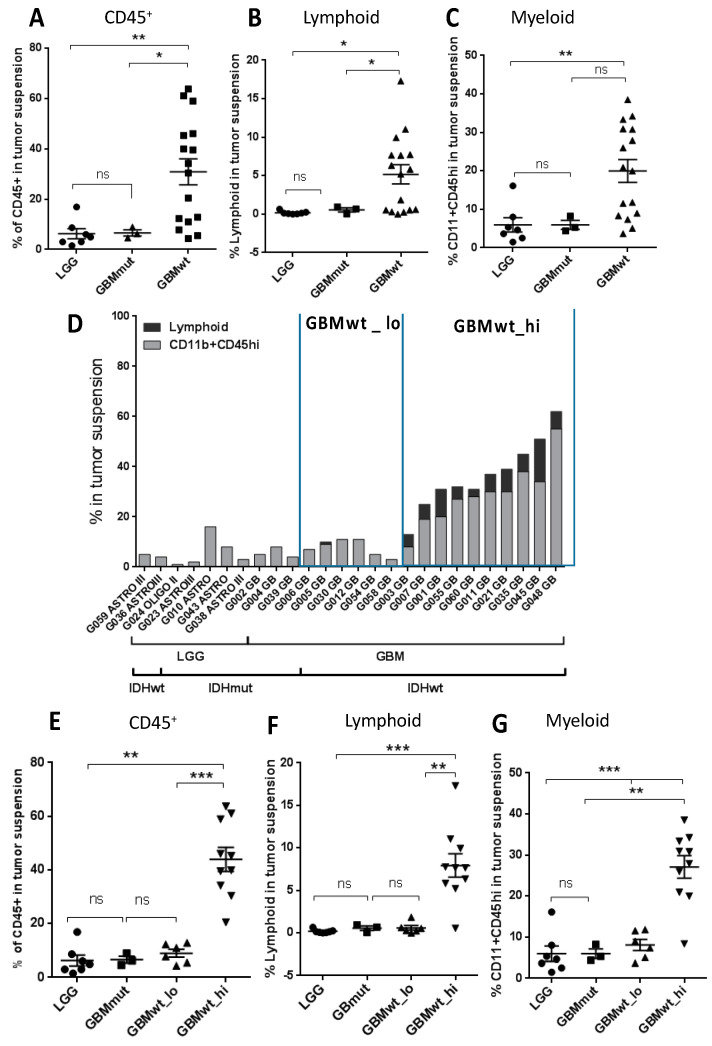
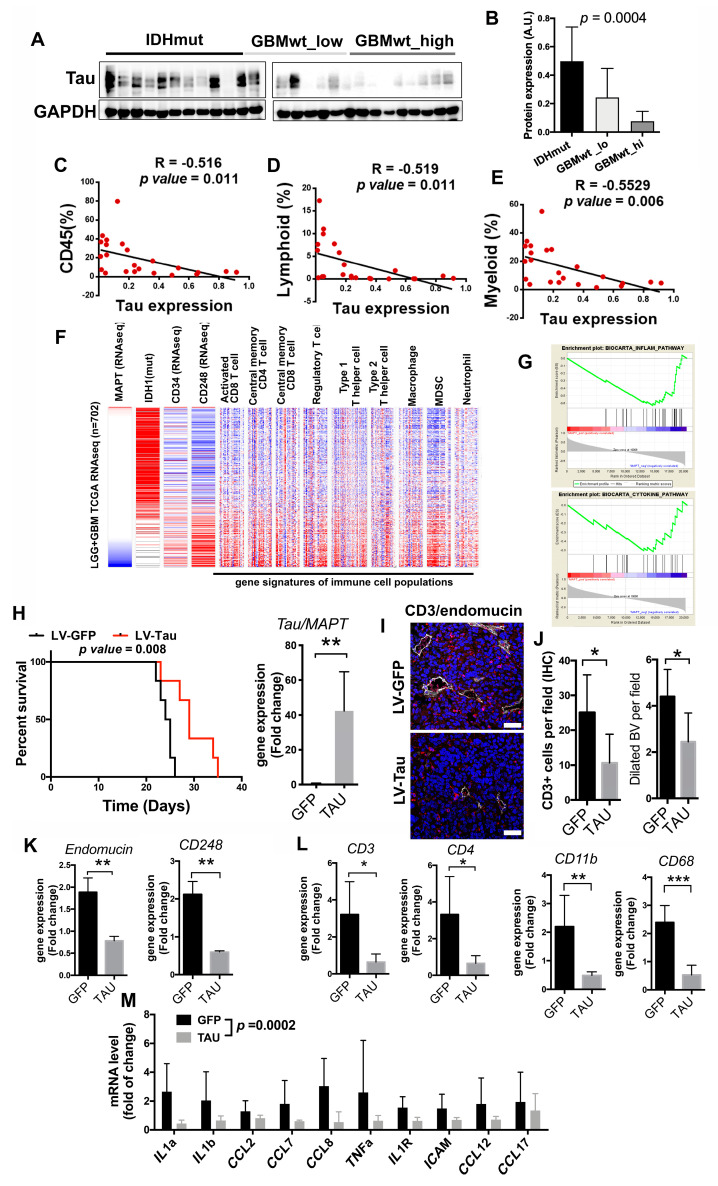
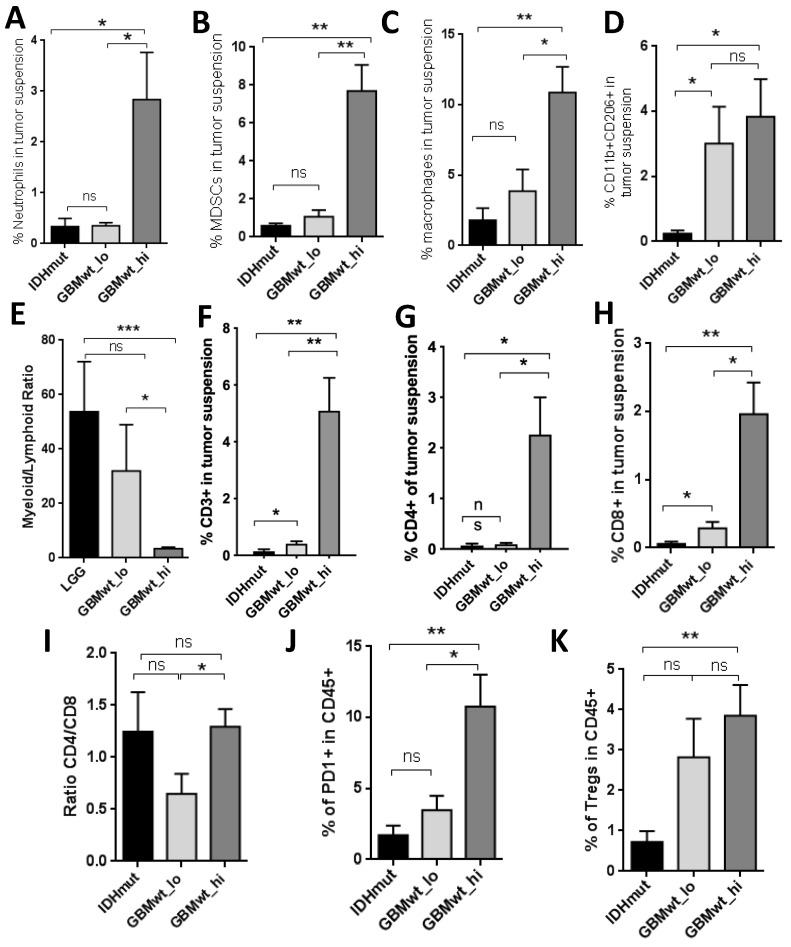
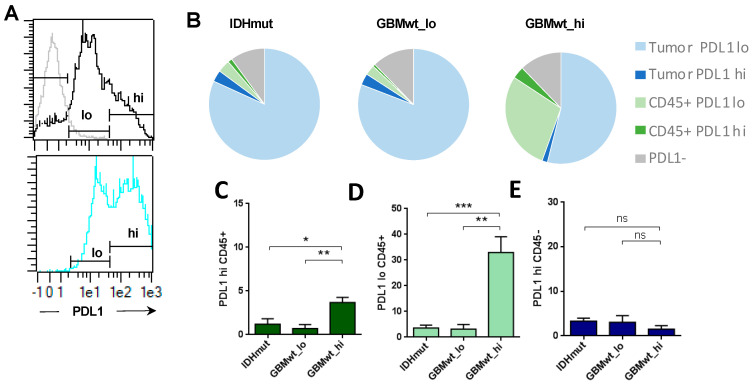
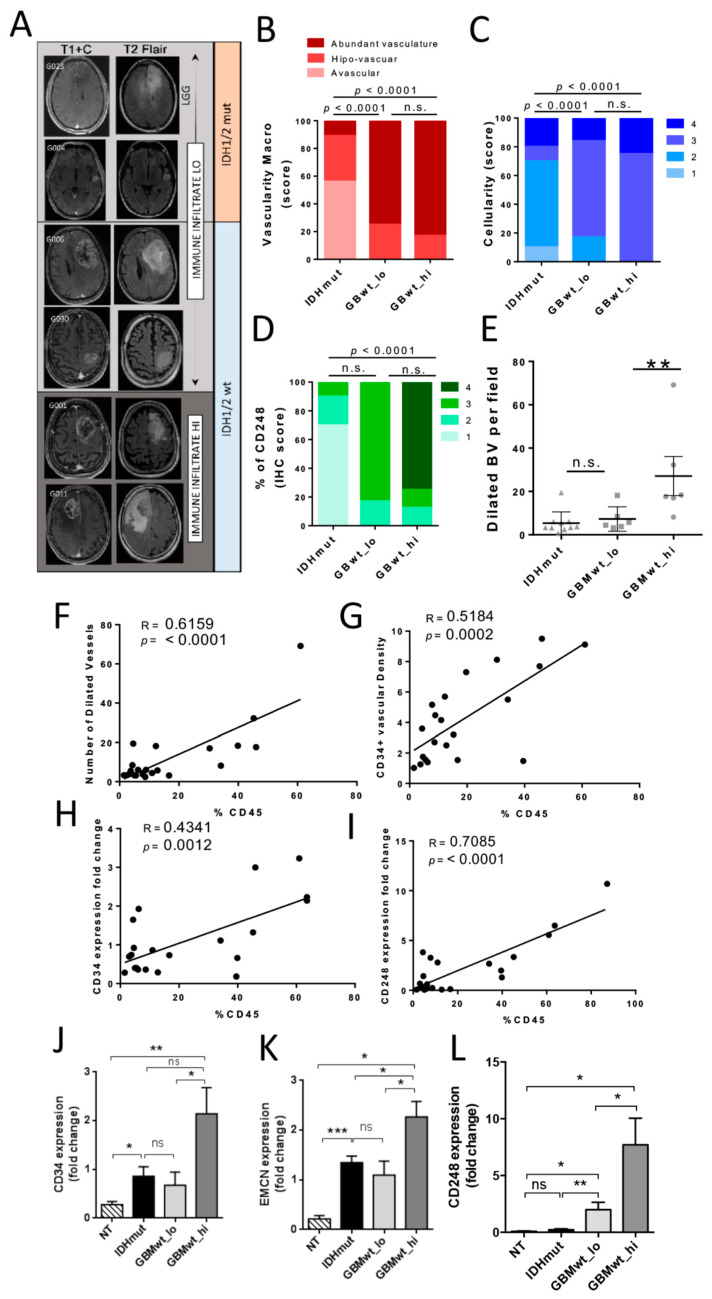
We observed that few immune cells infiltrate mutant gliomas whereas the immune content of wild-type tumors was more heterogeneous. Some of them contained an important immune infiltrate, particularly enriched in myeloid cells with immunosuppressive features, but others were more similar to mutant gliomas, with few immune cells and a less immunosuppressive profile. Notably, we observed a direct correlation between the percentage of leukocytes and the presence of vascular alterations, which were associated with a reduced expression of Tau, a microtubule-binding protein that controls the formation of tumor vessels in gliomas. Furthermore, overexpression of Tau was able to reduce the immune content in orthotopic allografts of GL261 cells, delaying tumor growth.
We have confirmed the reduced infiltration of immune cells in mutant gliomas. By contrast, in wild-type gliomas, we have found a direct correlation between the presence of vascular alterations and the entrance of leukocytes into the tumors. Interestingly, high levels of Tau inversely correlated with the vascular and the immune content of gliomas. Altogether, our results could be exploited for the design of more successful clinical trials with immunomodulatory molecules.
胶质瘤对所有尝试的治疗方法均具有抗性,包括使用免疫检查点抑制剂的治疗。肿瘤(免疫)微环境的特征已被视为解释这种缺乏反应并改善胶质肿瘤治疗的一项重要挑战。
我们通过流式细胞术对胶质瘤的免疫细胞进行了前瞻性分析。研究纳入了有或无()突变的肿瘤。同时分析了胶质瘤的基因图谱以及不同分子和细胞特征的存在情况。研究结果在同基因小鼠模型中得到了验证。
我们观察到,很少有免疫细胞浸润突变型胶质瘤,而野生型肿瘤的免疫成分则更为异质性。其中一些含有重要的免疫浸润,尤其富含具有免疫抑制特征的髓样细胞,但其他一些则更类似于突变型胶质瘤,免疫细胞较少且免疫抑制特征较弱。值得注意的是,我们观察到白细胞百分比与血管改变之间存在直接相关性,而血管改变与Tau的表达降低有关,Tau是一种微管结合蛋白,可控制胶质瘤中肿瘤血管的形成。此外,Tau的过表达能够降低GL261细胞原位同种异体移植中的免疫成分,延缓肿瘤生长。
我们证实了突变型胶质瘤中免疫细胞浸润减少。相比之下,在野生型胶质瘤中,我们发现血管改变的存在与白细胞进入肿瘤之间存在直接相关性。有趣的是,高水平的Tau与胶质瘤的血管和免疫成分呈负相关。总之,我们的研究结果可用于设计更成功的免疫调节分子临床试验。