Department of Internal Medicine, Section of Geriatric Medicine, Amsterdam UMC, University of Amsterdam, Amsterdam, the Netherlands.
Department of Internal Medicine, Section of Geriatric Medicine, Amsterdam UMC, University of Amsterdam, Amsterdam, the Netherlands.
J Am Med Dir Assoc. 2020 Dec;21(12):1746-1750.e3. doi: 10.1016/j.jamda.2020.09.031. Epub 2020 Sep 30.
Coronavirus disease 2019 (COVID-19) has caused many nursing homes to prohibit resident visits to prevent viral spread. Although visiting restrictions are instituted to prolong the life of nursing home residents, they may detrimentally affect their quality of life. The aim of this study was to capture perspectives from the relatives of nursing home residents on nursing home visiting restrictions.
A cross-sectional online survey was conducted.
A convenience sample of Dutch relatives of nursing home residents (n = 1997) completed an online survey on their perspectives regarding nursing home visiting restrictions.
The survey included Likert-item, multiselect, and open-answer questions targeting 4 key areas: (1) communication access to residents, (2) adverse effects of visiting restrictions on residents and relatives, (3) potential protective effect of visiting restrictions, (4) important aspects for relatives during and after visiting restrictions.
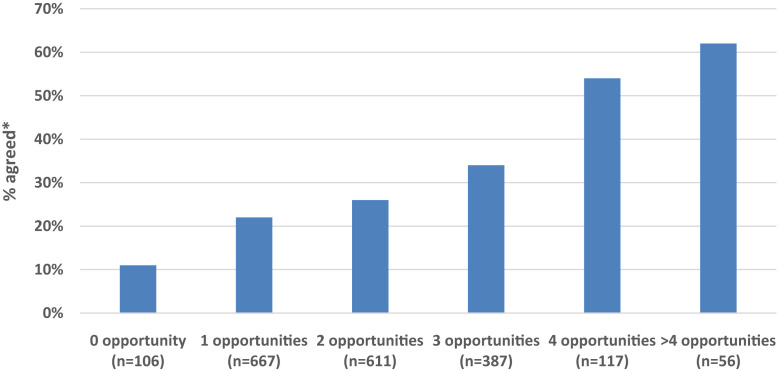
Satisfaction of communication access to nursing home residents was highest when respondents had the possibility to communicate with nursing home residents by nurses informing them via telephone, contact behind glass, and contact outside maintaining physical distance. Satisfaction rates increased when respondents had multiple opportunities to stay in contact with residents. Respondents were concerned that residents had increased loneliness (76%), sadness (66%), and decreased quality of life (62%), whereas study respondents reported personal sadness (73%) and fear (26%). There was no consensus among respondents if adverse effects of the visiting restrictions outweighed the protective effect for nursing home residents. Respondents expressed the need for increased information, communication options, and better safety protocols.
Providing multiple opportunities to stay in touch with nursing home residents can increase satisfaction of communication between residents and relatives. Increased context-specific information, communication options, and safety protocols should be addressed in national health policy.
2019 年冠状病毒病(COVID-19)导致许多养老院禁止居民探访,以防止病毒传播。尽管访问限制是为了延长养老院居民的寿命,但它们可能会对他们的生活质量产生不利影响。本研究旨在从养老院居民亲属的角度捕捉对养老院探访限制的看法。
横断面在线调查。
对荷兰养老院居民亲属(n=1997)进行了便利抽样,完成了一项关于他们对养老院探访限制看法的在线调查。
该调查包括针对 4 个关键领域的李克特项目、多项选择和开放式回答问题:(1)与居民沟通的途径,(2)探访限制对居民和亲属的不利影响,(3)探访限制的潜在保护作用,(4)探访限制期间和之后亲属的重要方面。
当受访者有可能通过护士通过电话、玻璃后面的接触和保持身体距离的外部接触向居民提供信息时,与养老院居民沟通的途径的满意度最高。当受访者有多种与居民保持联系的机会时,满意度会增加。受访者担心居民孤独感增加(76%)、悲伤感增加(66%)和生活质量下降(62%),而研究受访者报告个人悲伤(73%)和恐惧(26%)。受访者对探访限制的不利影响是否超过对养老院居民的保护作用没有达成共识。受访者表示需要增加信息、沟通选择和更好的安全协议。
为与养老院居民保持联系提供多种机会可以提高居民与亲属之间沟通的满意度。应在国家卫生政策中解决增加的特定于背景的信息、沟通选择和安全协议。