Department of Endocrinology and Metabolism, The First Affiliated Hospital of Soochow University, Suzhou, Jiangsu, China.
Department of Endocrinology and Metabolism, Heze Municipal Hospital, Heze, Shandong, China.
Comput Math Methods Med. 2020 Oct 21;2020:9602016. doi: 10.1155/2020/9602016. eCollection 2020.
The aim of this study was to identify the candidate genes in type 2 diabetes mellitus (T2DM) and explore their potential mechanisms.
The gene expression profile GSE26168 was downloaded from the Gene Expression Omnibus (GEO) database. The online tool GEO2R was used to obtain differentially expressed genes (DEGs). Gene Ontology (GO) term enrichment analysis and Kyoto Encyclopedia of Genes and Genomes (KEGG) pathway analysis were performed by using Metascape for annotation, visualization, and comprehensive discovery. The protein-protein interaction (PPI) network of DEGs was constructed by using Cytoscape software to find the candidate genes and key pathways.
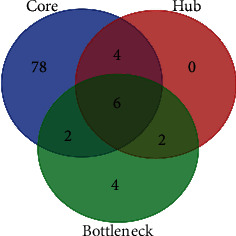
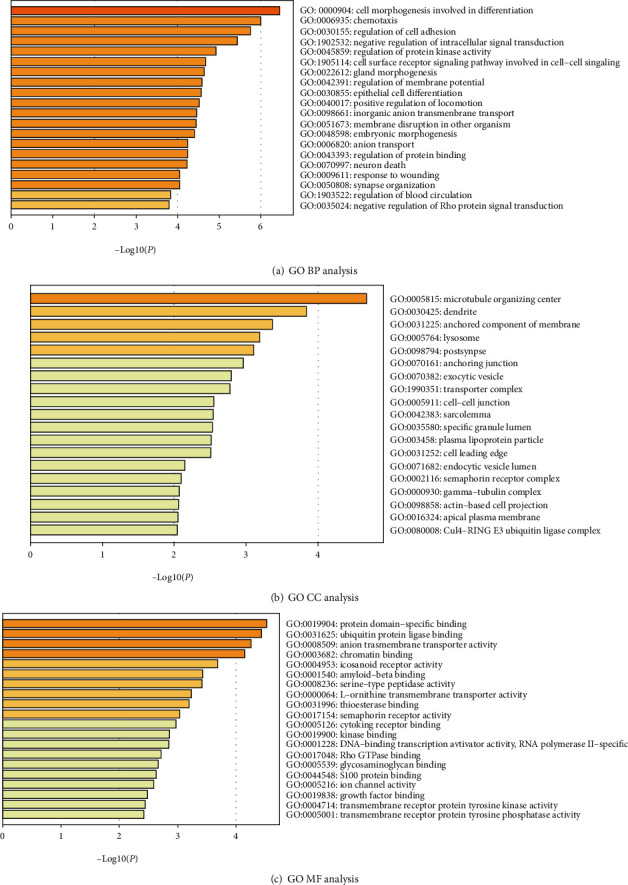
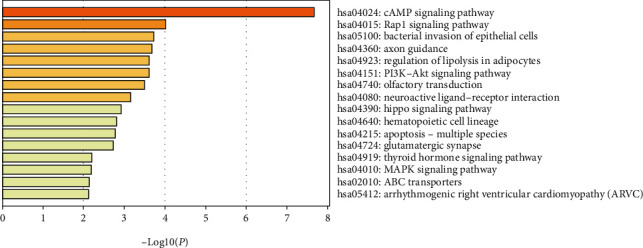
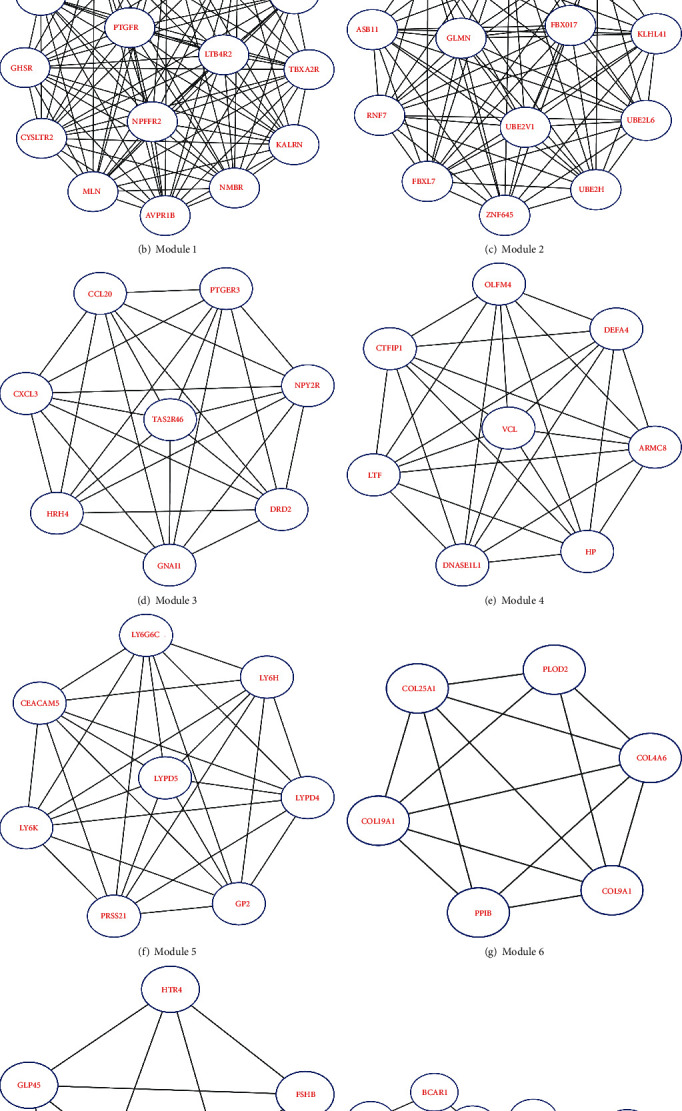
A total of 981 DEGs were found in T2DM, including 301 upregulated genes and 680 downregulated genes. GO analyses from Metascape revealed that DEGs were significantly enriched in cell differentiation, cell adhesion, intracellular signal transduction, and regulation of protein kinase activity. KEGG pathway analysis revealed that DEGs were mainly enriched in the cAMP signaling pathway, Rap1 signaling pathway, regulation of lipolysis in adipocytes, PI3K-Akt signaling pathway, MAPK signaling pathway, and so on. On the basis of the PPI network of the DEGs, the following 6 candidate genes were identified: PIK3R1, RAC1, GNG3, GNAI1, CDC42, and ITGB1.
Our data provide a comprehensive bioinformatics analysis of genes, functions, and pathways, which may be related to the pathogenesis of T2DM.
本研究旨在鉴定 2 型糖尿病(T2DM)的候选基因,并探讨其潜在机制。
从基因表达综合数据库(GEO)下载基因表达谱 GSE26168。使用在线工具 GEO2R 获得差异表达基因(DEGs)。使用 Metascape 进行注释、可视化和综合发现,对基因本体论(GO)术语富集分析和京都基因与基因组百科全书(KEGG)通路分析。使用 Cytoscape 软件构建 DEGs 的蛋白质-蛋白质相互作用(PPI)网络,以找到候选基因和关键途径。
在 T2DM 中发现了总共 981 个 DEGs,包括 301 个上调基因和 680 个下调基因。Metascape 的 GO 分析表明,DEGs 显著富集在细胞分化、细胞黏附、细胞内信号转导和蛋白激酶活性调节等过程中。KEGG 通路分析表明,DEGs 主要富集在 cAMP 信号通路、Rap1 信号通路、脂肪细胞脂解的调节、PI3K-Akt 信号通路、MAPK 信号通路等通路中。基于 DEGs 的 PPI 网络,确定了以下 6 个候选基因:PIK3R1、RAC1、GNG3、GNAI1、CDC42 和 ITGB1。
我们的数据提供了与 T2DM 发病机制相关的基因、功能和途径的综合生物信息学分析。