Institute of Molecular Biology, Academia Sinica, Taipei, Taiwan.
Molecular and Cell Biology, Taiwan International Graduate Program, Academia Sinica and Graduate Institute of Life Sciences, National Defense Medical Center, Taipei, Taiwan.
Protein Sci. 2021 Feb;30(2):350-365. doi: 10.1002/pro.3990. Epub 2020 Nov 23.
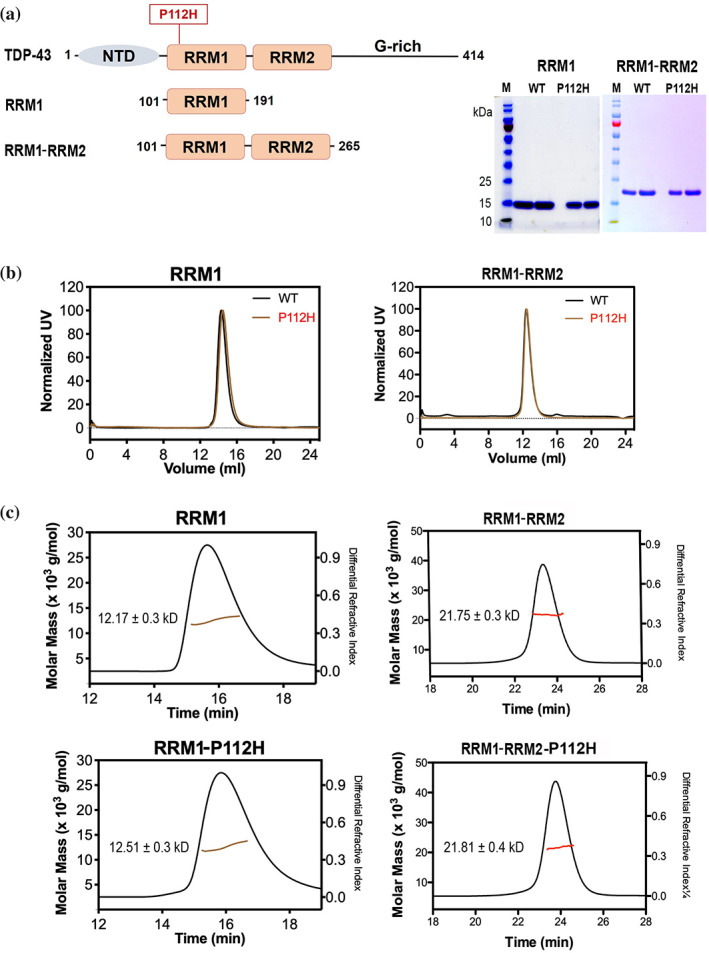
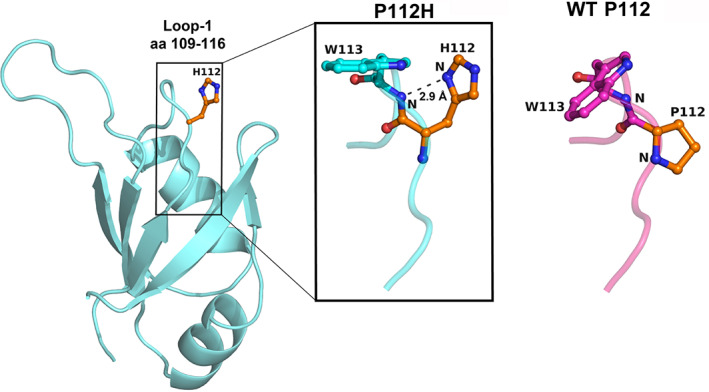
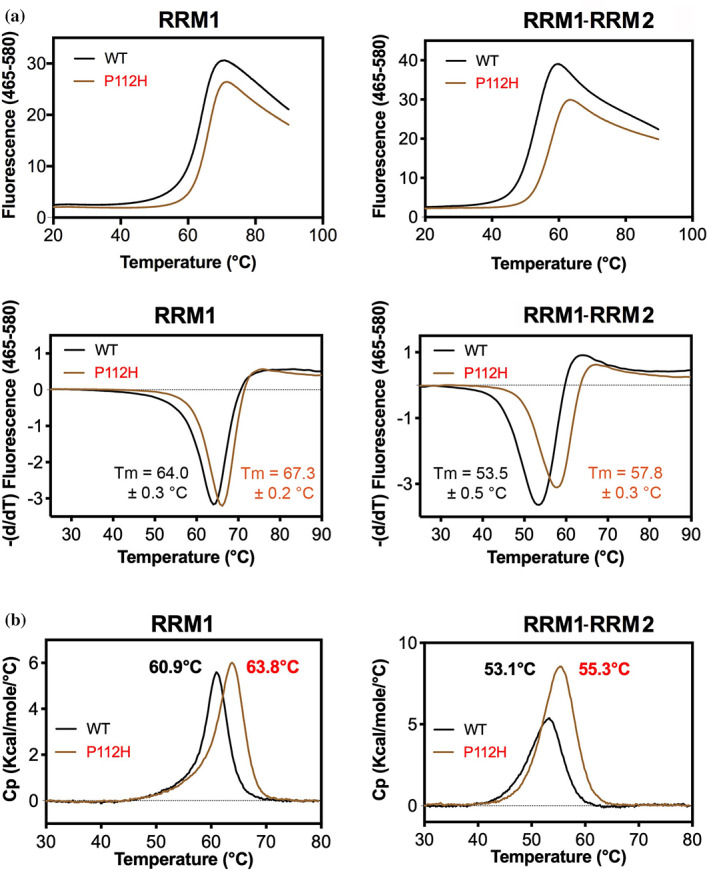
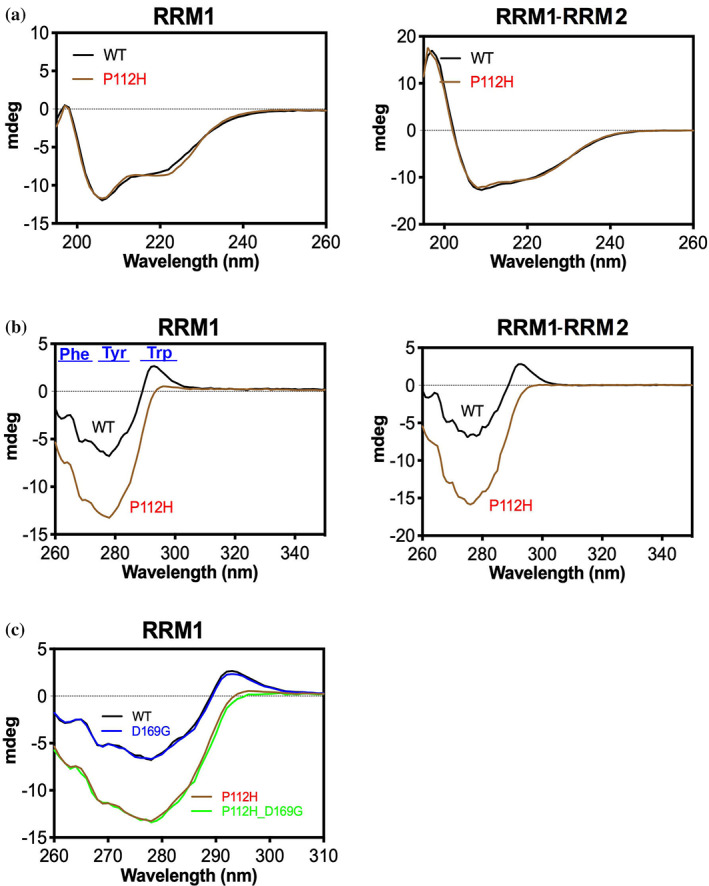
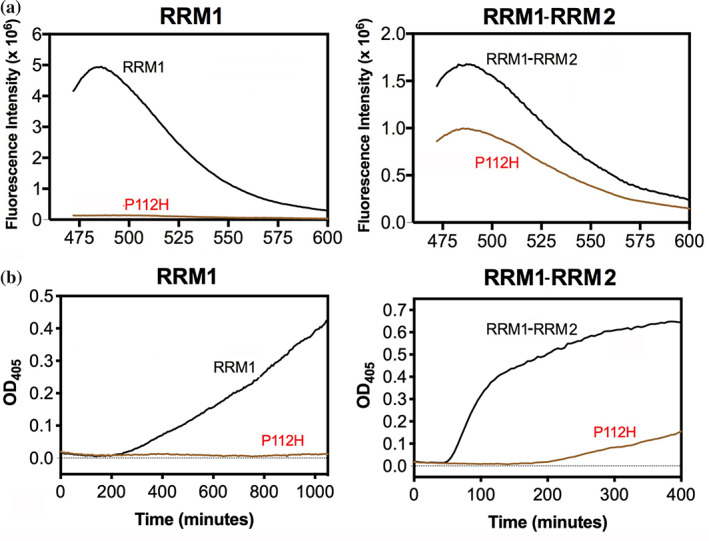
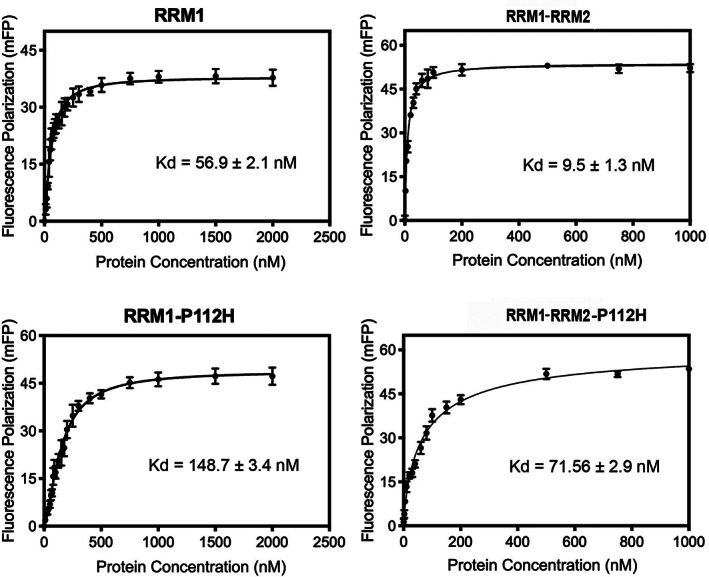
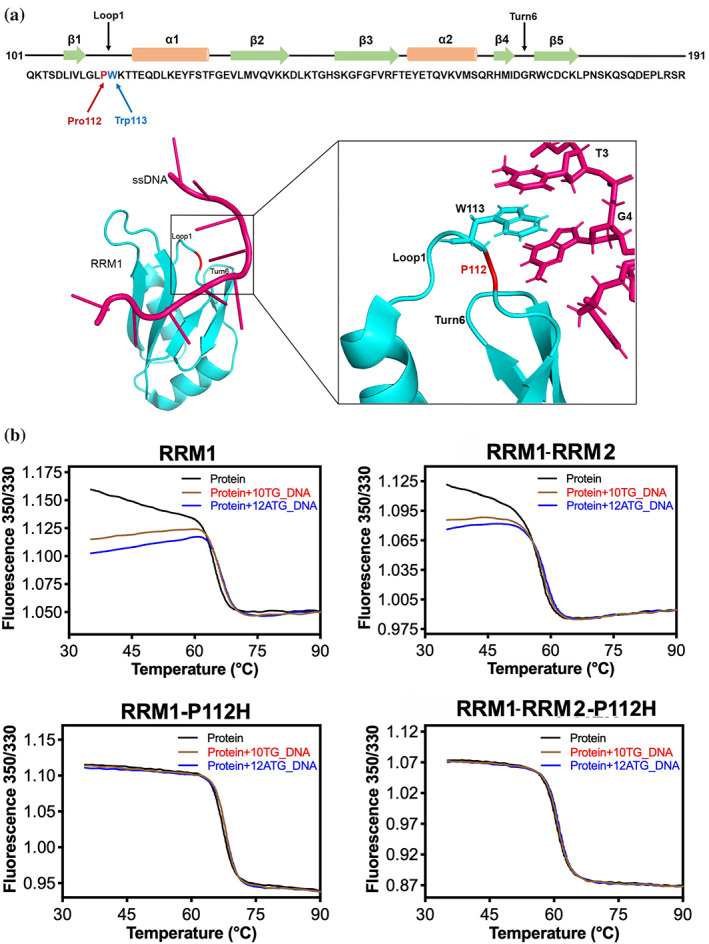
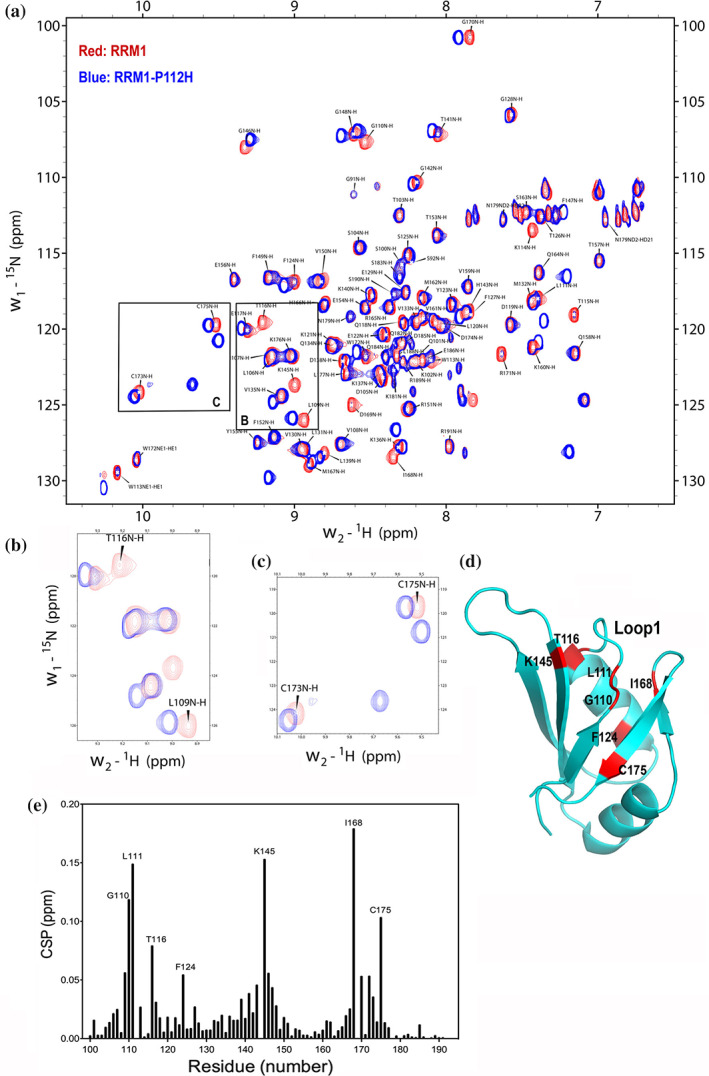
TDP-43 forms the primary constituents of the cytoplasmic inclusions contributing to various neurodegenerative diseases, including amyotrophic lateral sclerosis and frontotemporal dementia (FTD). Over 60 TDP-43 mutations have been identified in patients suffering from these two diseases, but most variations are located in the protein's disordered C-terminal glycine-rich region. P112H mutation of TDP-43 has been uniquely linked to FTD, and is located in the first RNA recognition motif (RRM1). This mutation is thought to be pathogenic, but its impact on TDP-43 at the protein level remains unclear. Here, we compare the biochemical and biophysical properties of TDP-43 truncated proteins with or without P112H mutation. We show that P112H-mutated TDP-43 proteins exhibit higher thermal stability, impaired RNA-binding activity, and a reduced tendency to aggregate relative to wild-type proteins. Near-UV CD, 2D-nuclear-magnetic resonance, and intrinsic fluorescence spectrometry further reveal that the P112H mutation in RRM1 generates local conformational changes surrounding the mutational site that disrupt the stacking interactions of the W113 side chain with nucleic acids. Together, these results support the notion that P112H mutation of TDP-43 contributes to FTD through functional impairment of RNA metabolism and/or structural changes that curtail protein clearance.
TDP-43 形成了导致各种神经退行性疾病(包括肌萎缩性侧索硬化症和额颞叶痴呆症)的细胞质内含物的主要成分。在患有这两种疾病的患者中,已经发现了超过 60 种 TDP-43 突变,但大多数变异位于蛋白质无规卷曲的 C 端甘氨酸丰富区域。TDP-43 的 P112H 突变与额颞叶痴呆症有独特的关联,位于第一个 RNA 识别基序(RRM1)中。该突变被认为是致病的,但它对蛋白质水平的 TDP-43 的影响尚不清楚。在这里,我们比较了具有或不具有 P112H 突变的 TDP-43 截断蛋白的生化和生物物理特性。我们表明,与野生型蛋白相比,P112H 突变的 TDP-43 蛋白表现出更高的热稳定性、受损的 RNA 结合活性和降低的聚集倾向。近紫外线圆二色性、二维核磁共振和本征荧光光谱进一步表明,RRM1 中的 P112H 突变导致突变部位周围的局部构象变化,破坏了 W113 侧链与核酸的堆积相互作用。总之,这些结果支持了 TDP-43 的 P112H 突变通过 RNA 代谢的功能障碍和/或限制蛋白质清除的结构变化导致额颞叶痴呆症的观点。