Research Institute of Molecular Pathology (IMP), Campus-Vienna-Biocenter 1, Vienna 1030, Austria.
J Proteome Res. 2021 Jan 1;20(1):78-93. doi: 10.1021/acs.jproteome.0c00583. Epub 2020 Nov 5.
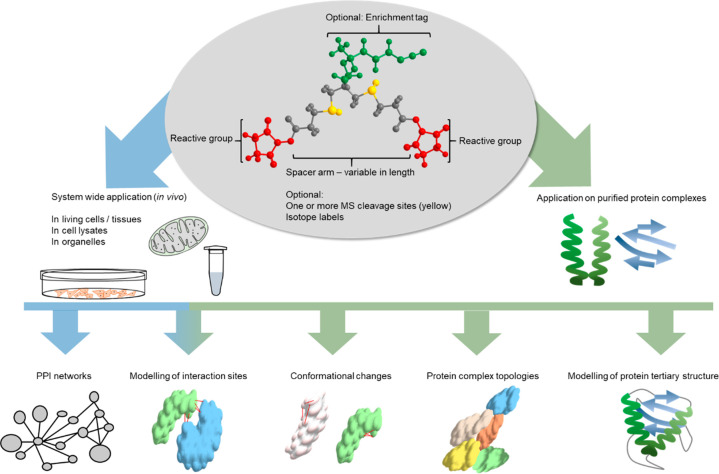
Cross-linking mass spectrometry (XL-MS) has matured into a potent tool to identify protein-protein interactions or to uncover protein structures in living cells, tissues, or organelles. The unique ability to investigate the interplay of proteins within their native environment delivers valuable complementary information to other advanced structural biology techniques. This Review gives a comprehensive overview of the current possible applications as well as the remaining limitations of the technique, focusing on cross-linking in highly complex biological systems like cells, organelles, or tissues. Thanks to the commercial availability of most reagents and advances in user-friendly data analysis, validation, and visualization tools, studies using XL-MS can, in theory, now also be utilized by nonexpert laboratories.
交联质谱(XL-MS)已经发展成为一种强大的工具,可以用于鉴定蛋白质-蛋白质相互作用或揭示活细胞、组织或细胞器中的蛋白质结构。该技术具有在天然环境中研究蛋白质相互作用的独特能力,为其他先进的结构生物学技术提供了有价值的互补信息。本文综述了该技术目前可能的应用以及在高度复杂的生物系统(如细胞、细胞器或组织)中交联的剩余限制,重点介绍了交联质谱。由于大多数试剂的商业可用性以及用户友好的数据分析、验证和可视化工具的进步,理论上,现在非专业实验室也可以使用 XL-MS 进行研究。