Key Laboratory of Forestry Genetics & Biotechnology of Ministry of Education, Co-Innovation Center for Sustainable Forestry in Southern China, Nanjing Forestry University, Nanjing, 210037, China.
College of Life Sciences, Hefei Normal University, Hefei, 230601, China.
BMC Plant Biol. 2020 Nov 5;20(1):508. doi: 10.1186/s12870-020-02634-7.
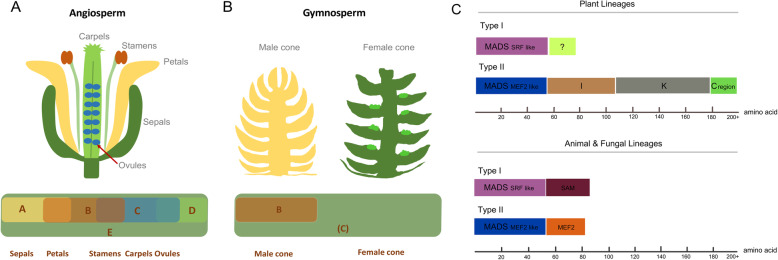
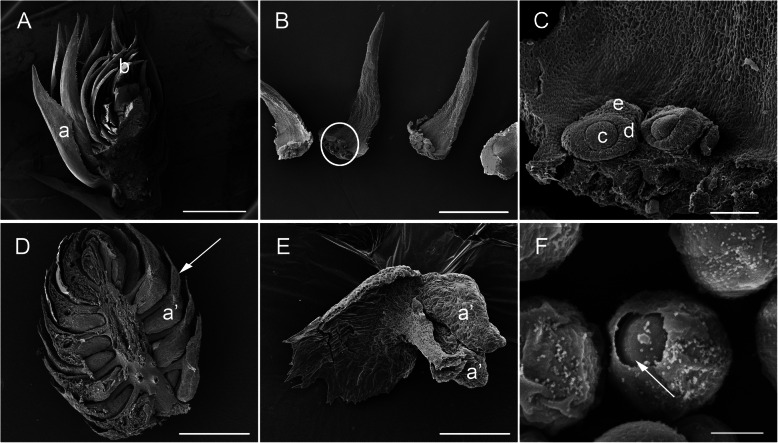
Cunninghamia lanceolata (Chinese fir), a member of the conifer family Cupressaceae, is one of the most popular cultivated trees for wood production in China. Continuous research is being performed to improve C. lanceolata breeding values. Given the high rate of seed abortion (one of the reasons being the failure of ovule and pollen development) in C. lanceolata, the proper formation of female/male cones could theoretically increase the number of offspring in future generations. MIKC MADS-box genes are well-known for their roles in the flower/cone development and comprise the typical/atypical floral development model for both angiosperms and gymnosperms.
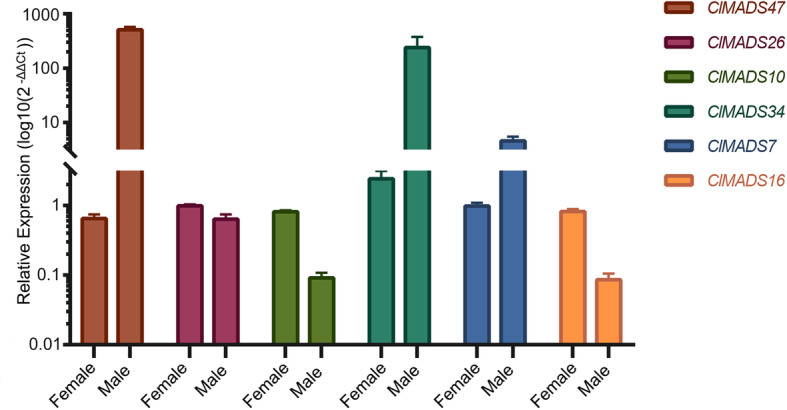
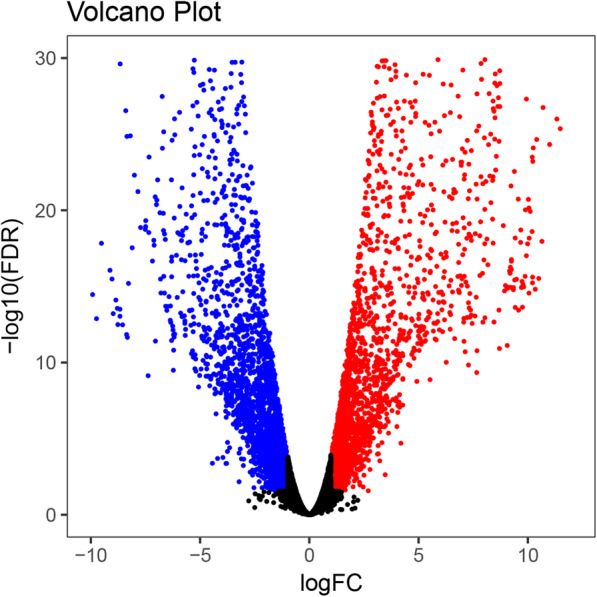
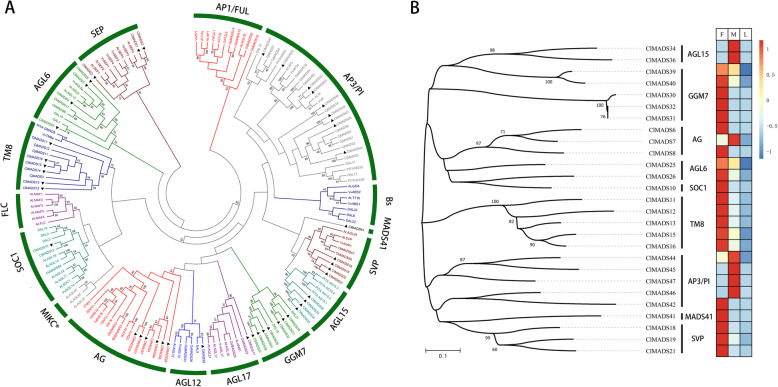
We performed a transcriptomic analysis to find genes differentially expressed between female and male cones at a single, carefully determined developmental stage, focusing on the MIKC MADS-box genes. We finally obtained 47 unique MIKC MADS-box genes from C. lanceolata and divided these genes into separate branches. 27 out of the 47 MIKC MADS-box genes showed differential expression between female and male cones, and most of them were not expressed in leaves. Out of these 27 genes, most B-class genes (AP3/PI) were up-regulated in the male cone, while TM8 genes were up-regulated in the female cone. Then, with no obvious overall preference for AG (class C + D) genes in female/male cones, it seems likely that these genes are involved in the development of both cones. Finally, a small number of genes such as GGM7, SVP, AGL15, that were specifically expressed in female/male cones, making them candidate genes for sex-specific cone development.
Our study identified a number of MIKC MADS-box genes showing differential expression between female and male cones in C. lanceolata, illustrating a potential link of these genes with C. lanceolata cone development. On the basis of this, we postulated a possible cone development model for C. lanceolata. The gene expression library showing differential expression between female and male cones shown here, can be used to discover unknown regulatory networks related to sex-specific cone development in the future.
杉木(Chinese fir),柏科柏木属的一种植物,是中国最受欢迎的木材生产树种之一。为了提高杉木的育种值,人们一直在进行持续的研究。由于杉木种子败育率高(原因之一是胚珠和花粉发育失败),理论上,雌/雄球果的正常形成可以增加后代的数量。MIKC MADS 盒基因在花/果发育中起着重要作用,构成了被子植物和裸子植物典型/非典型的花发育模式。
我们进行了转录组分析,以在单一、精心确定的发育阶段寻找雌、雄球果之间差异表达的基因,重点是 MIKC MADS 盒基因。我们最终从杉木中获得了 47 个独特的 MIKC MADS 盒基因,并将这些基因分为不同的分支。在 47 个 MIKC MADS 盒基因中,有 27 个基因在雌、雄球果之间表现出差异表达,其中大多数在叶片中不表达。在这 27 个基因中,大多数 B 类基因(AP3/PI)在雄球果中上调表达,而 TM8 基因在雌球果中上调表达。然后,在雌、雄球果中,AG 类(C+D 类)基因没有明显的整体偏好,似乎这些基因参与了两种球果的发育。最后,一小部分基因,如 GGM7、SVP、AGL15,在雌、雄球果中特异性表达,它们是性别特异性球果发育的候选基因。
本研究在杉木中鉴定了一些在雌、雄球果之间差异表达的 MIKC MADS 盒基因,表明这些基因与杉木球果发育之间存在潜在联系。在此基础上,我们提出了杉木球果发育的可能模型。本研究构建的雌、雄球果差异表达基因表达文库,可用于未来发现与性别特异性球果发育相关的未知调控网络。