Institute of Radiation Biology, Helmholtz Zentrum Muenchen, German Research Center for Environmental Health GmbH, Neuherberg, Germany.
Radiation Epidemiology Branch, National Cancer Institute (NCI), National Institutes of Health (NIH), MD, USA.
Environ Int. 2021 Jan;146:106235. doi: 10.1016/j.envint.2020.106235. Epub 2020 Nov 3.
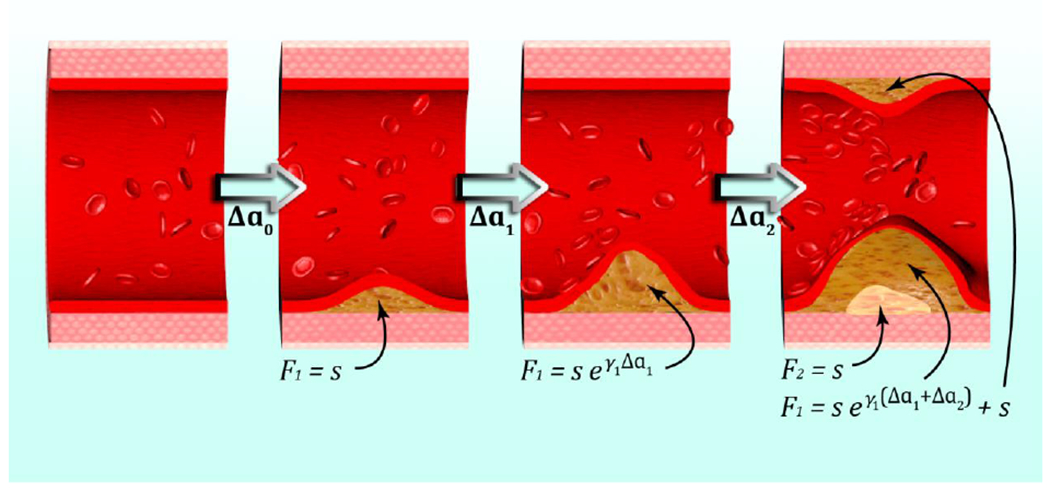
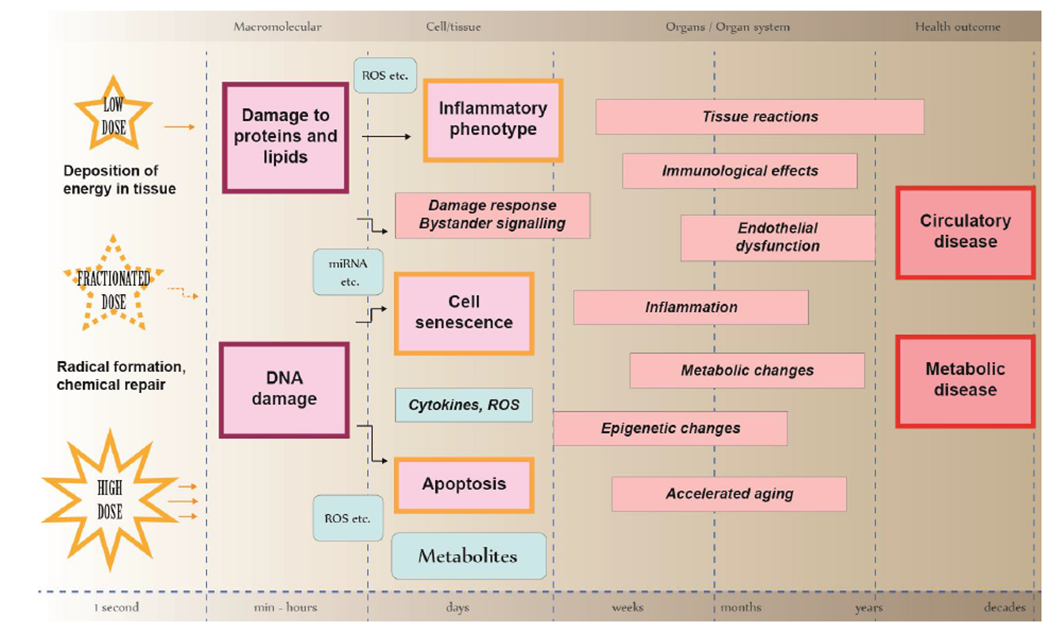
Risks to health are the prime consideration in all human situations of ionizing radiation exposure and therefore of relevance to radiation protection in all occupational, medical, and public exposure situations. Over the past few decades, advances in therapeutic strategies have led to significant improvements in cancer survival rates. However, a wide range of long-term complications have been reported in cancer survivors, in particular circulatory diseases and their major risk factors, metabolic diseases. However, at lower levels of exposure, the evidence is less clear. Under real-life exposure scenarios, including radiotherapy, radiation effects in the whole organism will be determined mainly by the response of normal tissues receiving relatively low doses, and will be mediated and moderated by systemic effects. Therefore, there is an urgent need for further research on the impact of low-dose radiation. In this article, we review radiation-associated risks of circulatory and metabolic diseases in clinical, occupational or environmental exposure situations, addressing epidemiological, biological, risk modelling, and systems biology aspects, highlight the gaps in knowledge and discuss future directions to address these gaps.
在所有涉及电离辐射暴露的人类情况下,健康风险都是首要考虑因素,因此与所有职业、医疗和公众暴露情况中的辐射防护都相关。在过去几十年中,治疗策略的进步导致癌症生存率显著提高。然而,癌症幸存者报告了广泛的长期并发症,特别是心血管疾病及其主要危险因素代谢疾病。然而,在较低的暴露水平下,证据不太清楚。在包括放射治疗在内的现实暴露情况下,整个生物体的辐射效应将主要取决于接受相对低剂量的正常组织的反应,并通过全身效应来介导和调节。因此,迫切需要进一步研究低剂量辐射的影响。在本文中,我们回顾了临床、职业或环境暴露情况下与辐射相关的循环和代谢疾病的风险,涉及流行病学、生物学、风险建模和系统生物学方面,强调了知识差距,并讨论了解决这些差距的未来方向。