Huang Shanshan, Che Jing, Chu Qian, Zhang Peng
Department of Oncology, Tongji Hospital, Tongji Medical College, Huazhong University of Science and Technology, Wuhan, China.
College of Life Sciences, Wuhan University, Wuhan, China.
Front Cell Dev Biol. 2020 Mar 12;8:140. doi: 10.3389/fcell.2020.00140. eCollection 2020.
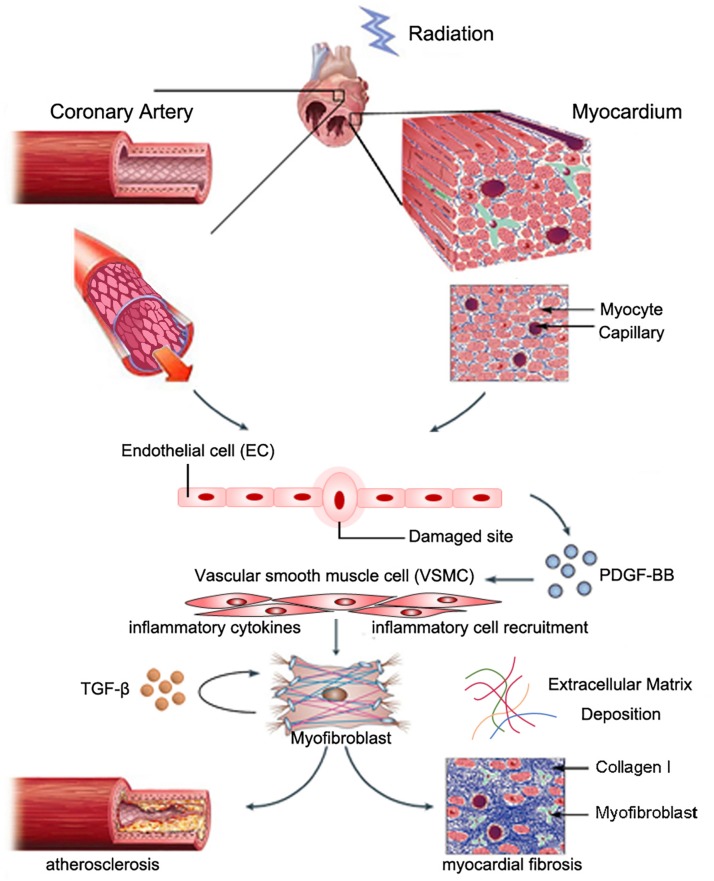
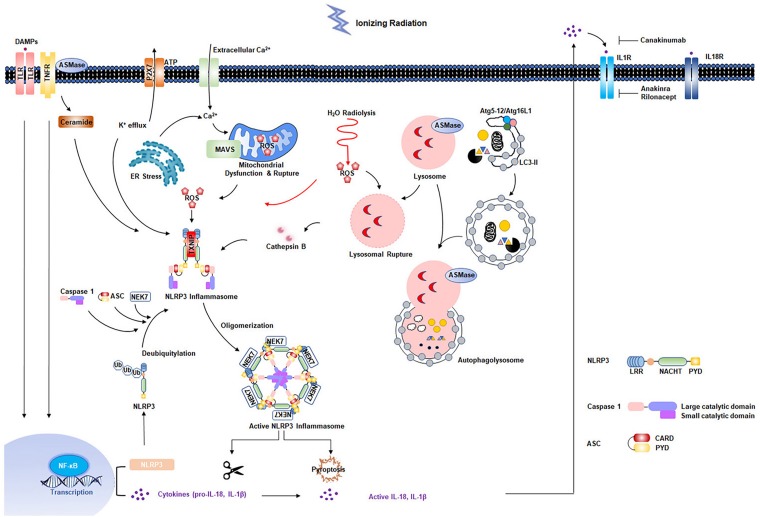
The increasing risk of long-term adverse effects from radiotherapy on the cardiovascular structure is receiving increasing attention. However, the mechanisms underlying this increased risk remain poorly understood. Recently, the nucleotide-binding domain and leucine-rich-repeat-containing family pyrin 3 (NLRP3) inflammasome was suggested to play a critical role in radiation-induced cardiovascular injury. However, the relationship between ionizing radiation and the NLRP3 inflammasome in acute and chronic inflammation is complex. We reviewed literature detailing pathological changes and molecular mechanisms associated with radiation-induced damage to the cardiovascular structure, with a specific focus on NLRP3 inflammasome-related cardiovascular diseases. We also summarized possible therapeutic strategies for the prevention of radiation-induced heart disease (RIHD).
放疗对心血管结构产生长期不良影响的风险日益增加,这一问题正受到越来越多的关注。然而,这种风险增加背后的机制仍知之甚少。最近,有人提出含核苷酸结合结构域和富含亮氨酸重复序列的家族pyrin 3(NLRP3)炎性小体在辐射诱导的心血管损伤中起关键作用。然而,电离辐射与急性和慢性炎症中NLRP3炎性小体之间的关系很复杂。我们回顾了详细阐述与辐射诱导的心血管结构损伤相关的病理变化和分子机制的文献,特别关注与NLRP3炎性小体相关的心血管疾病。我们还总结了预防放射性心脏病(RIHD)的可能治疗策略。