Tandon Kshitij, Baatar Bayanmunkh, Chiang Pei-Wen, Dashdondog Narangarvuu, Oyuntsetseg Bolormaa, Tang Sen-Lin
Biodiversity Research Center, Academia Sinica, Taipei 115, Taiwan.
Bioinformatics Program, Institute of Information Science, Taiwan International Graduate Program, Academia Sinica, Taipei 115, Taiwan.
Microorganisms. 2020 Nov 4;8(11):1729. doi: 10.3390/microorganisms8111729.
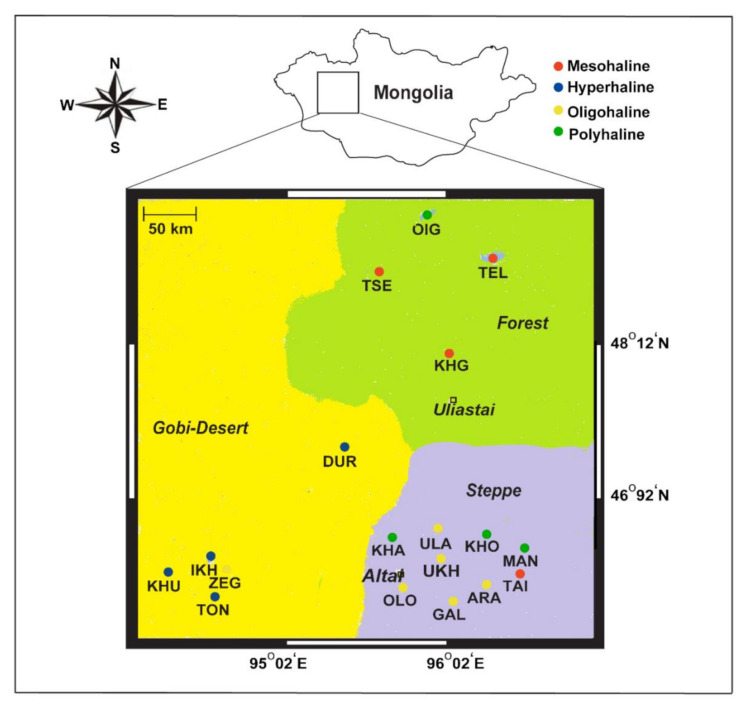
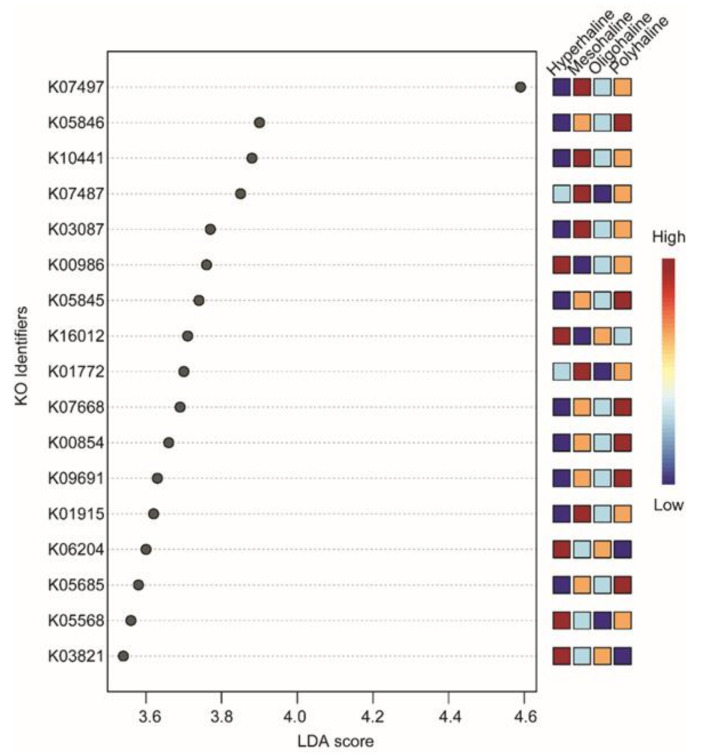
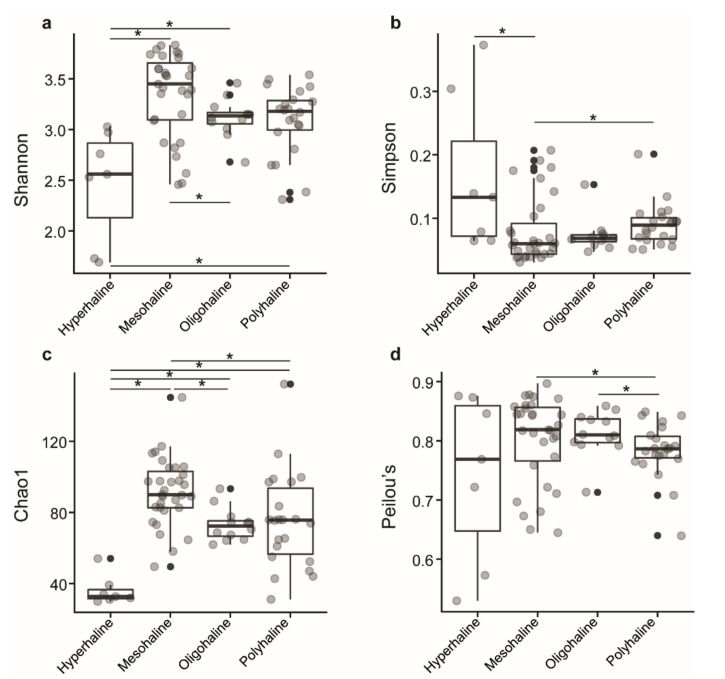
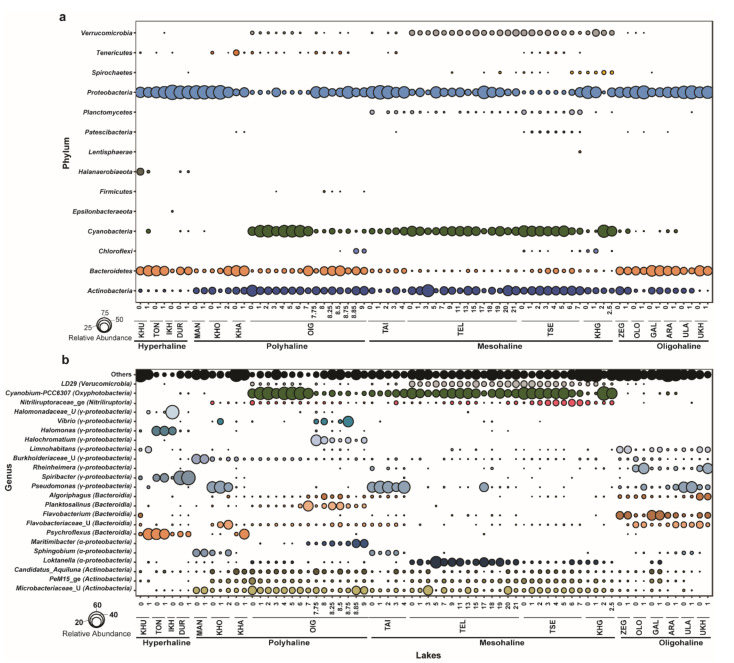
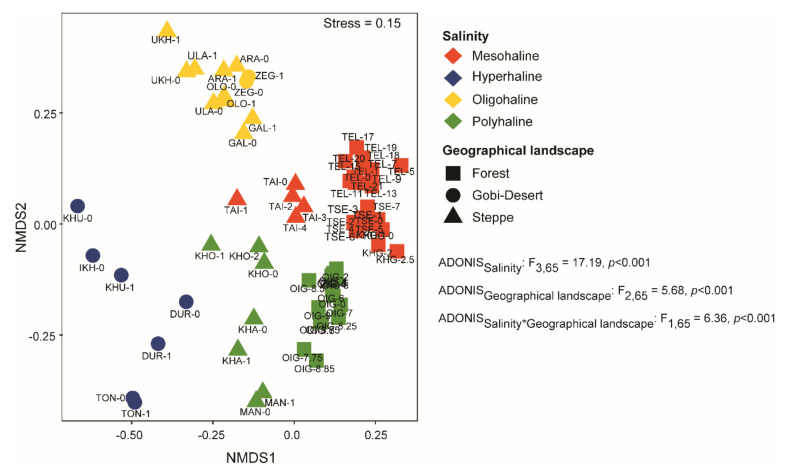
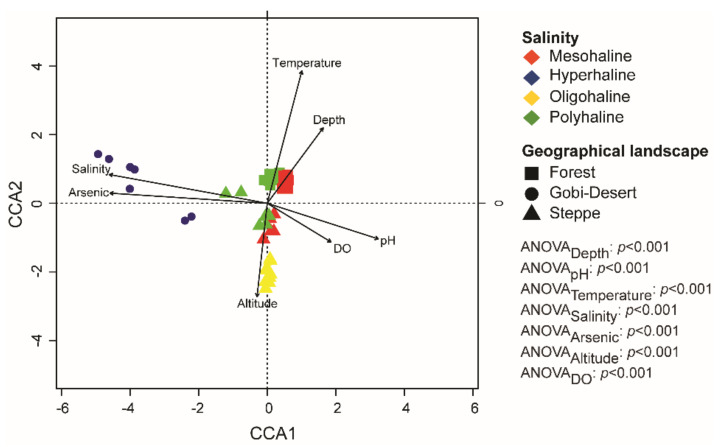
In recent years, climate change coupled with anthropogenic activities has led to monumental changes in saline lakes which are rapidly drying up across the globe and particularly in Central Asia. The landlocked country of Mongolia is rich in lakes which have remained primarily undisturbed by human impact, and many of these lakes have varying salinity regimes and are located across various geographical landscapes. In this study, we sampled 18 lakes with varying salinity regimes (hyperhaline, mesohaline, oligohaline, and polyhaline) covering 7000 km of western Mongolia and its various geographical landscapes (Gobi Desert, forests, and steppe). We identified that the bacterial communities that dominate these lakes are significantly influenced by salinity ( < 0.001) and geographical landscape ( < 0.001). Further, only five zOTUs were shared in all the lakes across the salinity regimes, providing evidence that both local and regional factors govern the community assembly and composition. Furthermore, the bacterial communities of hyperhaline lakes were significantly positively correlated with salinity (ANOVA, < 0.001) and arsenic concentrations (ANOVA, < 0.001), whereas bacterial communities of mesohaline and polyhaline lakes situated in forest and steppe landscapes were positively correlated with temperature (ANOVA, < 0.001) and altitude (ANOVA, < 0.001), respectively. Functional predictions based on the 16S rRNA gene indicated enrichment of KEGG Ontology terms related to transporters for osmoprotection and -regulation. Overall, our study provides a comprehensive view of the bacterial diversity and community composition present in these lakes, which might be lost in the future.
近年来,气候变化与人为活动共同作用,导致盐湖发生了巨大变化,全球范围内的盐湖,尤其是中亚地区的盐湖正在迅速干涸。内陆国家蒙古拥有众多湖泊,这些湖泊基本未受人类活动的影响,其中许多湖泊具有不同的盐度状况,分布在不同的地理景观中。在本研究中,我们对蒙古西部7000公里范围内不同盐度状况(超盐度、中盐度、低盐度和多盐度)的18个湖泊及其不同地理景观(戈壁沙漠、森林和草原)进行了采样。我们发现,主导这些湖泊的细菌群落受盐度(<0.001)和地理景观(<0.001)的显著影响。此外,在所有不同盐度状况的湖泊中,仅共享了五个零运算分类单元(zOTUs),这表明局部和区域因素共同控制着群落的组装和组成。此外,超盐度湖泊的细菌群落与盐度(方差分析,<0.001)和砷浓度(方差分析,<0.001)呈显著正相关,而位于森林和草原景观中的中盐度和多盐度湖泊的细菌群落分别与温度(方差分析,<0.001)和海拔(方差分析,<0.001)呈正相关。基于16S rRNA基因的功能预测表明,与渗透保护和调节转运蛋白相关的京都基因与基因组百科全书(KEGG)本体术语得到了富集。总体而言,我们的研究全面展示了这些湖泊中存在的细菌多样性和群落组成,而这些在未来可能会消失。