Center for Drug Evaluation and Research, U.S. FDA, Silver Spring, MD, USA.
Oak Ridge Institute for Science and Education, Oak Ridge, TN, USA.
NPJ Syst Biol Appl. 2020 Nov 6;6(1):36. doi: 10.1038/s41540-020-00157-3.
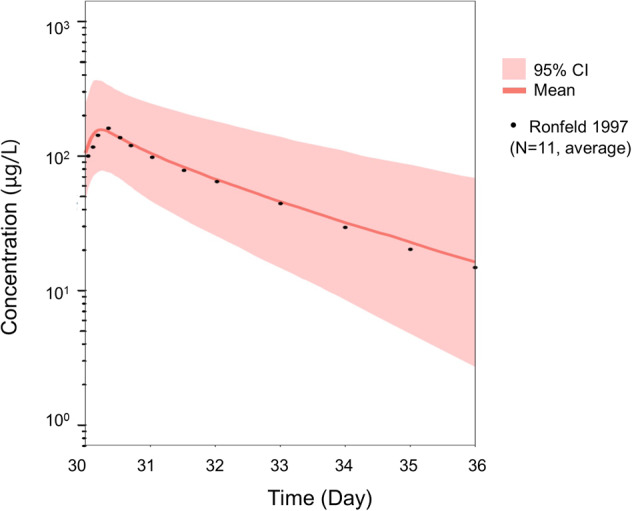
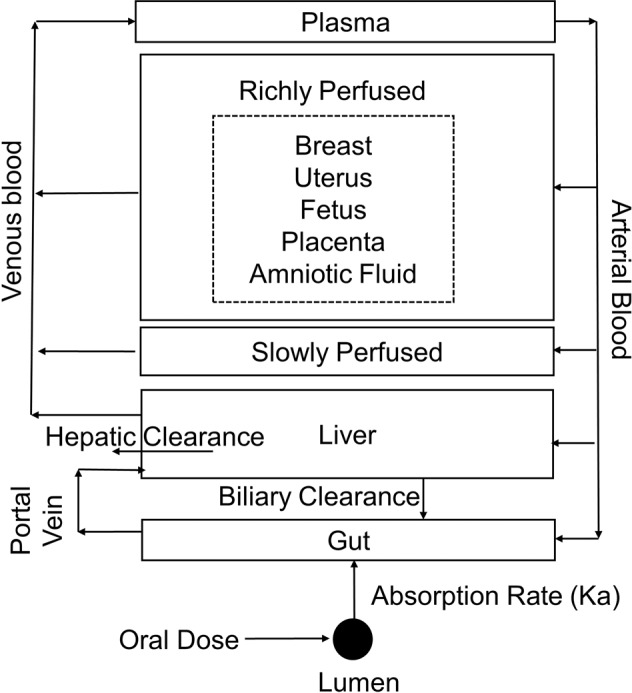
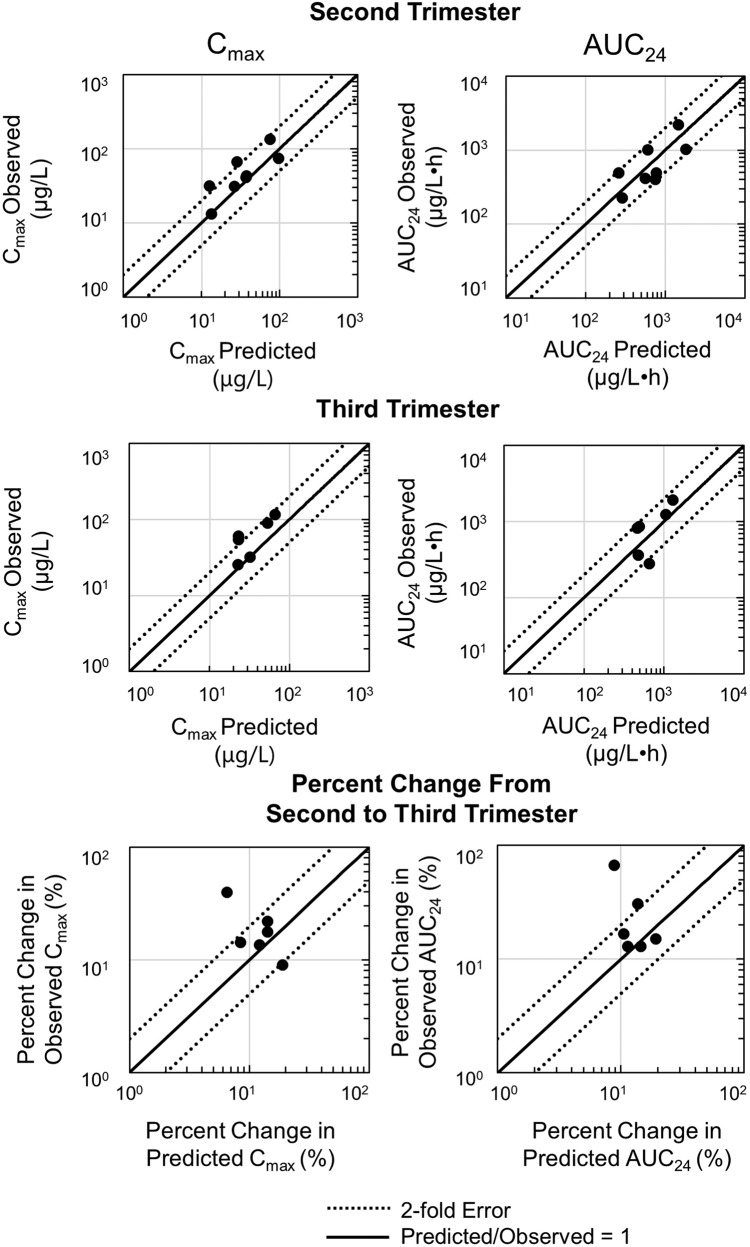
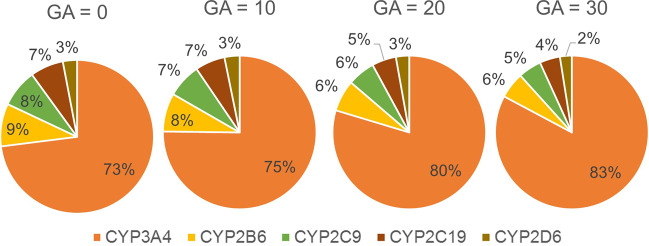
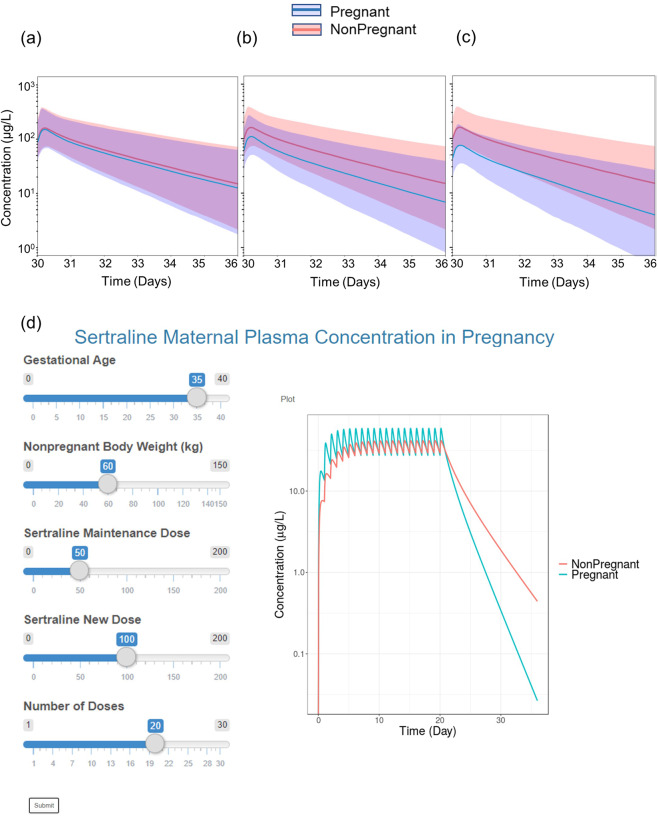
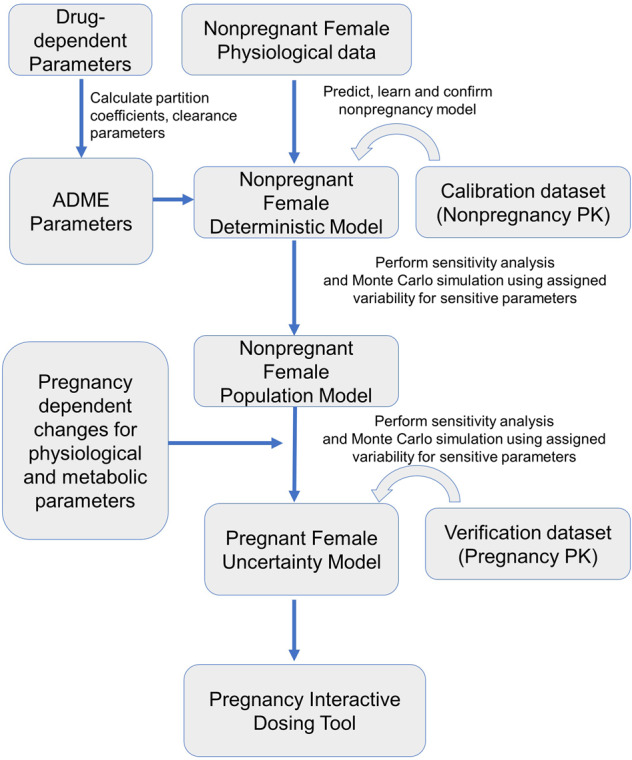
Pregnancy is a period of significant change that impacts physiological and metabolic status leading to alterations in the disposition of drugs. Uncertainty in drug dosing in pregnancy can lead to suboptimal therapy, which can contribute to disease exacerbation. A few studies show there are increased dosing requirements for antidepressants in late pregnancy; however, the quantitative data to guide dose adjustments are sparse. We aimed to develop a physiologically based pharmacokinetic (PBPK) model that allows gestational-age dependent prediction of sertraline dosing in pregnancy. A minimal physiological model with defined gut, liver, plasma, and lumped placental-fetal compartments was constructed using the ordinary differential equation solver package, 'mrgsolve', in R. We extracted data from the literature to parameterize the model, including sertraline physicochemical properties, in vitro metabolism studies, disposition in nonpregnant women, and physiological changes during pregnancy. The model predicted the pharmacokinetic parameters from a clinical study with eight subjects for the second trimester and six subjects for the third trimester. Based on the model, gestational-dependent changes in physiology and metabolism account for increased clearance of sertraline (up to 143% at 40 weeks gestational age), potentially leading to under-dosing of pregnant women when nonpregnancy doses are used. The PBPK model was converted to a prototype web-based interactive dosing tool to demonstrate how the output of a PBPK model may translate into optimal sertraline dosing in pregnancy. Quantitative prediction of drug exposure using PBPK modeling in pregnancy will support clinically appropriate dosing and increase the therapeutic benefit for pregnant women.
妊娠是一个重大变化的时期,会影响生理和代谢状态,导致药物处置发生变化。妊娠期间药物剂量不确定可能导致治疗效果不佳,从而导致疾病恶化。一些研究表明,抗抑郁药在妊娠晚期需要增加剂量;然而,指导剂量调整的定量数据仍然很少。我们旨在开发一种基于生理学的药代动力学(PBPK)模型,该模型允许根据妊娠年龄预测舍曲林在妊娠期间的剂量。使用 R 中的常微分方程求解器包“mrgsolve”构建了一个具有定义的肠道、肝脏、血浆和整体胎盘-胎儿隔室的最小生理模型。我们从文献中提取数据来参数化模型,包括舍曲林的物理化学性质、体外代谢研究、非妊娠女性的处置以及妊娠期间的生理变化。该模型预测了 8 名妊娠中期和 6 名妊娠晚期受试者的临床研究中的药代动力学参数。基于该模型,妊娠期间生理和代谢的妊娠依赖性变化导致舍曲林清除率增加(在 40 周妊娠时高达 143%),当使用非妊娠剂量时,可能导致孕妇用药不足。将 PBPK 模型转换为原型基于网络的交互式给药工具,以展示如何将 PBPK 模型的输出转化为妊娠期间舍曲林的最佳给药剂量。使用 PBPK 模型在妊娠期间定量预测药物暴露将支持临床适当的给药,并提高孕妇的治疗效果。