National Center for Environmental Assessment, US Environmental Protection Agency, Research Triangle Park, North Carolina, United States of America.
National Center for Computational Toxicology, US Environmental Protection Agency, Research Triangle Park, North Carolina, United States of America.
PLoS One. 2019 May 2;14(5):e0215906. doi: 10.1371/journal.pone.0215906. eCollection 2019.
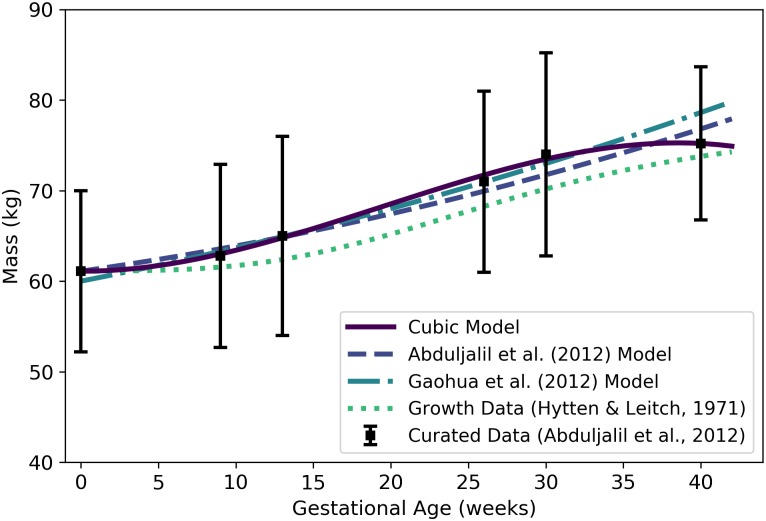
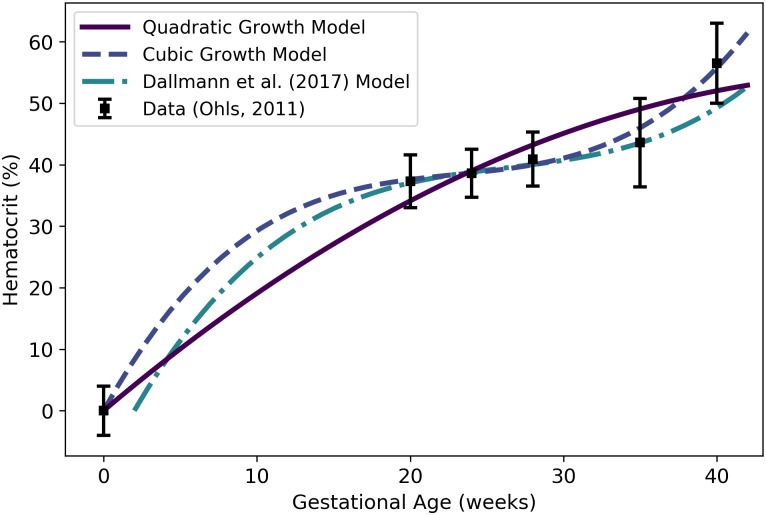
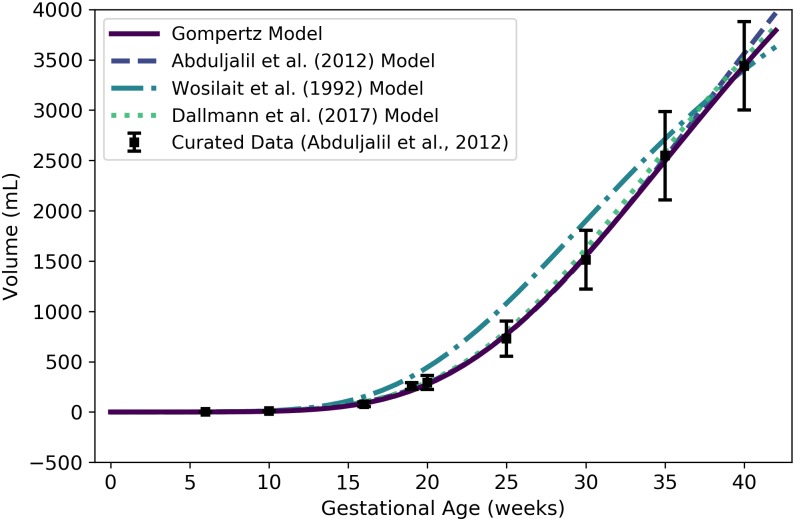
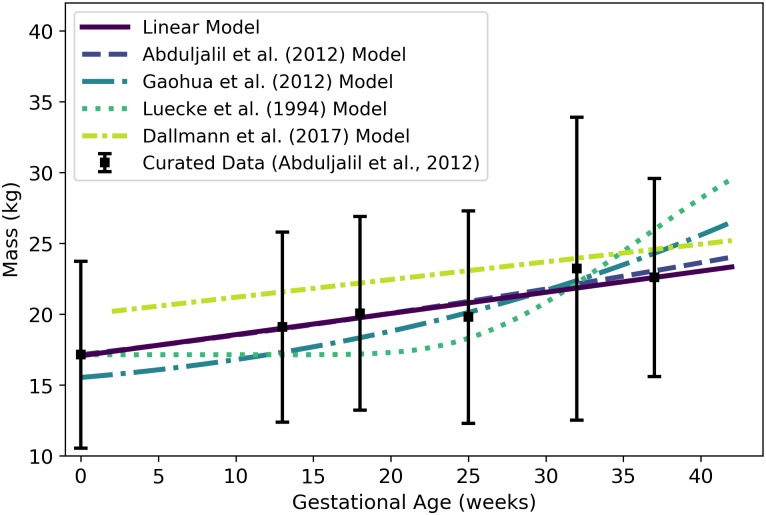
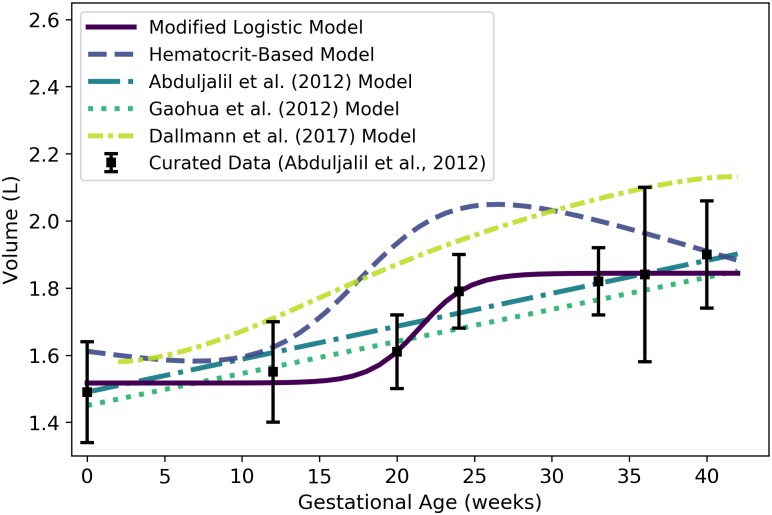
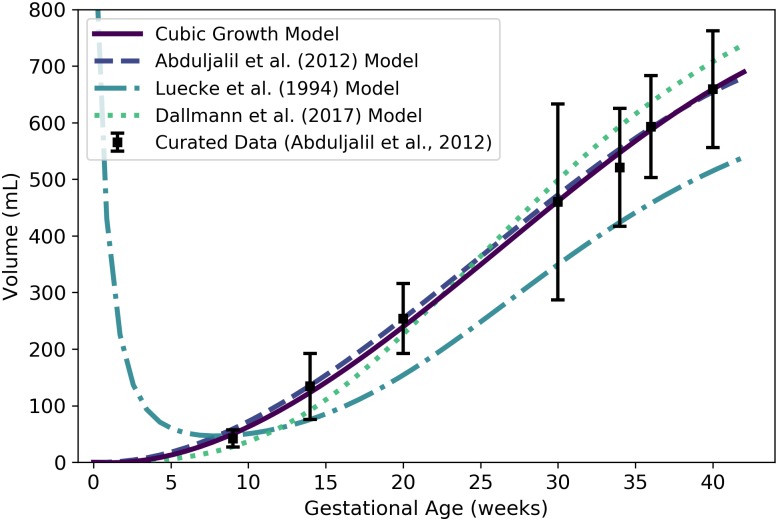
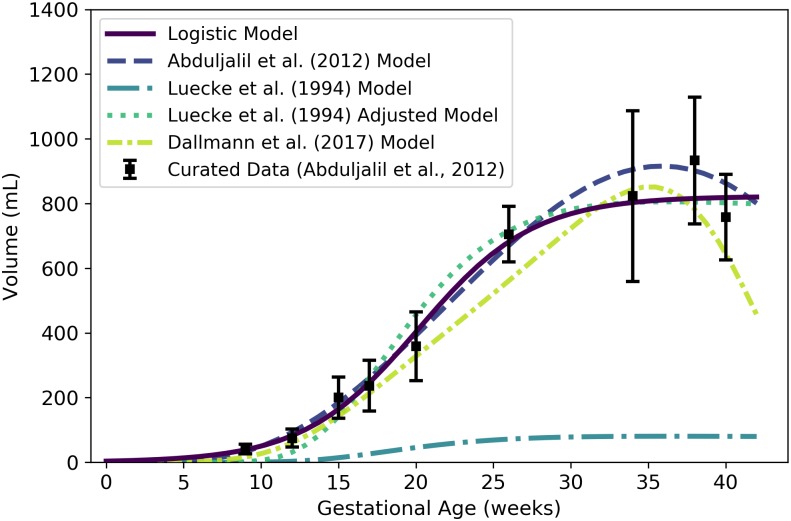
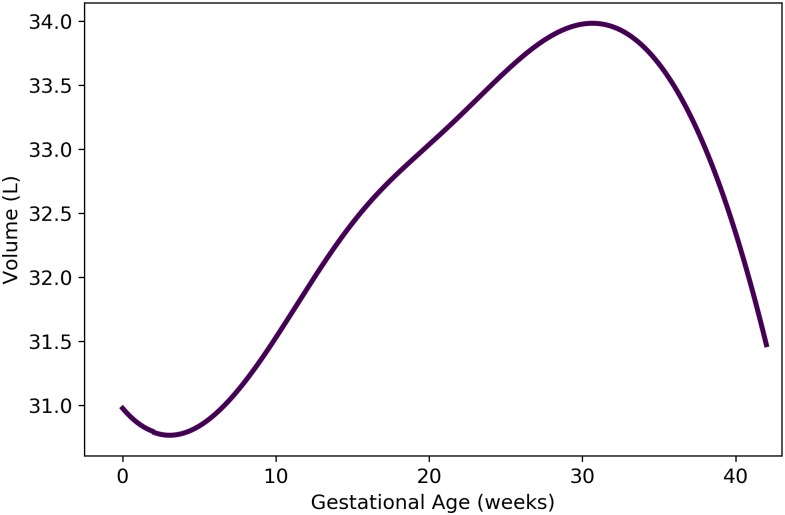
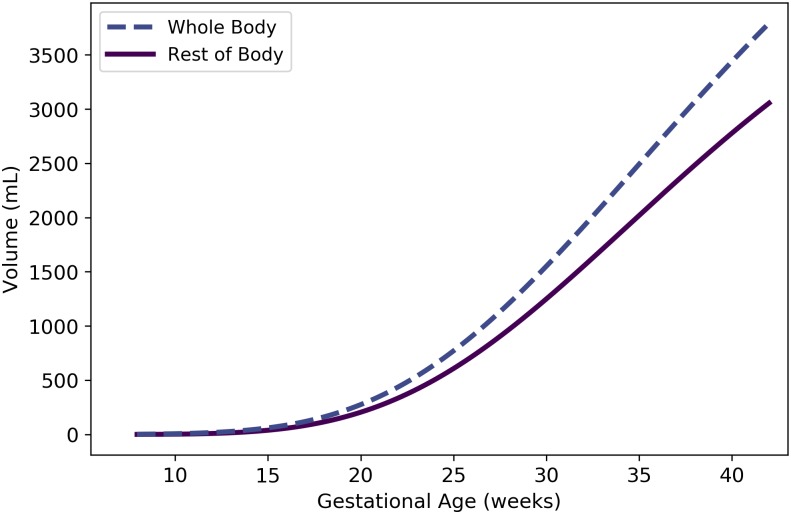
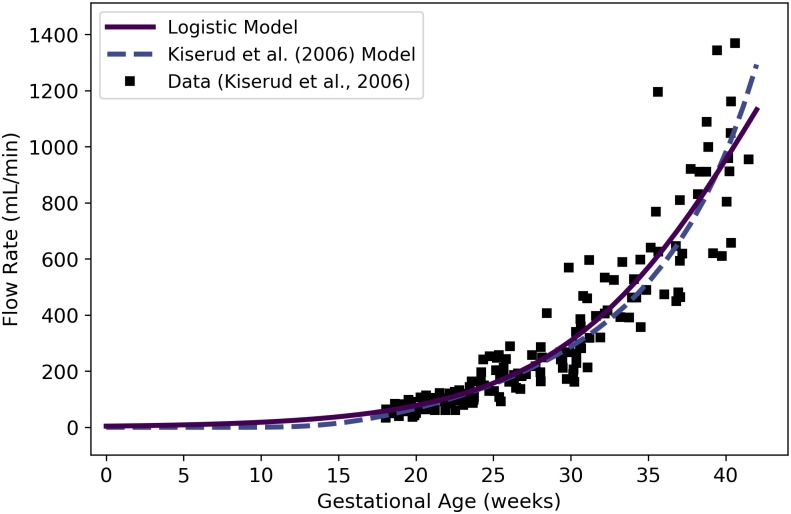
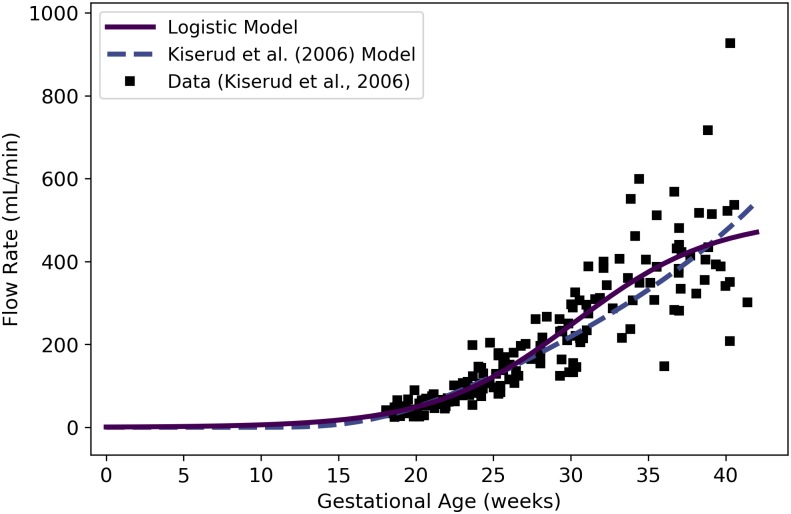
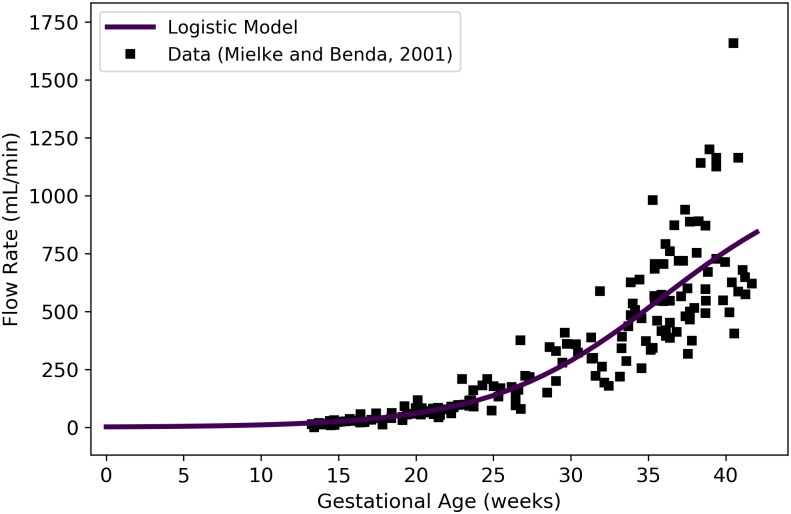
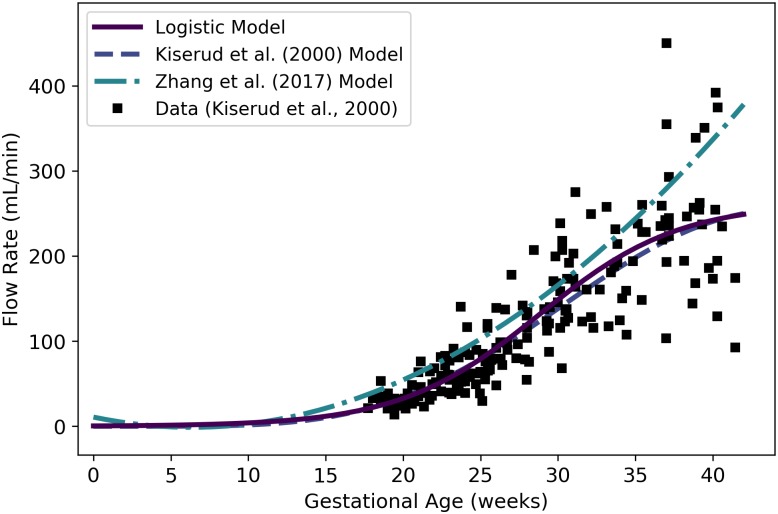
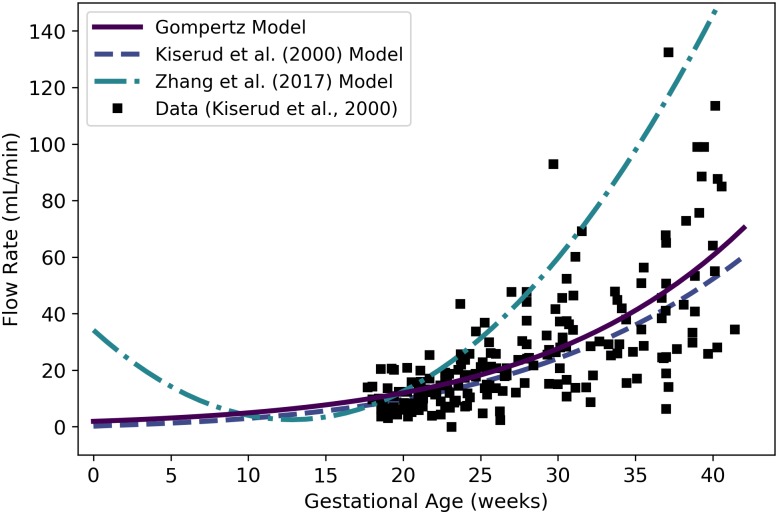
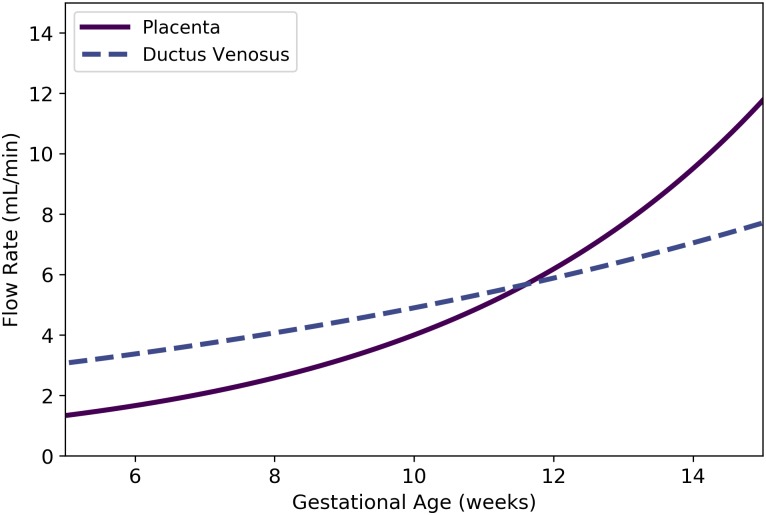
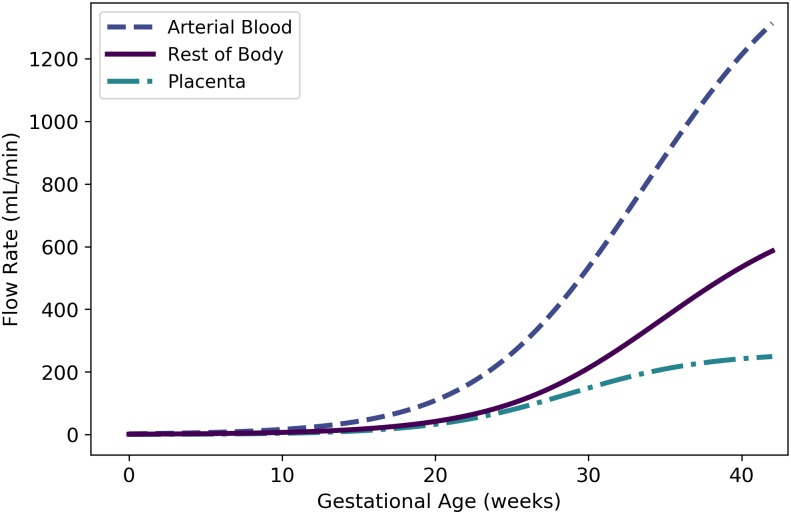
Many parameters treated as constants in traditional physiologically based pharmacokinetic models must be formulated as time-varying quantities when modeling pregnancy and gestation due to the dramatic physiological and anatomical changes that occur during this period. While several collections of empirical models for such parameters have been published, each has shortcomings. We sought to create a repository of empirical models for tissue volumes, blood flow rates, and other quantities that undergo substantial changes in a human mother and her fetus during the time between conception and birth, and to address deficiencies with similar, previously published repositories. We used maximum likelihood estimation to calibrate various models for the time-varying quantities of interest, and then used the Akaike information criterion to select an optimal model for each quantity. For quantities of interest for which time-course data were not available, we constructed composite models using percentages and/or models describing related quantities. In this way, we developed a comprehensive collection of formulae describing parameters essential for constructing a PBPK model of a human mother and her fetus throughout the approximately 40 weeks of pregnancy and gestation. We included models describing blood flow rates through various fetal blood routes that have no counterparts in adults. Our repository of mathematical models for anatomical and physiological quantities of interest provides a basis for PBPK models of human pregnancy and gestation, and as such, it can ultimately be used to support decision-making with respect to optimal pharmacological dosing and risk assessment for pregnant women and their developing fetuses. The views expressed in this article are those of the authors and do not necessarily represent the views or policies of the U.S. Environmental Protection Agency.
许多在传统生理基于药代动力学模型中被视为常数的参数,在对妊娠和孕育进行建模时,必须被表述为随时间变化的量,因为在这期间会发生显著的生理和解剖变化。虽然已经发表了几集关于这些参数的经验模型,但每个模型都有缺点。我们试图为在受孕到分娩期间,人类母亲及其胎儿体内经历显著变化的组织体积、血流速率和其他数量,创建一个经验模型库,并解决之前发布的类似模型库存在的缺陷。我们使用最大似然估计法对感兴趣的随时间变化的各种数量进行校准,然后使用赤池信息量准则(Akaike information criterion)为每个数量选择一个最佳模型。对于没有时间过程数据的感兴趣数量,我们使用百分比和/或描述相关数量的模型来构建复合模型。通过这种方式,我们开发了一套全面的公式集,描述了构建人类母亲及其胎儿在整个大约 40 周妊娠和孕育期间的 PBPK 模型所需的参数。我们还包括了描述各种胎儿血液途径血流速率的模型,这些模型在成人中没有对应物。我们的感兴趣的解剖学和生理学数量的数学模型库为人类妊娠和孕育的 PBPK 模型提供了基础,因此,它最终可以用于支持对孕妇及其发育中的胎儿进行最佳药物剂量和风险评估的决策。本文表达的观点仅代表作者的观点,不一定代表美国环境保护署的观点或政策。