Department of Immunology & National Key Laboratory of Medical Molecular Biology, Institute of Basic Medical Sciences, Chinese Academy of Medical Sciences (CAMS) & Peking Union Medical College, Beijing, 100005, China.
Clinical Immunology Center, CAMS, Beijing, 100005, China.
Cell Res. 2020 Dec;30(12):1078-1087. doi: 10.1038/s41422-020-00435-z. Epub 2020 Nov 6.
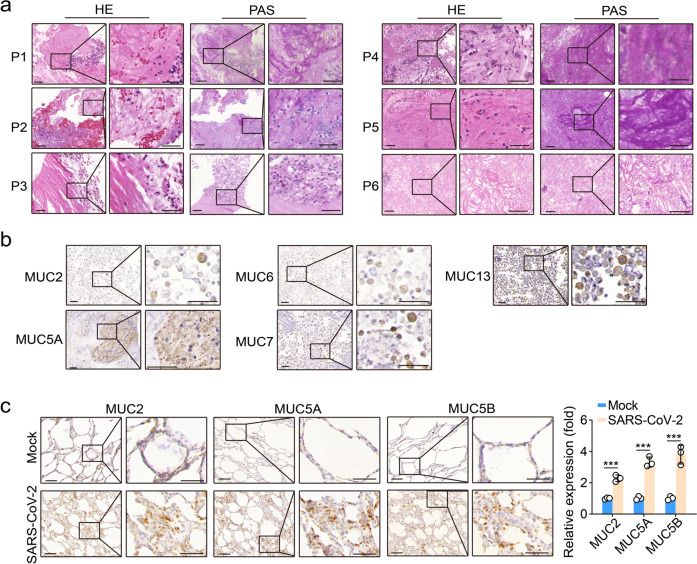
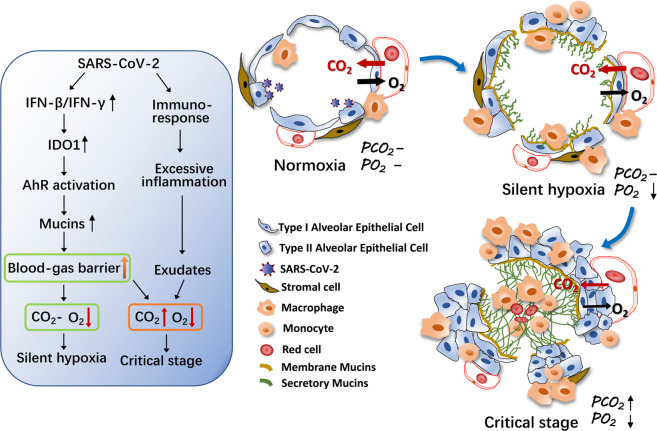
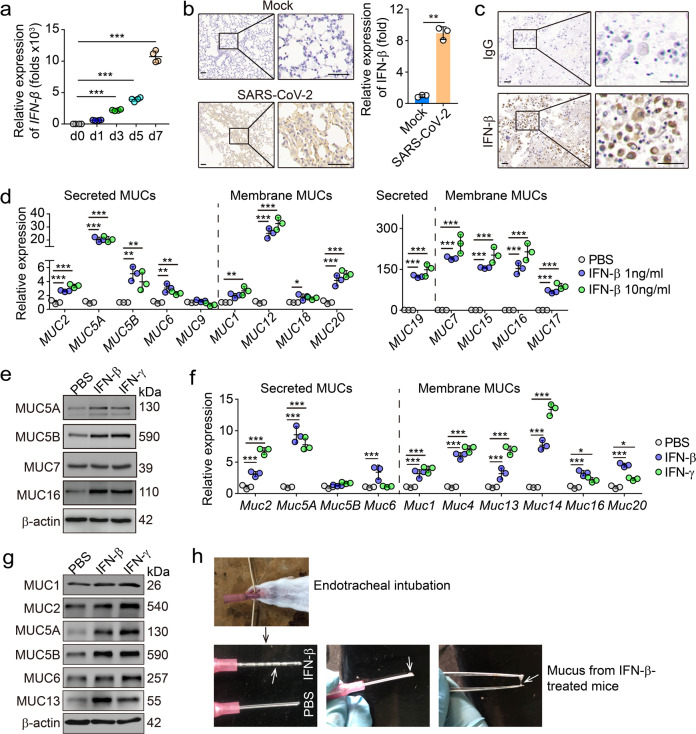
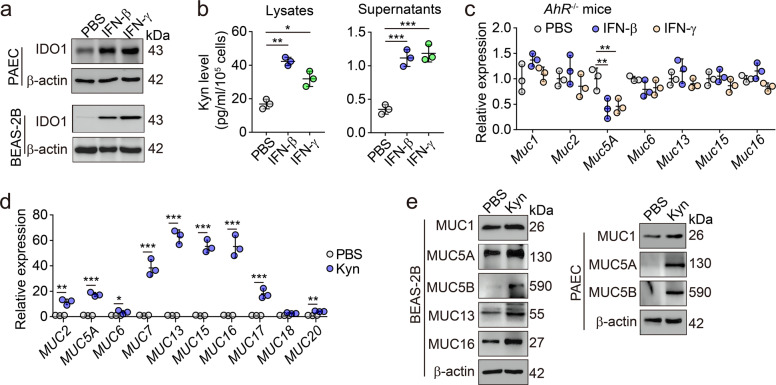
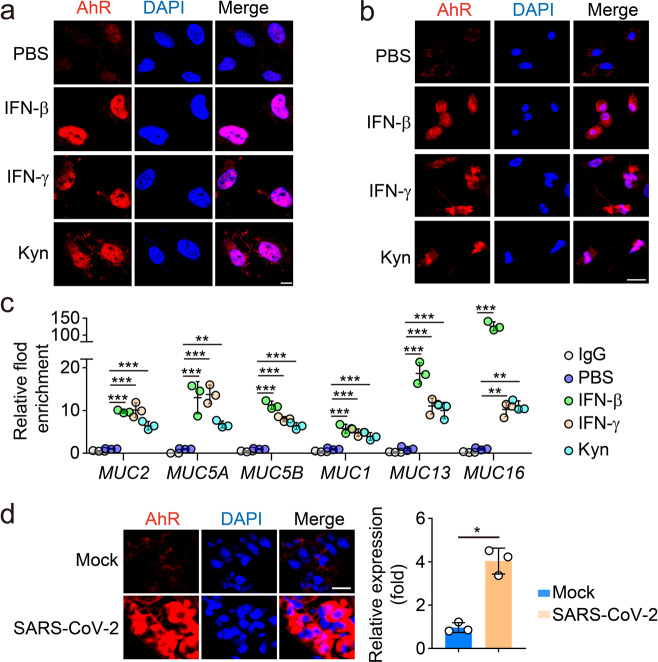
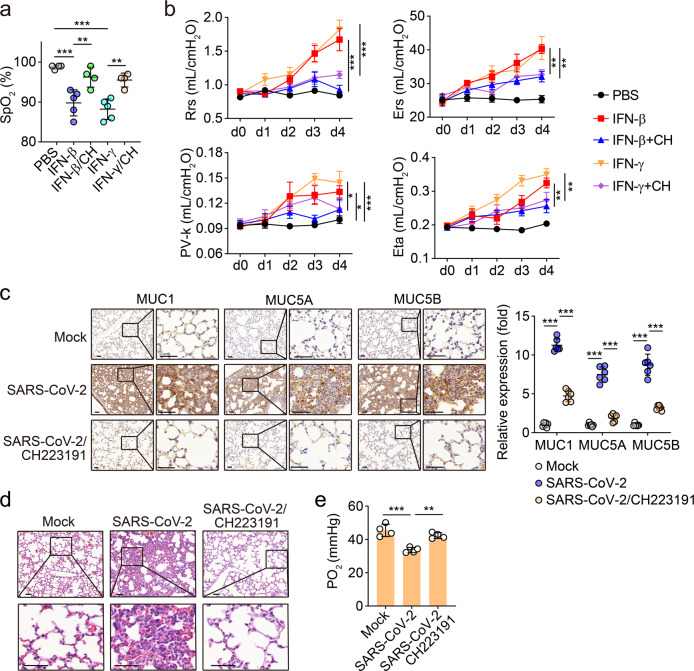
Silent hypoxia has emerged as a unique feature of coronavirus disease 2019 (COVID-19). In this study, we show that mucins are accumulated in the bronchoalveolar lavage fluid (BALF) of COVID-19 patients and are upregulated in the lungs of severe respiratory syndrome coronavirus 2 (SARS-CoV-2)-infected mice and macaques. We find that induction of either interferon (IFN)-β or IFN-γ upon SARS-CoV-2 infection results in activation of aryl hydrocarbon receptor (AhR) signaling through an IDO-Kyn-dependent pathway, leading to transcriptional upregulation of the expression of mucins, both the secreted and membrane-bound, in alveolar epithelial cells. Consequently, accumulated alveolar mucus affects the blood-gas barrier, thus inducing hypoxia and diminishing lung capacity, which can be reversed by blocking AhR activity. These findings potentially explain the silent hypoxia formation in COVID-19 patients, and suggest a possible intervention strategy by targeting the AhR pathway.
沉默性低氧血症已成为 2019 年冠状病毒病(COVID-19)的一个独特特征。在这项研究中,我们表明黏蛋白在 COVID-19 患者的支气管肺泡灌洗液(BALF)中积累,并在严重呼吸综合征冠状病毒 2(SARS-CoV-2)感染的小鼠和猕猴的肺部中上调。我们发现,SARS-CoV-2 感染后诱导干扰素(IFN)-β或 IFN-γ,通过 IDO-Kyn 依赖性途径导致芳香烃受体(AhR)信号的激活,从而导致肺泡上皮细胞中黏蛋白的分泌型和膜结合型的转录上调。因此,积累的肺泡黏液会影响血气屏障,从而导致低氧血症和肺容量减少,而通过阻断 AhR 活性可以逆转这种情况。这些发现可能解释了 COVID-19 患者沉默性低氧血症的形成,并提示通过靶向 AhR 途径可能是一种潜在的干预策略。