Department of Emergency Medicine, University of Maryland School of Medicine, Baltimore, MD, United States of America.
Department of Emergency Medicine, University of Maryland School of Medicine, Baltimore, MD, United States of America.
Am J Emerg Med. 2020 Oct;38(10):2243.e5-2243.e6. doi: 10.1016/j.ajem.2020.05.044. Epub 2020 May 22.
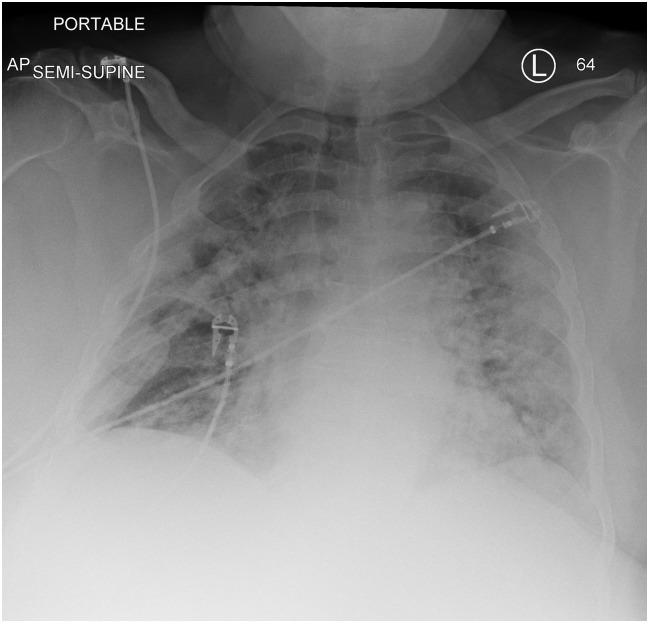
Patients infected with the SARS-CoV-2 virus can present with a wide variety of symptoms including being entirely asymptomatic. Despite having no or minimal symptoms, some patients may have markedly reduced pulse oximetry readings. This has been referred to as "silent" or "apathetic" hypoxia (Ottestad et al., 2020 [1]). We present a case of a 72-year-old male with COVID-19 syndrome who presented to the emergency department with minimal symptoms but low peripheral oxygen saturation readings. The patient deteriorated over the following days and eventually died as a result of overwhelming multi-organ system failure. This case highlights the utility of peripheral oxygen measurements in the evaluation of patients with SARS-CoV-2 infection. Self-monitoring of pulse oximetry by patients discharged from the emergency department is a potential way to identify patients needing to return for further evaluation.
感染 SARS-CoV-2 病毒的患者可能出现各种症状,包括完全无症状。尽管没有或仅有轻微的症状,一些患者的脉搏血氧饱和度读数可能明显降低。这被称为“无声”或“冷漠”性缺氧(Ottestad 等人,2020 [1])。我们报告了一例 COVID-19 综合征的 72 岁男性患者,他因症状轻微但外周血氧饱和度读数低而到急诊就诊。患者在接下来的几天里病情恶化,最终因多器官系统衰竭而死亡。该病例强调了外周血氧测量在评估 SARS-CoV-2 感染患者中的效用。从急诊出院的患者自行监测脉搏血氧饱和度可能是识别需要返回进一步评估的患者的一种方法。