Colorectal Cancer Group, ONCOBELL Program, Bellvitge Biomedical Research Institute (IDIBELL), Hospitalet de Llobregat, Avinguda de La Granvia de L'Hospitalet, 199, 08908, Barcelona, Spain.
Unit of Biomarkers and Susceptibility, Oncology Data Analytics Program, Catalan Institute of Oncology (ICO). Hospitalet de Llobregat, Barcelona, Spain.
Sci Rep. 2020 Nov 6;10(1):19273. doi: 10.1038/s41598-020-76361-2.
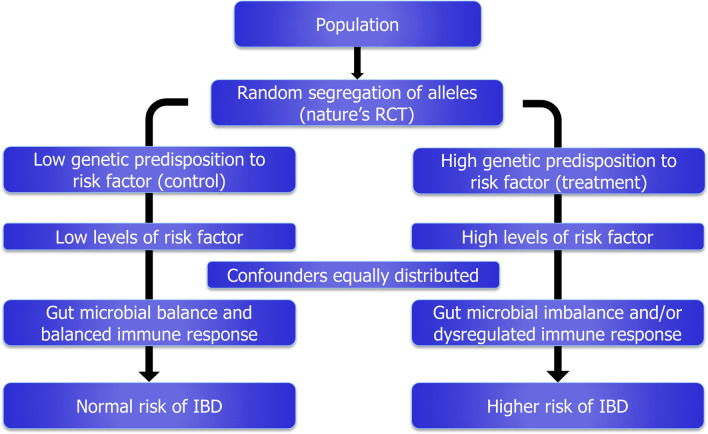
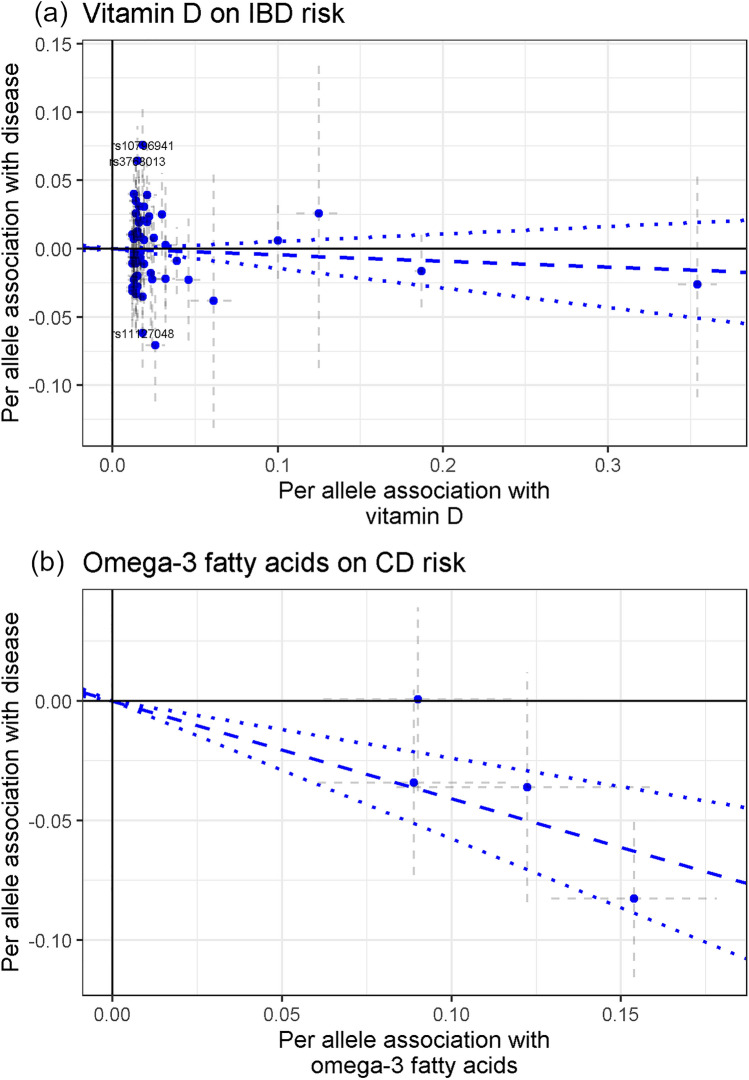
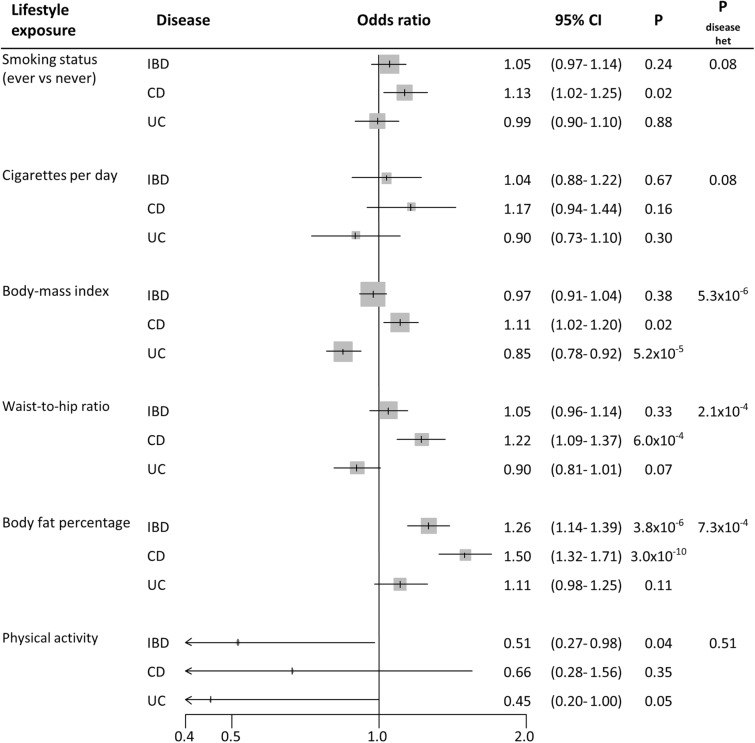
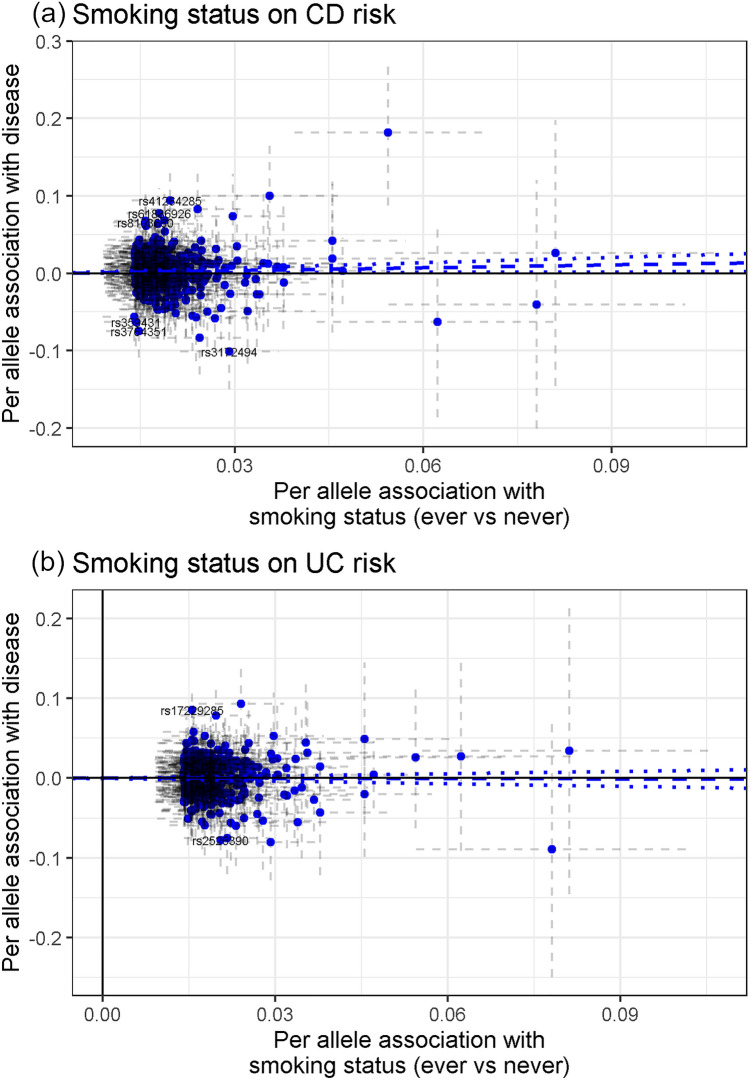
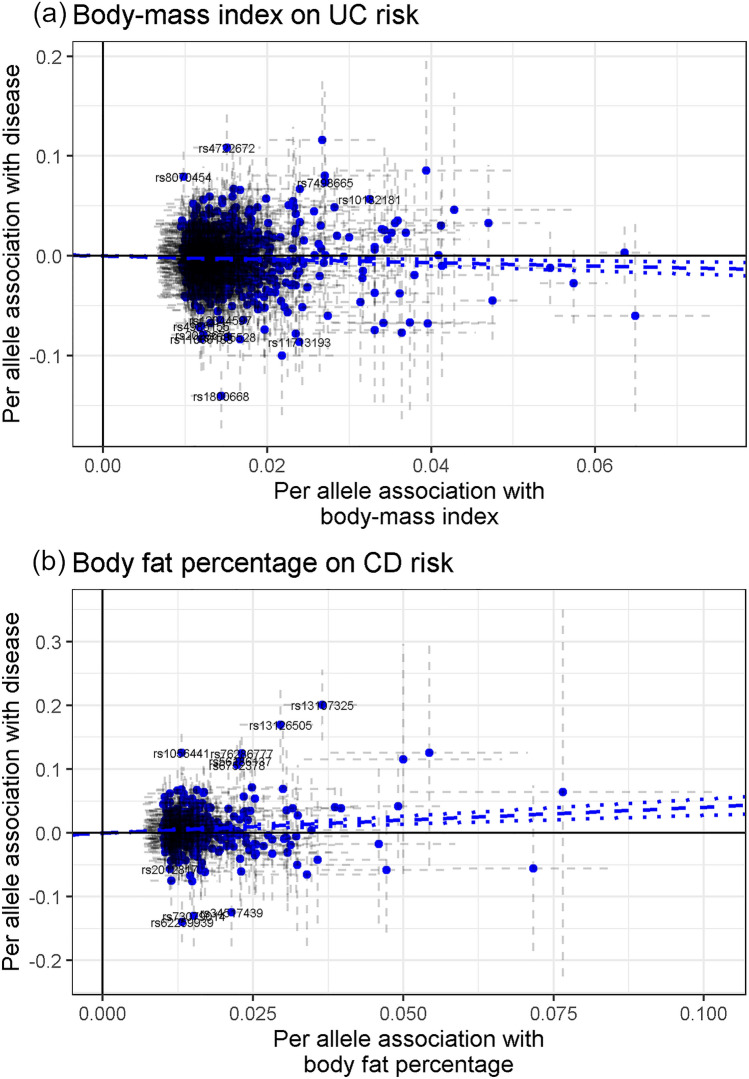
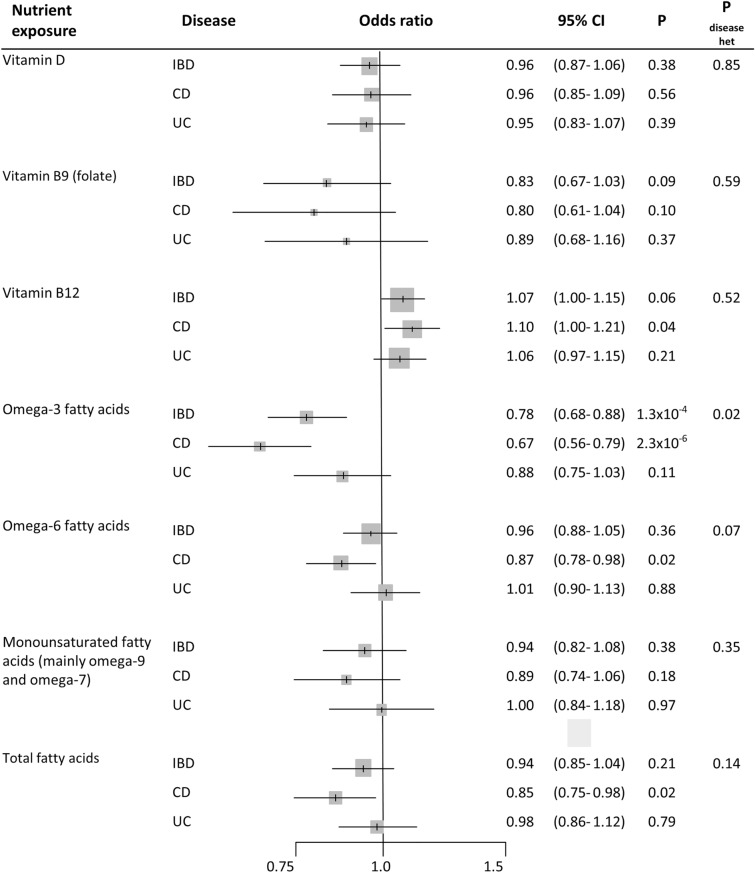
Several studies have examined environmental factors and inflammatory bowel diseases (IBD) using traditional approaches; however, provided results are still conflicting. Our aim was to determine whether lifestyle and nutrient exposures, related to IBD in observational meta-analyses, influence IBD risk using a Mendelian randomization (MR) approach. A two-sample MR approach was applied on summary-level genome-wide association results. Genetic variants strongly associated with measures of tobacco smoking, obesity and fat distribution, physical activity, and blood levels of vitamins and fatty acids were evaluated on genetic data from international IBD consortia including a total of 25,042 IBD cases (12,194 cases of Crohn's disease (CD) and 12,366 cases of ulcerative colitis (UC)) and 34,915 controls. Our results indicated that, among lifestyle exposures, being a smoker was positively associated with CD (OR 1.13, P = 0.02), but it was not associated with UC risk (OR 0.99, P = 0.88). Body-mass index (BMI) and body fat percentage were positively associated with CD (OR 1.11, P = 0.02, per standard deviation (SD) of 4.6 kg/m; and OR 1.50, P = 3 × 10, per SD of 6.6%; respectively); while for UC, BMI was inversely associated (OR 0.85, P = 5 × 10; per SD) and body fat percentage showed a OR of 1.11 (P = 0.11; per SD). Additionally, among nutrient exposures, omega-3 fatty acids levels were inversely associated with CD (OR 0.67, P = 2 × 10). Our MR results did not support a protective effect for being a smoker on UC risk; however, they are compatible with a risk effect for higher body fat proportion and a protective role for higher levels of omega-3 fatty acids on CD etiology.
几项研究使用传统方法检查了环境因素和炎症性肠病(IBD);然而,结果仍然存在冲突。我们的目的是确定在观察性荟萃分析中与 IBD 相关的生活方式和营养暴露是否会通过孟德尔随机化(MR)方法影响 IBD 风险。应用两样本 MR 方法对全基因组关联结果进行汇总分析。在来自国际 IBD 联盟的遗传数据中评估了与吸烟、肥胖和脂肪分布、体力活动以及维生素和脂肪酸血液水平密切相关的遗传变异,该联盟包括 25042 例 IBD 病例(12194 例克罗恩病(CD)和 12366 例溃疡性结肠炎(UC))和 34915 例对照。我们的结果表明,在生活方式暴露中,吸烟与 CD 呈正相关(OR 1.13,P = 0.02),但与 UC 风险无关(OR 0.99,P = 0.88)。体重指数(BMI)和体脂肪百分比与 CD 呈正相关(OR 1.11,P = 0.02,每 4.6kg/m 的标准偏差(SD);OR 1.50,P = 3 × 10 ,每 6.6% SD;分别);而对于 UC,BMI 呈负相关(OR 0.85,P = 5 × 10;每 SD),体脂肪百分比的 OR 为 1.11(P = 0.11;每 SD)。此外,在营养暴露中,ω-3 脂肪酸水平与 CD 呈负相关(OR 0.67,P = 2 × 10)。我们的 MR 结果不支持吸烟对 UC 风险的保护作用;然而,它们与较高体脂肪比例的风险作用以及较高水平的 ω-3 脂肪酸对 CD 病因学的保护作用是一致的。