Department of Gastroenterology, Nanfang Hospital, Southern Medical University, Guangzhou 510515, China.
Nutrients. 2022 Jul 14;14(14):2883. doi: 10.3390/nu14142883.
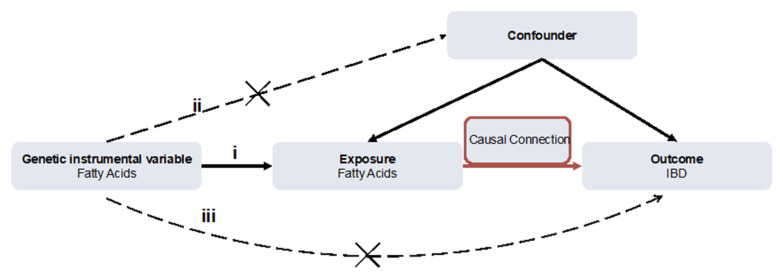
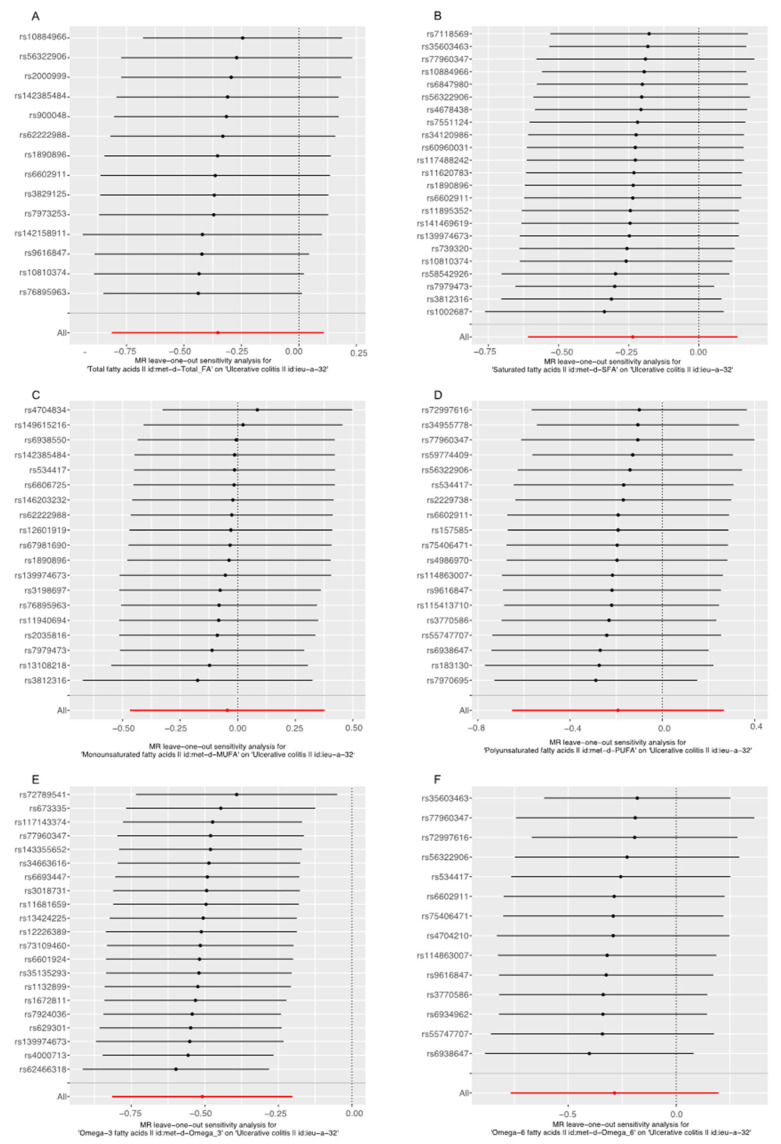
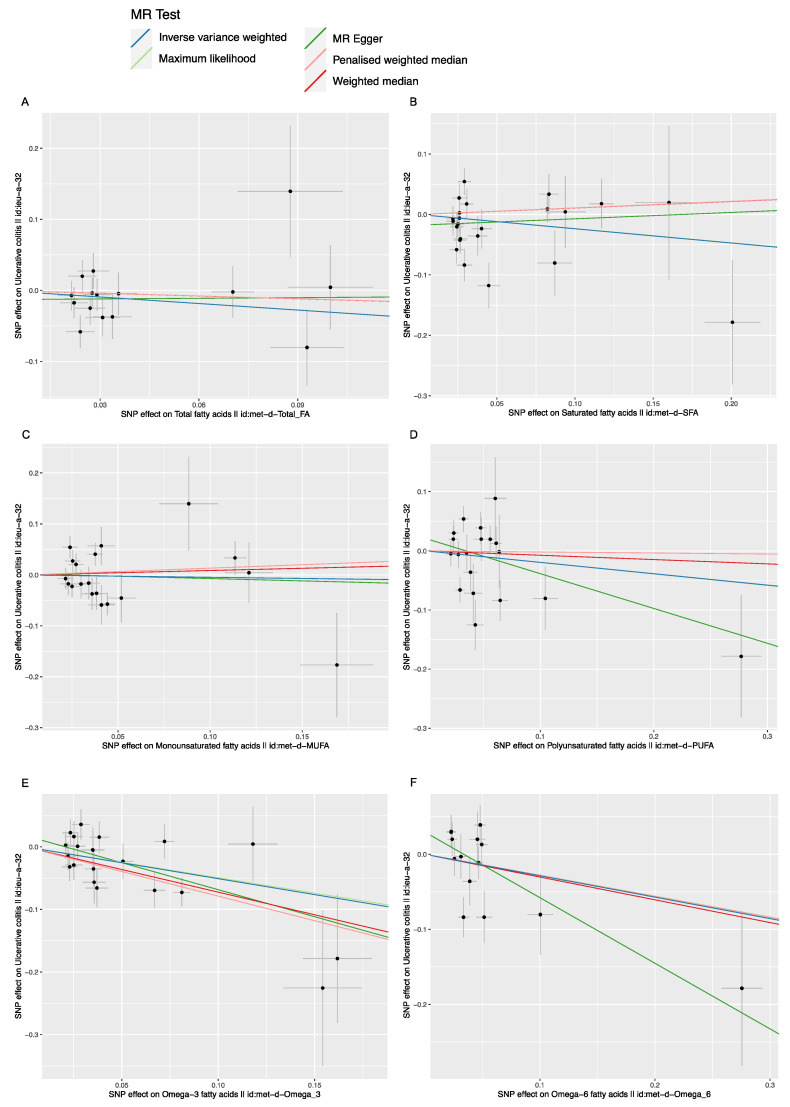
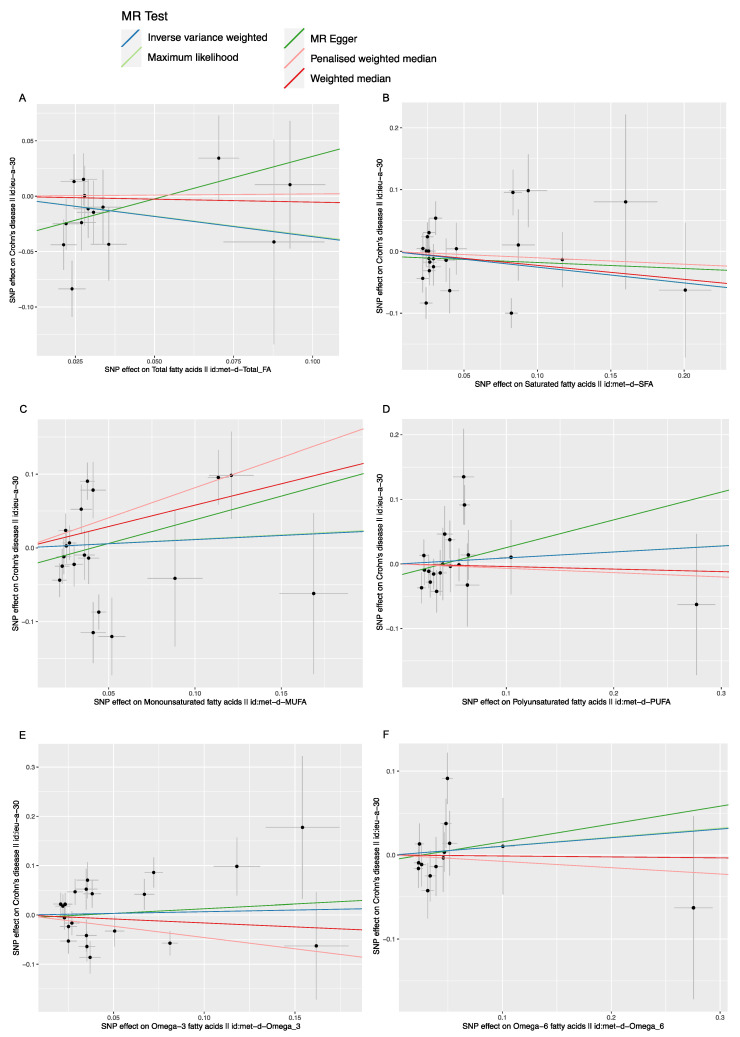
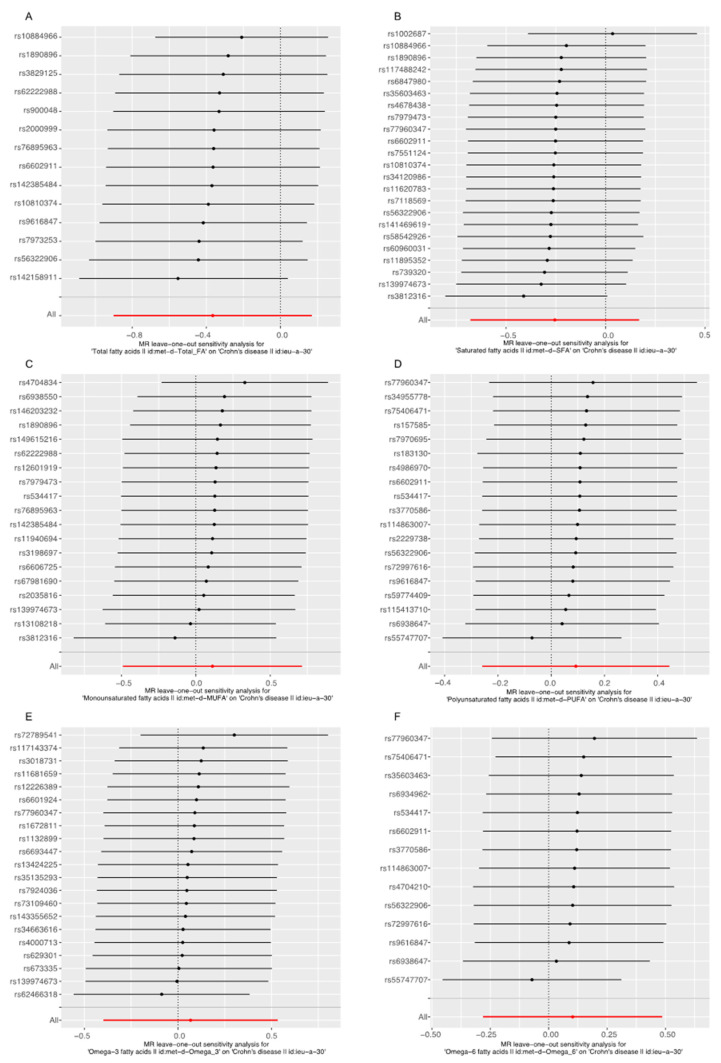
Inflammatory Bowel Disease (IBD) is a severe relapsing inflammation of the gastrointestinal tract. The association between fatty acids (FAs) and IBD is controversial and it remains unclear whether there is a causal relationship between them. Mendelian randomization (MR) analysis was province/state for affiliations from the same country performed to clarify the causality. Eligible single nucleotide polymorphisms were selected as instrumental variables from six Genome-wide association studies, involving 114,999 individuals in UK Biobank. The summary-level data on IBD, including Crohn's disease (CD) and ulcerative colitis (UC), were obtained from the International Inflammatory Bowel Disease Genetics Consortium with 20,883 and 27,432 individuals involved. The primary inverse variance weighted (IVW) method as well as other supplementary analysis ones were adopted to evaluate the causal relationship between diverse FAs and IBD. The tests for heterogeneity and pleiotropy, and Leave-one-out analysis were adopted to verify the stability of the results. Omega-3 FA was found to have a causal effect on UC instead of CD. For each Standard Deviation increase in Omega-3 FA genetic levels, the risk of ulcerative colitis was found to be reduced by 39.9% by the IVW method ( = 1.766 × 10), by 57.8% by the MR Egger ( = 1.11 × 10), by 51.5% by the Weighted median estimator ( = 7.706 × 10), by 39% by the Maximum likelihood estimation ( = 3.262 × 10), and by 54.5% by the penalized weighted median estimator ( = 1.628 × 10). No causal relationship was found between other FAs (including total FA, saturated FA, polyunsaturated FA, monounsaturated FA and omega-6 FA) and IBD. The pleiotropic test and Leave-one-out analysis both proved the validity and reliability of these MR analyses. Omega-3 FA was observed to have a protective effect against UC, providing a new perspective on the investigation of the associations between FAs and IBD.
炎症性肠病(IBD)是一种严重的胃肠道反复发作的炎症。脂肪酸(FAs)与 IBD 之间的关联存在争议,目前尚不清楚它们之间是否存在因果关系。孟德尔随机化(MR)分析是为了阐明因果关系而在具有相同国籍的省/州之间进行的。从 UK Biobank 中涉及 114999 个人的六项全基因组关联研究中选择单核苷酸多态性作为工具变量。IBD(包括克罗恩病(CD)和溃疡性结肠炎(UC))的汇总水平数据来自国际炎症性肠病遗传学联合会,涉及 20883 人和 27432 人。采用主要逆方差加权(IVW)方法和其他补充分析方法来评估不同 FAs 与 IBD 之间的因果关系。采用异质性和多效性检验以及遗漏值分析来验证结果的稳定性。发现 ω-3 FA 对 UC 而不是 CD 具有因果作用。通过 IVW 方法发现,ω-3 FA 遗传水平每增加一个标准差,溃疡性结肠炎的风险降低 39.9%( = 1.766×10),通过 MR Egger 降低 57.8%( = 1.11×10),通过加权中位数估计值降低 51.5%( = 7.706×10),通过最大似然估计降低 39%( = 3.262×10),通过惩罚加权中位数估计降低 54.5%( = 1.628×10)。其他 FAs(包括总 FA、饱和 FA、多不饱和 FA、单不饱和 FA 和 ω-6 FA)与 IBD 之间没有发现因果关系。多效性检验和遗漏值分析均证明了这些 MR 分析的有效性和可靠性。发现 ω-3 FA 对 UC 具有保护作用,为研究 FAs 与 IBD 之间的关联提供了新视角。