Alarim Raghad A, Alasmre Faris A, Alotaibi Hammam A, Alshehri Mohammed A, Hussain Sara A
Internal Medicine, King Khalid University, Abha, SAU.
Research, Prince Sultan Military Medical City, Riyadh, SAU.
Cureus. 2020 Oct 5;12(10):e10796. doi: 10.7759/cureus.10796.
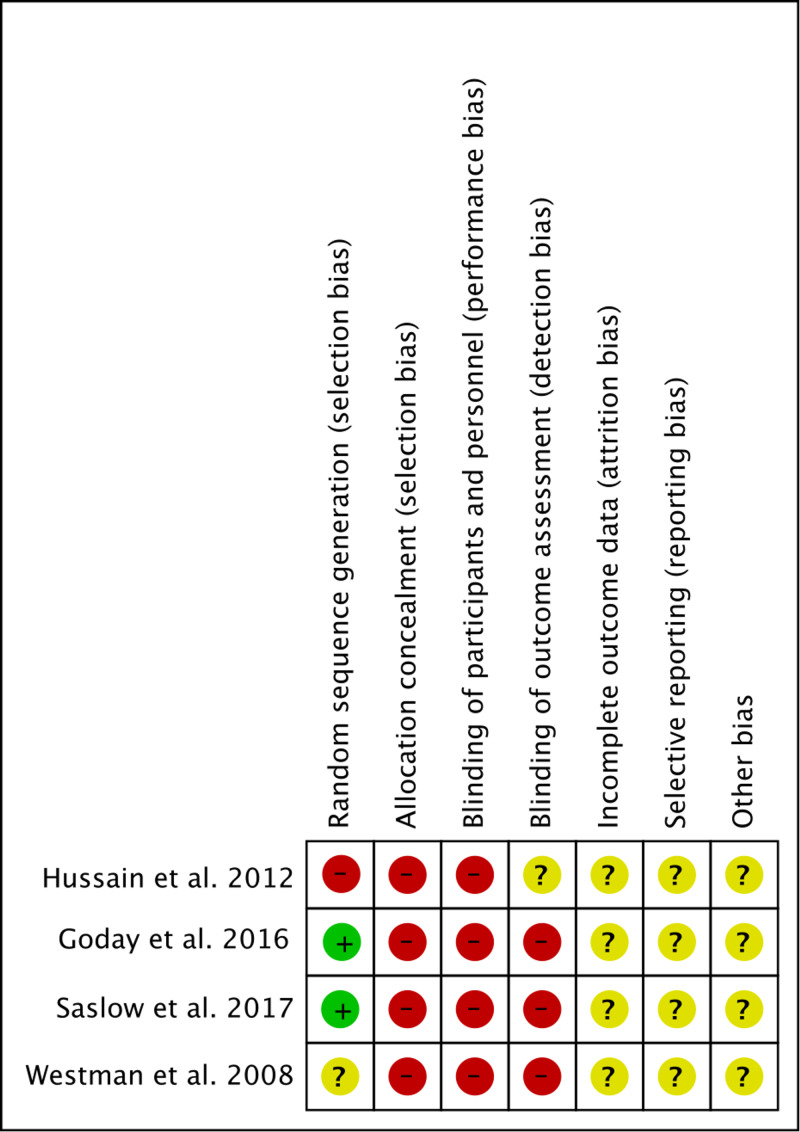
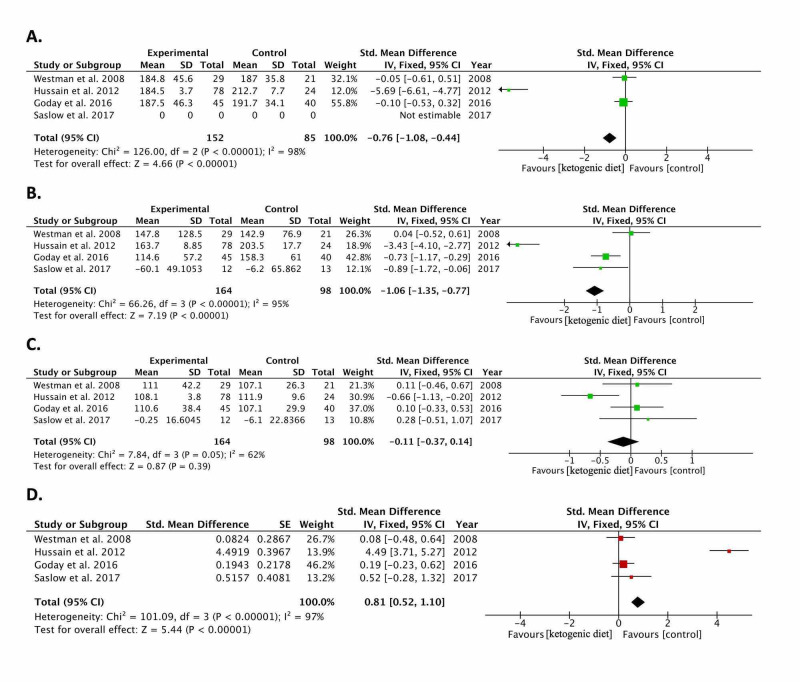
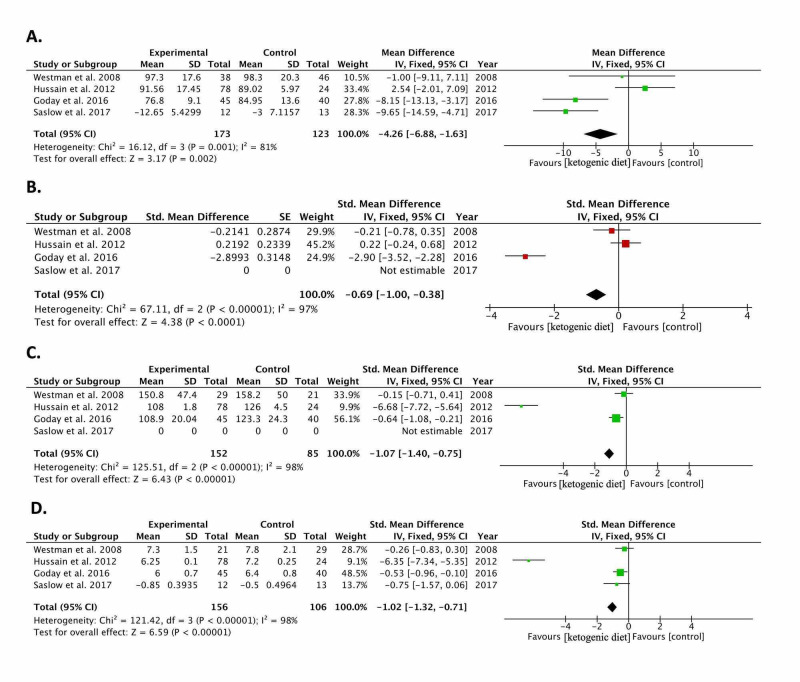
Introduction The ketogenic diet is a diet that relies on reducing carbohydrate intake to a minimum while increasing fat intake. This induces a state of ketosis where it is hypothesized to favor fat metabolism for energy instead of carbohydrates. The diet is used to treat pediatric patients with seizures to control their symptoms. Today, it is used by many to help in weight loss. Extensive research is being conducted on the benefits of the diet, as it gains popularity among patients with diabetes and obesity, to evaluate its effects on glycemic control. Methods This review looks at the published literature and summarizes the interventional trials that use the ketogenic diet for glycemic control. Emphasis was on pooling the results of selected variables such as weight, glycemic control, and lipid profile. The meta-analysis was conducted by a trained statistician using the Cochrane software review manager (Revman version 5.4; Cochrane, London, UK). Results were reviewed by an independent reviewer adhering to the Cochrane Collaboration's guidelines. Results The findings of this review show a significant effect of the ketogenic diet as compared to controls in terms of weight reduction, glycemic control, and improved lipid profile. A noticeable improvement was seen in glycated hemoglobin (HbA1c) and in high-density lipoprotein (HDL), favoring the ketogenic diet as compared to control. Conclusion This review concludes that the ketogenic diet is superior to controls in terms of glycemic control and lipid profile improvements, and the results are significant enough to recommend it as an adjunctive treatment for type two diabetes.
引言 生酮饮食是一种将碳水化合物摄入量降至最低同时增加脂肪摄入量的饮食方式。这会引发一种酮症状态,据推测在此状态下身体更倾向于利用脂肪代谢供能而非碳水化合物。该饮食用于治疗小儿癫痫患者以控制其症状。如今,许多人用它来帮助减肥。随着生酮饮食在糖尿病和肥胖患者中越来越受欢迎,人们正在对其益处进行广泛研究,以评估其对血糖控制的影响。
方法 本综述查阅已发表的文献,并总结使用生酮饮食进行血糖控制的干预试验。重点是汇总体重、血糖控制和血脂谱等选定变量的结果。荟萃分析由一名经过培训的统计学家使用Cochrane软件综述管理器(Revman 5.4版;Cochrane,英国伦敦)进行。结果由一名独立评审员按照Cochrane协作网的指南进行审查。
结果 本综述的结果表明,与生酮饮食对照组相比,在体重减轻、血糖控制和改善血脂谱方面,生酮饮食有显著效果。糖化血红蛋白(HbA1c)和高密度脂蛋白(HDL)有明显改善,与生酮饮食对照组相比更有利于生酮饮食。
结论 本综述得出结论,在血糖控制和改善血脂谱方面,生酮饮食优于对照组,其结果具有足够的显著性,可推荐将其作为2型糖尿病的辅助治疗方法。