Granados Karol, Poelchen Juliane, Novak Daniel, Utikal Jochen
Skin Cancer Unit, German Cancer Research Center (DKFZ), D-69120 Heidelberg, Germany.
Department of Dermatology, Venereology and Allergology, University Medical Center Mannheim, Ruprecht-Karl University of Heidelberg, D-68135 Mannheim, Germany.
Int J Mol Sci. 2020 Nov 5;21(21):8274. doi: 10.3390/ijms21218274.
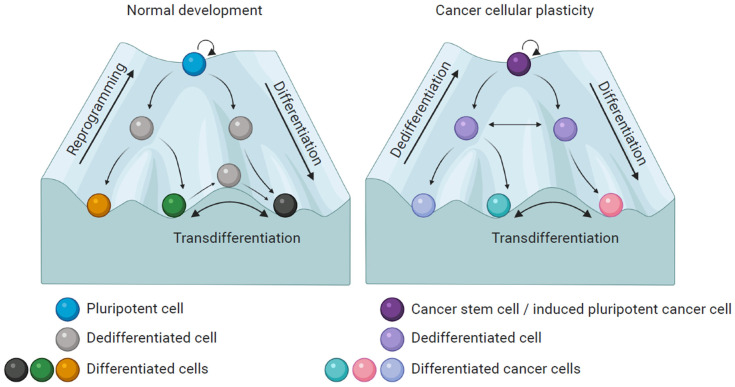
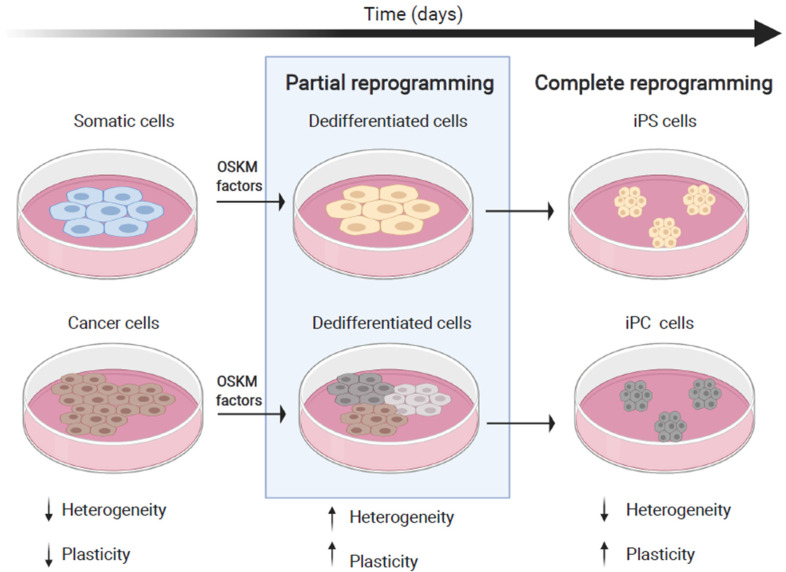
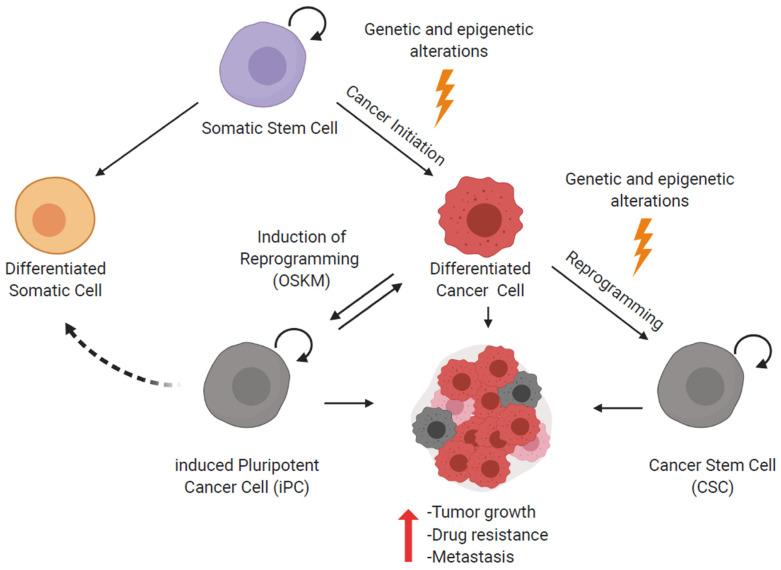
Cellular plasticity of cancer cells is often associated with phenotypic heterogeneity and drug resistance and thus remains a major challenge for the treatment of melanoma and other types of cancer. Melanoma cells have the capacity to switch their phenotype during tumor progression, from a proliferative and differentiated phenotype to a more invasive and dedifferentiated phenotype. However, the molecular mechanisms driving this phenotype switch are not yet fully understood. Considering that cellular heterogeneity within the tumor contributes to the high plasticity typically observed in melanoma, it is crucial to generate suitable models to investigate this phenomenon in detail. Here, we discuss the use of complete and partial reprogramming into induced pluripotent cancer (iPC) cells as a tool to obtain new insights into melanoma cellular plasticity. We consider this a relevant topic due to the high plasticity of melanoma cells and its association with a strong resistance to standard anticancer treatments.
癌细胞的细胞可塑性通常与表型异质性和耐药性相关,因此仍然是黑色素瘤和其他类型癌症治疗的主要挑战。黑色素瘤细胞在肿瘤进展过程中具有改变其表型的能力,从增殖和分化的表型转变为更具侵袭性和去分化的表型。然而,驱动这种表型转换的分子机制尚未完全了解。鉴于肿瘤内的细胞异质性导致黑色素瘤中通常观察到的高可塑性,生成合适的模型来详细研究这一现象至关重要。在这里,我们讨论将完全和部分重编程为诱导多能癌细胞(iPC)作为一种工具,以获得对黑色素瘤细胞可塑性的新见解。由于黑色素瘤细胞的高可塑性及其与对标准抗癌治疗的强抗性的关联,我们认为这是一个相关的主题。