Lian Jingyao, Yue Ying, Yu Weina, Zhang Yi
Biotherapy Center and Cancer Center, The First Affiliated Hospital of Zhengzhou University, 1 Jianshe East Road, Zhengzhou, 450052, Henan, China.
State Key Laboratory of Esophageal Cancer Prevention and Treatment, Zhengzhou, 450052, Henan, China.
J Hematol Oncol. 2020 Nov 10;13(1):151. doi: 10.1186/s13045-020-00986-z.
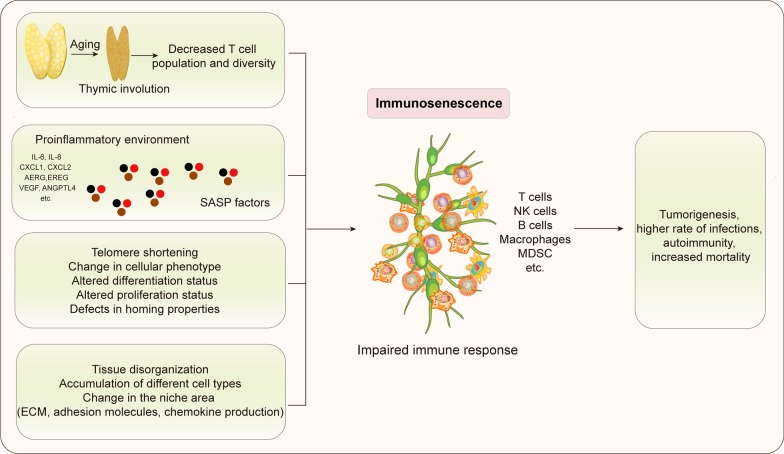
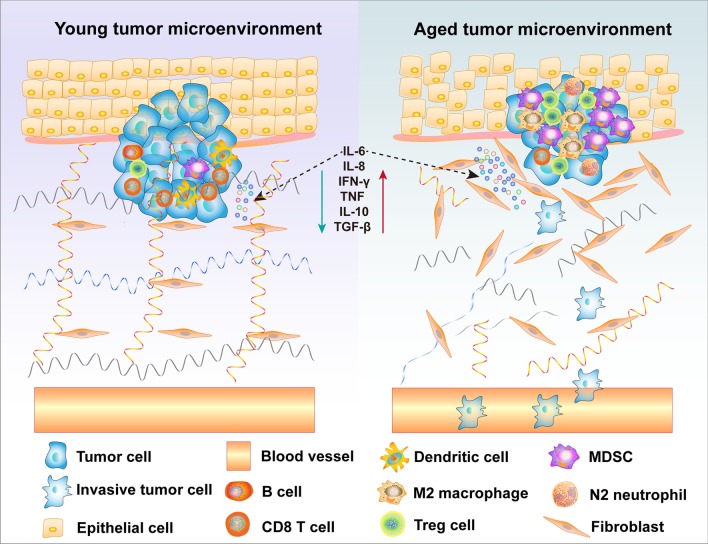
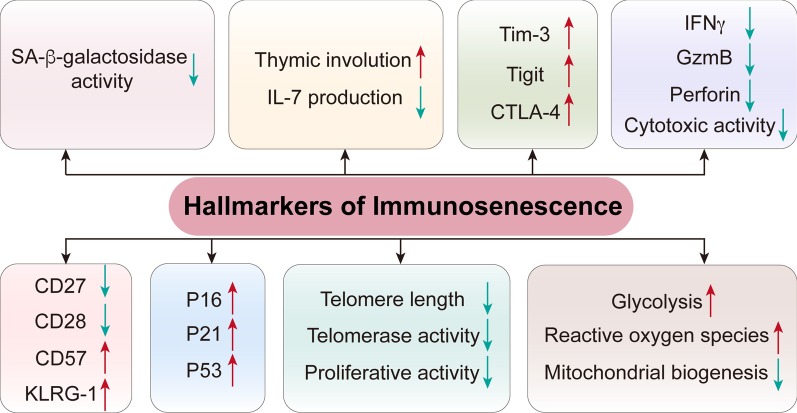
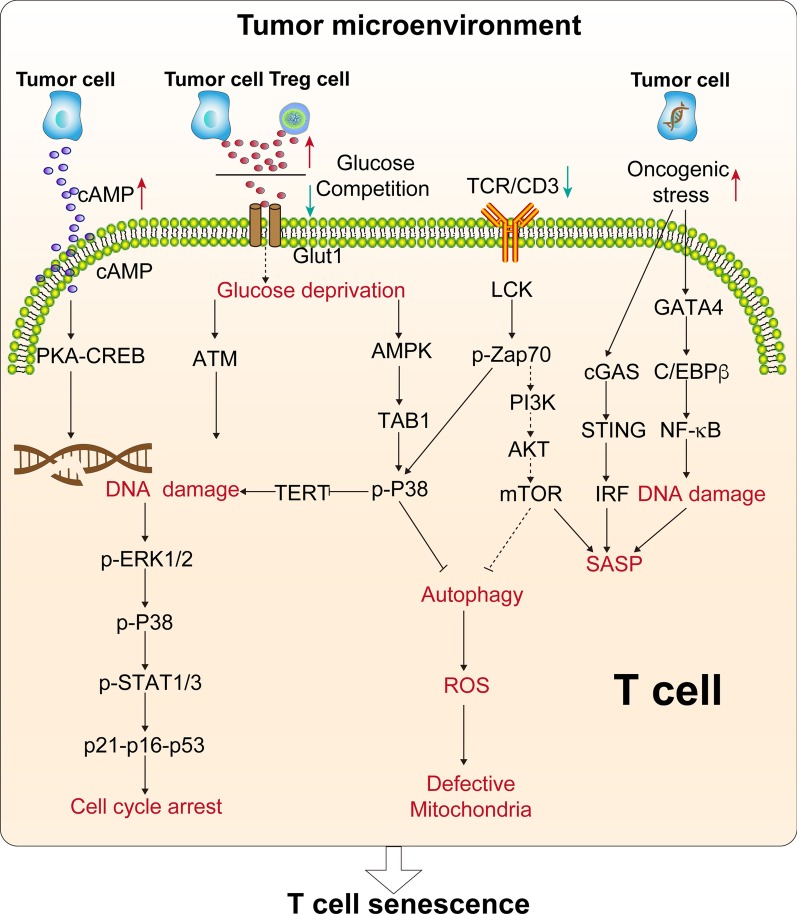
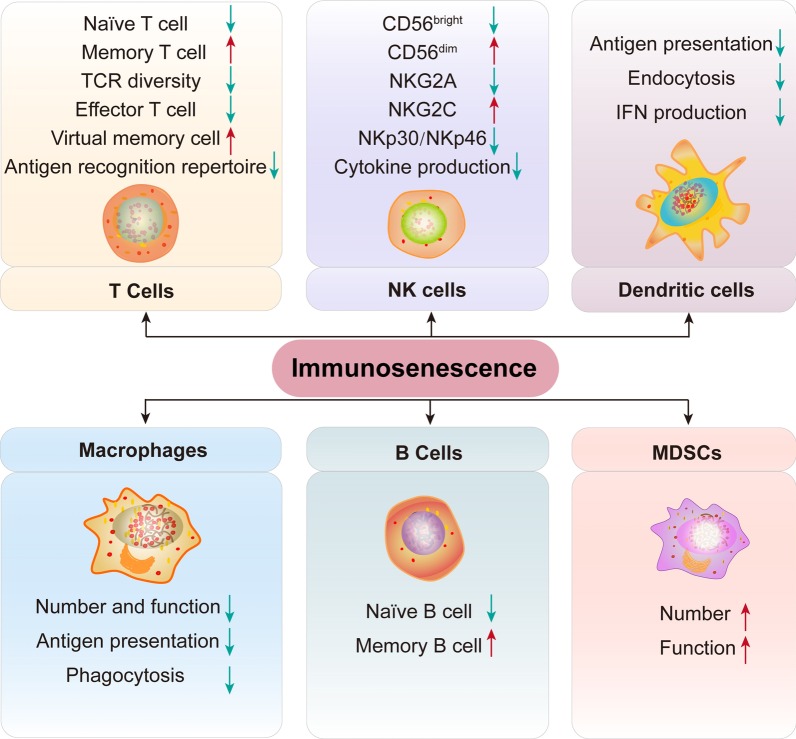
Immunosenescence is a process of immune dysfunction that occurs with age and includes remodeling of lymphoid organs, leading to changes in the immune function of the elderly, which is closely related to the development of infections, autoimmune diseases, and malignant tumors. T cell-output decline is an important feature of immunosenescence as well as the production of senescence-associated secretory phenotype, increased glycolysis, and reactive oxygen species. Senescent T cells exhibit abnormal phenotypes, including downregulation of CD27, CD28, and upregulation of CD57, killer cell lectin-like receptor subfamily G, Tim-3, Tight, and cytotoxic T-lymphocyte-associated protein 4, which are tightly related to malignant tumors. The role of immunosenescence in tumors is sophisticated: the many factors involved include cAMP, glucose competition, and oncogenic stress in the tumor microenvironment, which can induce the senescence of T cells, macrophages, natural killer cells, and dendritic cells. Accordingly, these senescent immune cells could also affect tumor progression. In addition, the effect of immunosenescence on the response to immune checkpoint blocking antibody therapy so far is ambiguous due to the low participation of elderly cancer patients in clinical trials. Furthermore, many other senescence-related interventions could be possible with genetic and pharmacological methods, including mTOR inhibition, interleukin-7 recombination, and NAD activation. Overall, this review aims to highlight the characteristics of immunosenescence and its impact on malignant tumors and immunotherapy, especially the future directions of tumor treatment through senescence-focused strategies.
免疫衰老(Immunosenescence)是一种随年龄增长而发生的免疫功能障碍过程,包括淋巴器官重塑,导致老年人免疫功能发生变化,这与感染、自身免疫性疾病和恶性肿瘤的发生密切相关。T细胞输出下降是免疫衰老的一个重要特征,同时还包括衰老相关分泌表型的产生、糖酵解增加和活性氧生成。衰老的T细胞表现出异常表型,包括CD27、CD28下调以及CD57、杀伤细胞凝集素样受体亚家族G、Tim-3、Tight和细胞毒性T淋巴细胞相关蛋白4上调,这些与恶性肿瘤密切相关。免疫衰老在肿瘤中的作用很复杂:涉及的许多因素包括肿瘤微环境中的环磷酸腺苷(cAMP)、葡萄糖竞争和致癌应激,它们可诱导T细胞、巨噬细胞、自然杀伤细胞和树突状细胞衰老。因此,这些衰老的免疫细胞也会影响肿瘤进展。此外,由于老年癌症患者参与临床试验的比例较低,目前免疫衰老对免疫检查点阻断抗体治疗反应的影响尚不明确。此外,通过基因和药理学方法,包括抑制哺乳动物雷帕霉素靶蛋白(mTOR)、重组白细胞介素-7和激活烟酰胺腺嘌呤二核苷酸(NAD),可能进行许多其他与衰老相关的干预。总的来说,本综述旨在强调免疫衰老的特征及其对恶性肿瘤和免疫治疗的影响,特别是通过以衰老为重点的策略进行肿瘤治疗的未来方向。