Department of Microbiology, University of Bayreuth, Universitätsstraße 30, 95447, Bayreuth, Germany.
Physical Chemistry I, University of Bayreuth, Universitätsstraße 30, Bayreuth, 95447, Germany.
Microb Cell Fact. 2020 Nov 10;19(1):206. doi: 10.1186/s12934-020-01469-z.
Magnetosomes produced by magnetotactic bacteria represent magnetic nanoparticles with unprecedented characteristics. However, their use in many biotechnological applications has so far been hampered by their challenging bioproduction at larger scales.
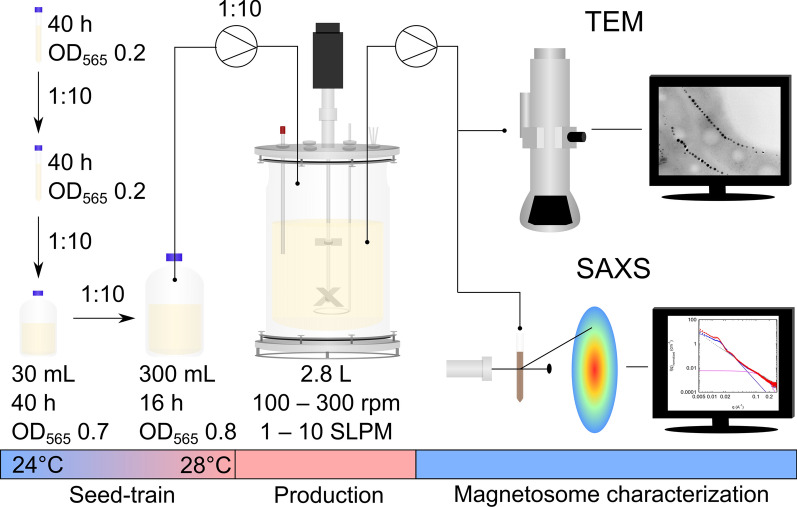
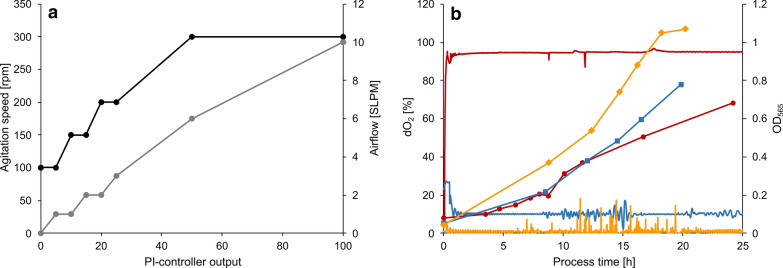
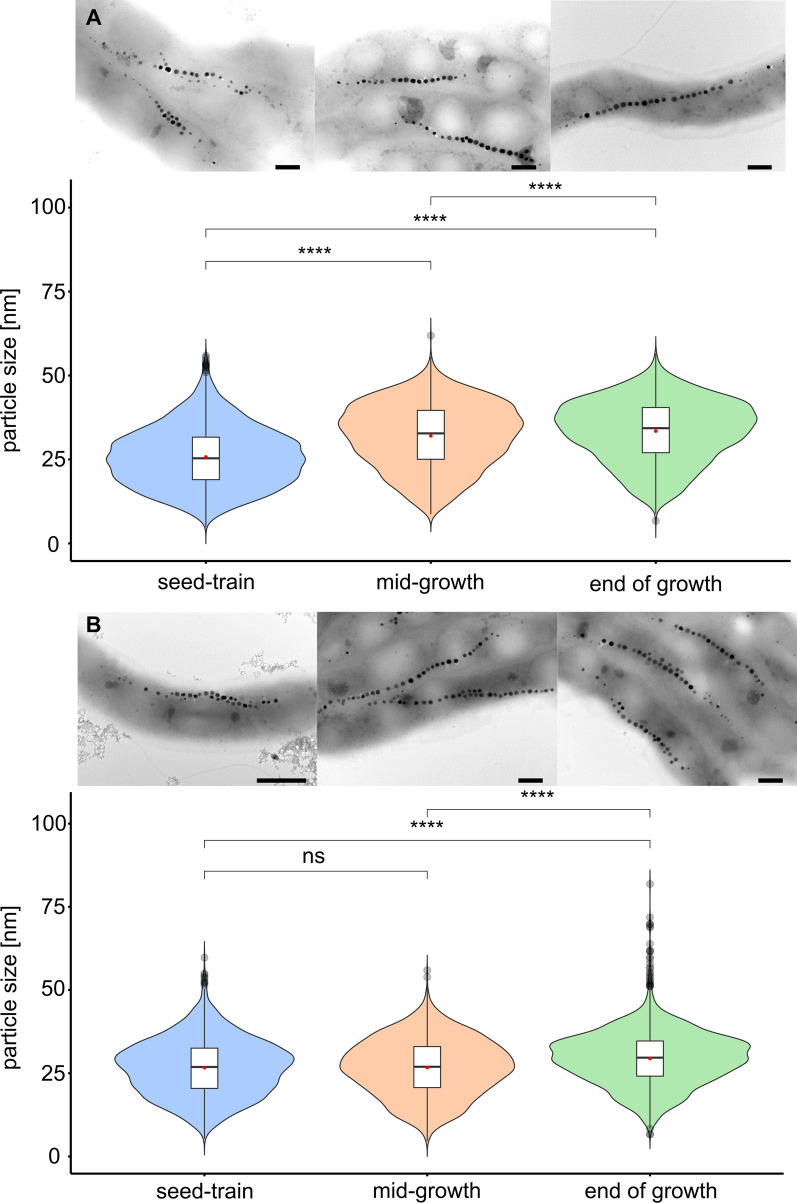
Here, we developed an oxystat batch fermentation regime for microoxic cultivation of Magnetospirillum gryphiswaldense in a 3 L bioreactor. An automated cascade regulation enabled highly reproducible growth over a wide range of precisely controlled oxygen concentrations (1-95% of air saturation). In addition, consumption of lactate as the carbon source and nitrate as alternative electron acceptor were monitored during cultivation. While nitrate became growth limiting during anaerobic growth, lactate was the growth limiting factor during microoxic cultivation. Analysis of microoxic magnetosome biomineralization by cellular iron content, magnetic response, transmission electron microscopy and small-angle X-ray scattering revealed magnetosomal magnetite crystals were highly uniform in size and shape.
The fermentation regime established in this study facilitates stable oxygen control during culturing of Magnetospirillum gryphiswaldense. Further scale-up seems feasible by combining the stable oxygen control with feeding strategies employed in previous studies. Results of this study will facilitate the highly reproducible laboratory-scale bioproduction of magnetosomes for a diverse range of future applications in the fields of biotechnology and biomedicine.
磁小体是趋磁细菌产生的磁性纳米颗粒,具有前所未有的特性。然而,由于其在较大规模下的生物生产具有挑战性,迄今为止,它们在许多生物技术应用中的应用受到了阻碍。
在这里,我们开发了一种微需氧批量发酵方案,用于在 3 L 生物反应器中对嗜甲基螺旋菌进行微需氧培养。自动化级联调节能够在广泛的精确控制氧气浓度范围内(空气饱和度的 1-95%)实现高度可重复的生长。此外,在培养过程中监测了乳酸作为碳源和硝酸盐作为替代电子受体的消耗。虽然硝酸盐在厌氧生长过程中成为生长限制因素,但在微需氧培养过程中,乳酸是生长限制因素。通过细胞铁含量、磁响应、透射电子显微镜和小角 X 射线散射分析微需氧磁小体生物矿化,发现磁小体磁铁矿晶体在尺寸和形状上高度均匀。
本研究建立的发酵方案有利于在嗜甲基螺旋菌培养过程中进行稳定的氧气控制。通过将稳定的氧气控制与之前研究中采用的进料策略相结合,进一步扩大规模似乎是可行的。本研究的结果将有助于在生物技术和生物医学领域的各种未来应用中高度重现性地实验室规模生产磁小体。