Department of Integrative Biology, University of Windsor, Windsor, ON, N9B 3P4, Canada.
National Institute of Polar Research, Tachikawa, Tokyo, 190-8518, Japan.
Sci Rep. 2020 Nov 9;10(1):19297. doi: 10.1038/s41598-020-76371-0.
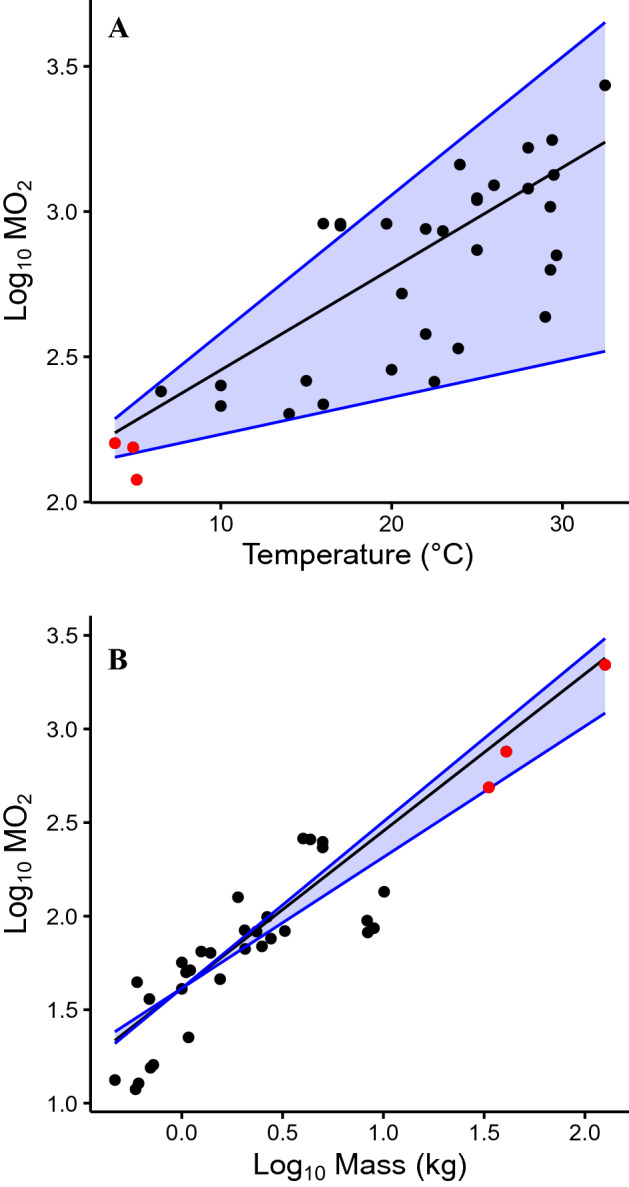
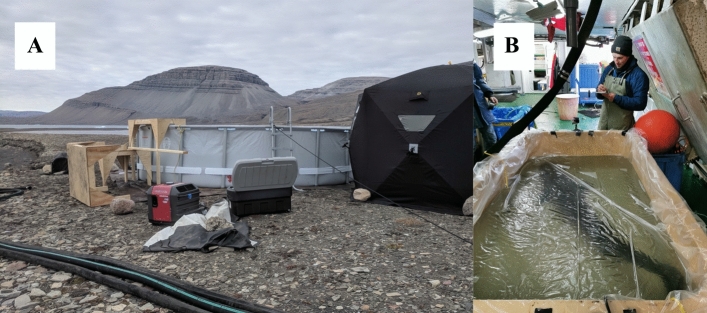
Metabolic rate is intricately linked to the ecology of organisms and can provide a framework to study the behaviour, life history, population dynamics, and trophic impact of a species. Acquiring measures of metabolic rate, however, has proven difficult for large water-breathing animals such as sharks, greatly limiting our understanding of the energetic lives of these highly threatened and ecologically important fish. Here, we provide the first estimates of resting and active routine metabolic rate for the longest lived vertebrate, the Greenland shark (Somniosus microcephalus). Estimates were acquired through field respirometry conducted on relatively large-bodied sharks (33-126 kg), including the largest individual shark studied via respirometry. We show that despite recording very low whole-animal resting metabolic rates for this species, estimates are within the confidence intervals predicted by derived interspecies allometric and temperature scaling relationships, suggesting this species may not be unique among sharks in this respect. Additionally, our results do not support the theory of metabolic cold adaptation which assumes that polar species maintain elevated metabolic rates to cope with the challenges of life at extreme cold temperatures.
代谢率与生物体的生态学密切相关,可以为研究物种的行为、生活史、种群动态和营养影响提供框架。然而,对于像鲨鱼这样的大型水生动物来说,获取代谢率的测量结果非常困难,这极大地限制了我们对这些受到高度威胁和具有重要生态意义的鱼类的能量生活的理解。在这里,我们首次估计了最长寿的脊椎动物——格陵兰鲨鱼(Somniosus microcephalus)的静息和日常活动代谢率。这些估计是通过对相对较大体型的鲨鱼(33-126 公斤)进行野外呼吸测量获得的,包括通过呼吸测量研究的最大个体鲨鱼。我们表明,尽管记录了该物种非常低的整体静息代谢率,但这些估计值在根据种间异速生长和温度缩放关系得出的置信区间内,这表明该物种在这方面可能并非鲨鱼中独一无二的。此外,我们的结果不支持代谢冷适应理论,该理论假设极地物种保持较高的代谢率以应对极寒温度下生活的挑战。