Cui Lianxu, Luo Wei, Jiang Wenkang, Li Haomin, Xu Junrong, Liu Xiaocui, Wang Bingyun, Wang Jinhui, Chen Guoqiang
The First People's Hospital of Foshan, Foshan, Guangdong Province, 528000, China.
School of Life Science and Engineering, Foshan University, Foshan, Guangdong Province, 528225, China.
Regen Ther. 2022 Aug 28;21:282-287. doi: 10.1016/j.reth.2022.07.005. eCollection 2022 Dec.
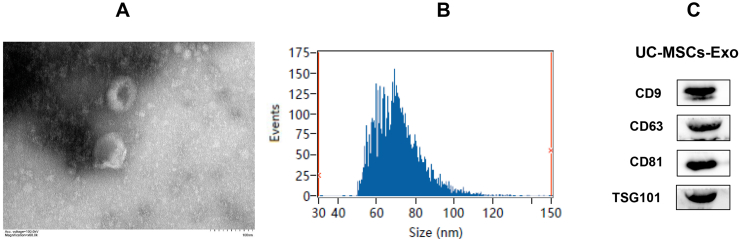
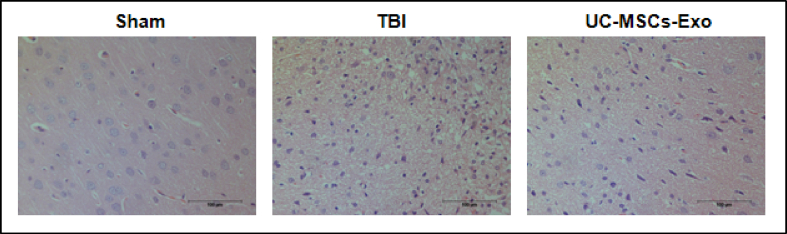
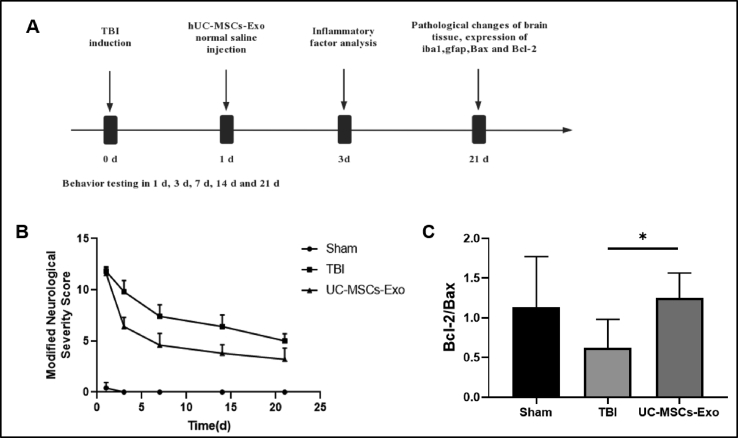
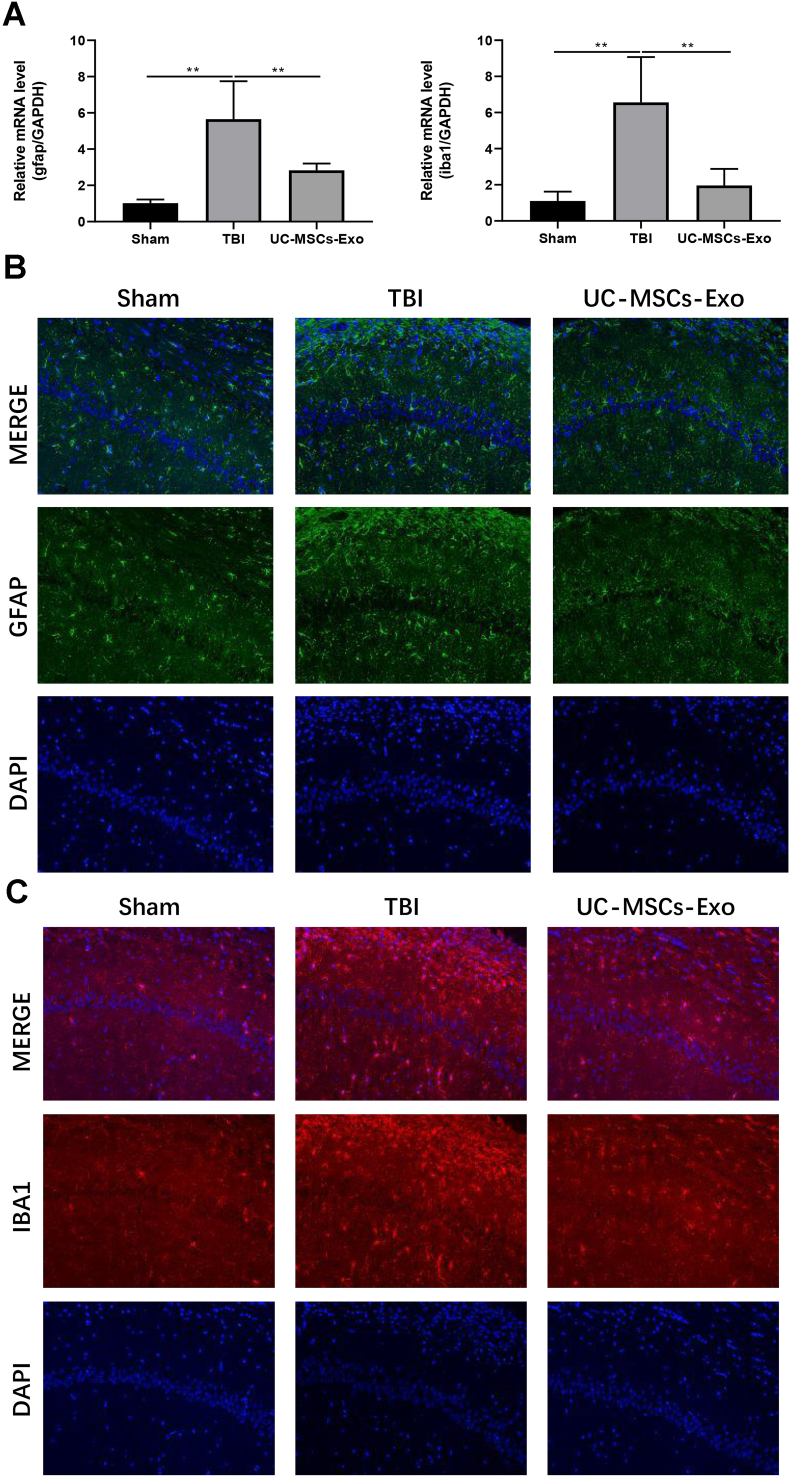
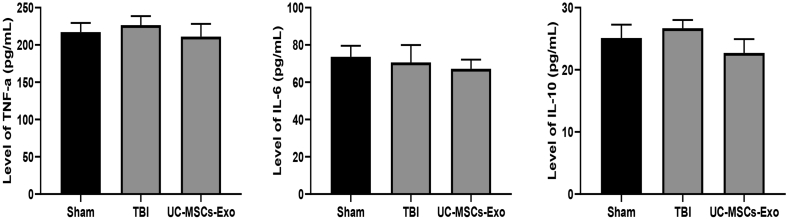
Traumatic brain injury (TBI) is a serious neurological disorder with increasing worldwide incidence. Emerging evidence has shown a significant therapeutic role of mesenchymal stem cells (MSCs) derived exosomes on traumatic brain injury with broad application prospects as a cell-free therapy. However, a comprehensive understanding of its underlying mechanism remained elusive. In this study, umbilical cord mesenchymal stem cells (UCMSCs)-derived exosomes (UC-MSCs-Exo) were isolated by ultracentrifugation and injected intraventricularly in a rat model of TBI. Our results showed that UC-MSCs-Exo promoted functional recovery and reduced neuronal apoptosis in TBI rats. Moreover, UC-MSCs-Exo inhibited the activation of microglia and astrocytes during brain injury, thereby promoting functional recovery. However, the effect of UC-MSCs-Exo on the content of plasma inflammatory factors in rats was not significant. Collectively our study suggested that UC-MSCs-Exo promotes the recovery of neurological function in TBI rats by inhibiting the activation of microglia and astrocytes, providing a theoretical basis for new therapeutic strategies for central nervous system diseases.
创伤性脑损伤(TBI)是一种严重的神经系统疾病,在全球范围内的发病率呈上升趋势。新出现的证据表明,间充质干细胞(MSCs)衍生的外泌体在创伤性脑损伤中具有显著的治疗作用,作为一种无细胞疗法具有广阔的应用前景。然而,对其潜在机制的全面了解仍然难以捉摸。在本研究中,通过超速离心法分离出脐带间充质干细胞(UCMSCs)衍生的外泌体(UC-MSCs-Exo),并将其脑室内注射到TBI大鼠模型中。我们的结果表明,UC-MSCs-Exo促进了TBI大鼠的功能恢复并减少了神经元凋亡。此外,UC-MSCs-Exo在脑损伤期间抑制了小胶质细胞和星形胶质细胞的激活,从而促进了功能恢复。然而,UC-MSCs-Exo对大鼠血浆炎症因子含量的影响并不显著。总体而言,我们的研究表明,UC-MSCs-Exo通过抑制小胶质细胞和星形胶质细胞的激活促进TBI大鼠神经功能的恢复,为中枢神经系统疾病的新治疗策略提供了理论依据。