Zhang Peize, Xu Guanghui, Song Yanhua, Tan Jie, Chen Tao, Deng Guofang
Department of Pulmonary Medicine & Tuberculosis, The Third People's Hospital of Shenzhen, Shenzhen, People's Republic of China.
Jiangmen Institute of Tuberculosis Prevention and Control, Guangdong, People's Republic of China.
Risk Manag Healthc Policy. 2020 Nov 2;13:2387-2394. doi: 10.2147/RMHP.S275400. eCollection 2020.
The aim of this study was to analyze socioeconomic burdens and other difficulties that multidrug-resistant tuberculosis (MDR-TB) patients in cities are facing, to identify major obstacles and which groups of patients are most affected.
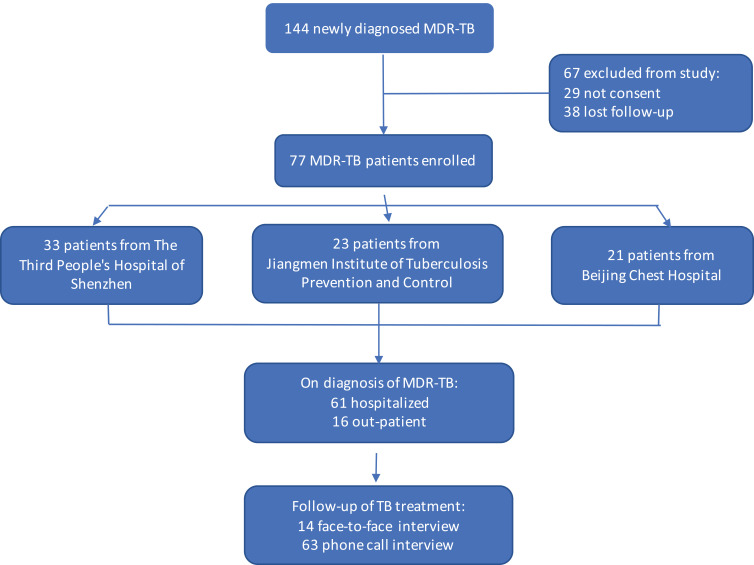
Face-to-face and phone-call interviews were conducted in early 2018 to follow-up with patients newly diagnosed with MDR-TB in 2017 in three tuberculosis hospitals in three financially affluent Chinese cities. Demographic data and information on their medical care, insurance coverage, and medical expenses were collected and analyzed.
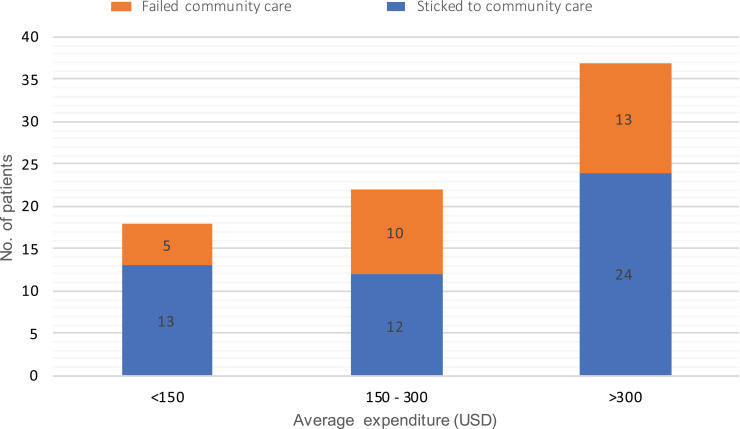
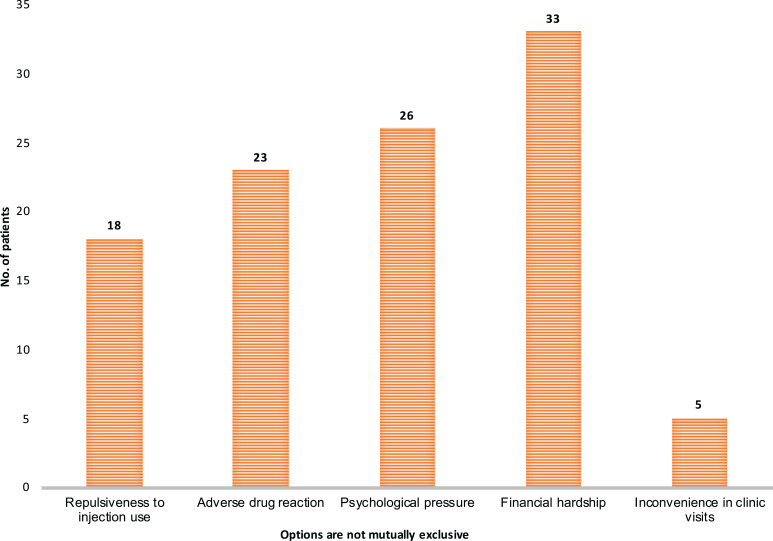
A total of 144 newly diagnosed MDR-TB cases were reviewed during the study period, excluding 38 who were lost to follow-up and 29 patients who refused to participate, 77 patients were enrolled in this study. A total of 61 (79%) of these patients were hospitalized after MDR-TB diagnosis with an average hospital stay of 14 days, of them 57 (74%) were sputum positive on diagnosis. The proportion of patients who failed community care were 48% married, 56% in white collar employment and 43% in temp jobs/unemployed. In terms of insurance coverage, the proportion of patients who failed community care were 23% with no insurance and/or New Rural Co-operative Medical Care Scheme (NRCMS) and 45% with Urban Employee Basic Medical Insurance (UEBMI)/Urban Residents Basic Medical Insurance (URBMI) and commercial insurance. Difficulties patients encountered were, financial pressure (33%), psychological stress (26%), adverse drug reactions (23%), repulsive reaction to injections (17%). Fourty-eight percent of the patients spent over ¥2000 (USD300) per month on TB treatment.
Despite insurance coverage, financial hardship remains the number one difficulty MDR-TB patients encountered in relatively financially affluent cities. Among them, the married working class were found to be the most financially sensitive group and have the highest tendency to fail community care. It is of utmost urgency to enhance the current medical policy to improve treatment adherence.
本研究旨在分析城市耐多药结核病(MDR-TB)患者所面临的社会经济负担及其他困难,以确定主要障碍以及受影响最严重的患者群体。
2018年初进行了面对面和电话访谈,对中国三个经济发达城市的三家结核病医院2017年新诊断的MDR-TB患者进行随访。收集并分析了人口统计学数据以及他们的医疗护理、保险覆盖范围和医疗费用等信息。
研究期间共审查了144例新诊断的MDR-TB病例,排除38例失访者和29例拒绝参与者后,77例患者纳入本研究。这些患者中共有61例(79%)在MDR-TB诊断后住院,平均住院时间为14天,其中57例(74%)诊断时痰菌阳性。社区护理失败的患者中,48%已婚,56%为白领职业,43%为临时工作/失业。在保险覆盖方面,社区护理失败的患者中,23%没有保险和/或新型农村合作医疗(NRCMS),45%有城镇职工基本医疗保险(UEBMI)/城镇居民基本医疗保险(URBMI)和商业保险。患者遇到的困难有,经济压力(33%)、心理压力(26%)、药物不良反应(23%)、对注射的排斥反应(17%)。48%的患者每月用于结核病治疗的费用超过2000元(300美元)。
尽管有保险覆盖,但在经济相对发达的城市,经济困难仍然是MDR-TB患者遇到的首要困难。其中,已婚工人阶级被发现是对经济最敏感的群体,社区护理失败的倾向最高。加强现行医疗政策以提高治疗依从性迫在眉睫。