Matas-Céspedes Alba, Brown Lee, Mahbubani Krishnaa T, Bareham Bethany, Higgins Jackie, Curran Michelle, de Haan Lolke, Lapointe Jean-Martin, Stebbings Richard, Saeb-Parsy Kourosh
Clinical Pharmacology and Safety Sciences R&D AstraZeneca Cambridge UK.
Department of Surgery University of Cambridge and NIHR Cambridge Biomedical Campus Cambridge UK.
Clin Transl Immunology. 2020 Nov 4;9(11):e1202. doi: 10.1002/cti2.1202. eCollection 2020.
Humanised mice have emerged as valuable models for pre-clinical testing of the safety and efficacy of immunotherapies. Given the variety of models available, selection of the most appropriate humanised mouse model is critical in study design. Here, we aimed to develop a model for predicting cytokine release syndrome (CRS) while minimising graft--host disease (GvHD).
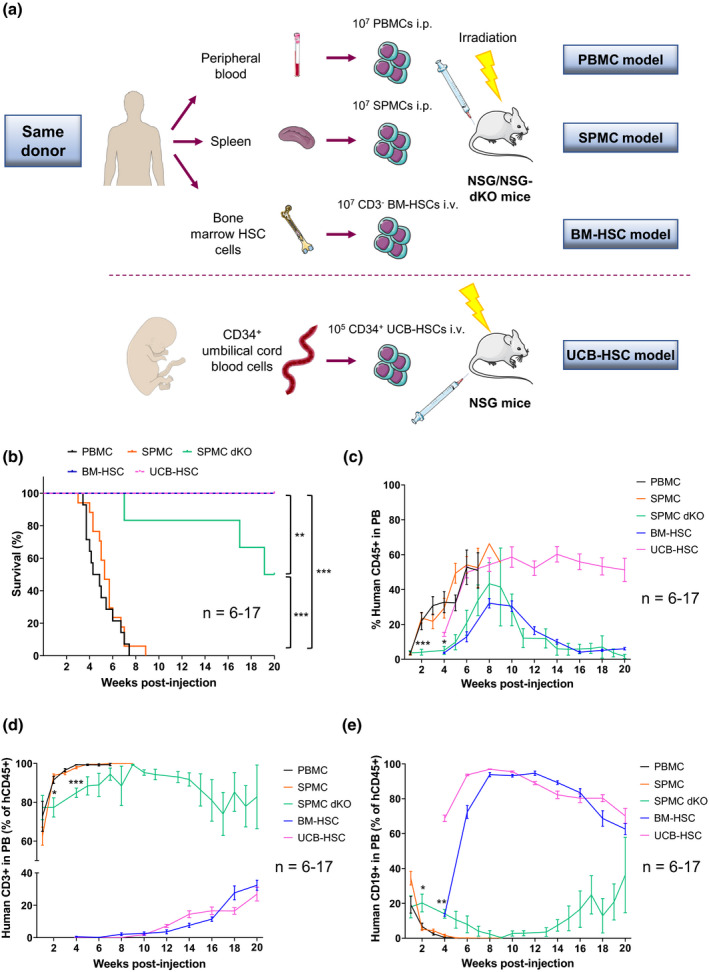
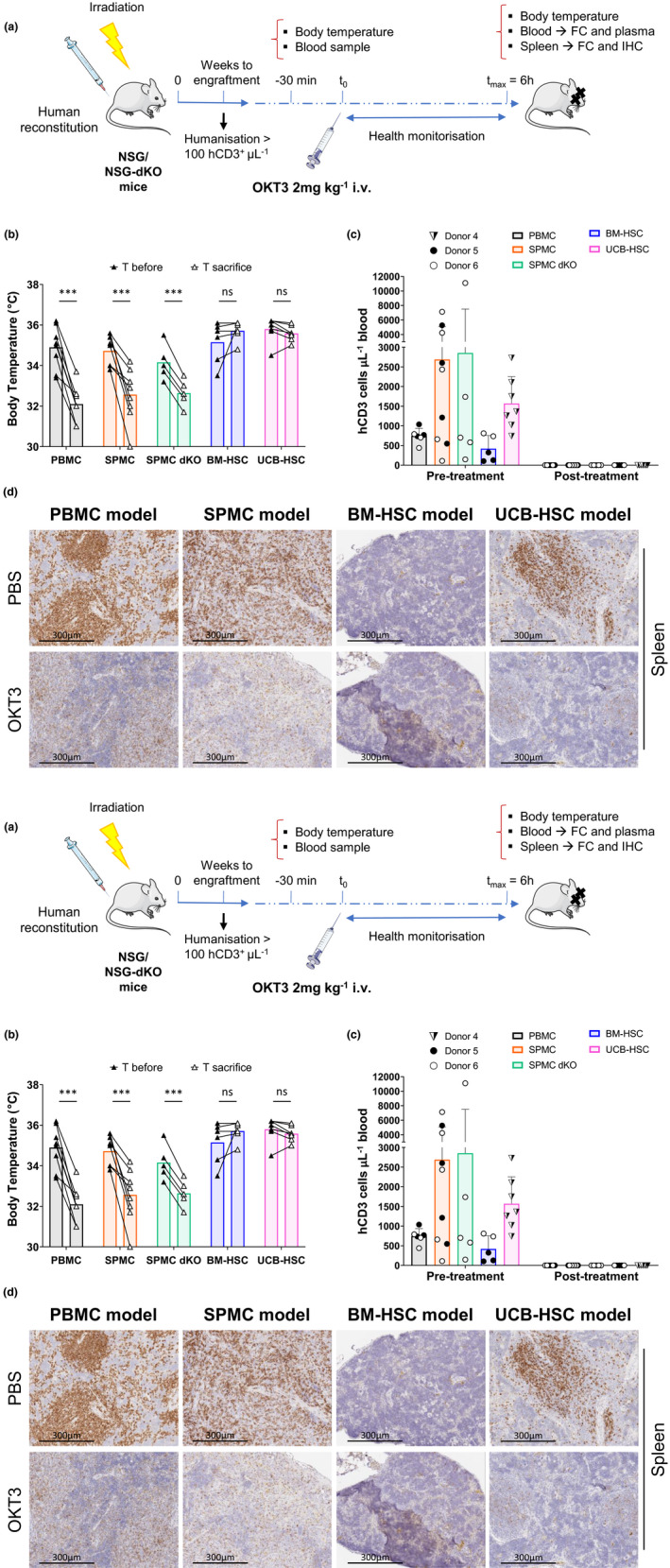
To overcome donor-induced variation, we directly compared the and immune phenotype of immunodeficient NSG mice reconstituted with human bone marrow (BM) CD34 haematopoietic stem cells (HSCs), peripheral blood mononuclear cells (PBMCs) or spleen mononuclear cells (SPMCs) from the same human donors. SPMC engraftment in NSG-dKO mice, which lack MHC class I and II, was also evaluated as a strategy to limit GvHD. Another group of mice was engrafted with umbilical cord blood (UCB) CD34 HSCs. Induction of CRS was investigated upon administration of the anti-CD3 monoclonal antibody OKT3.
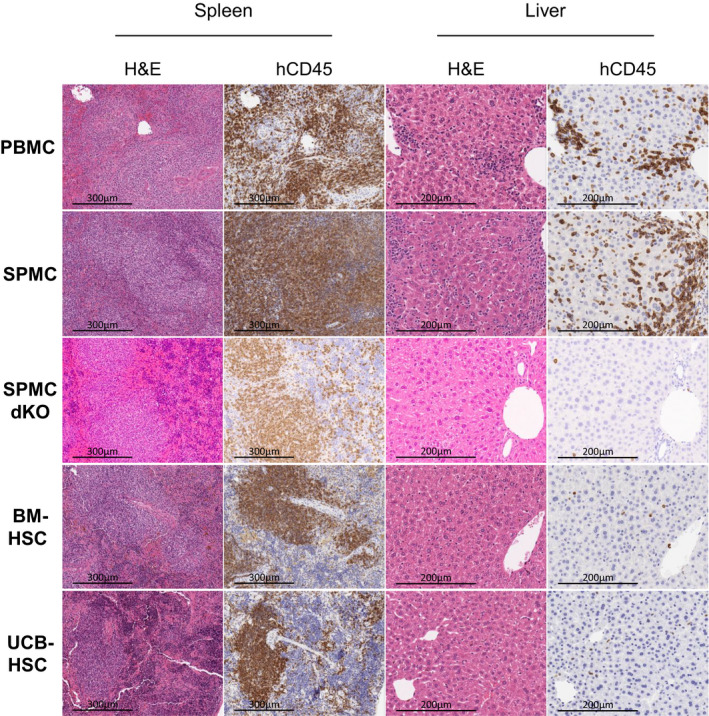
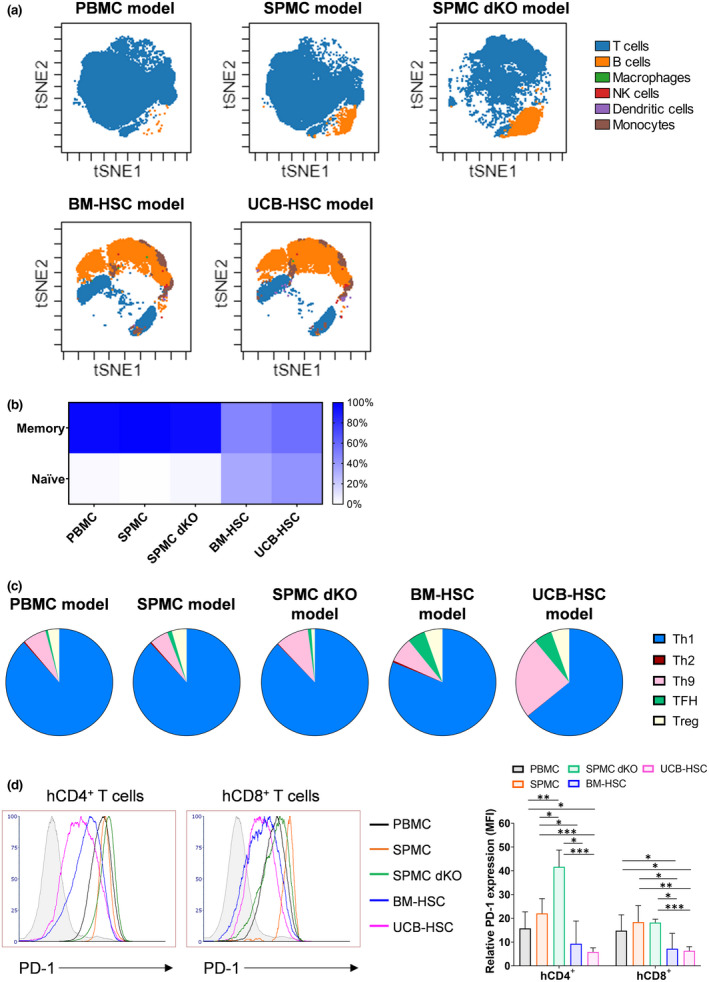
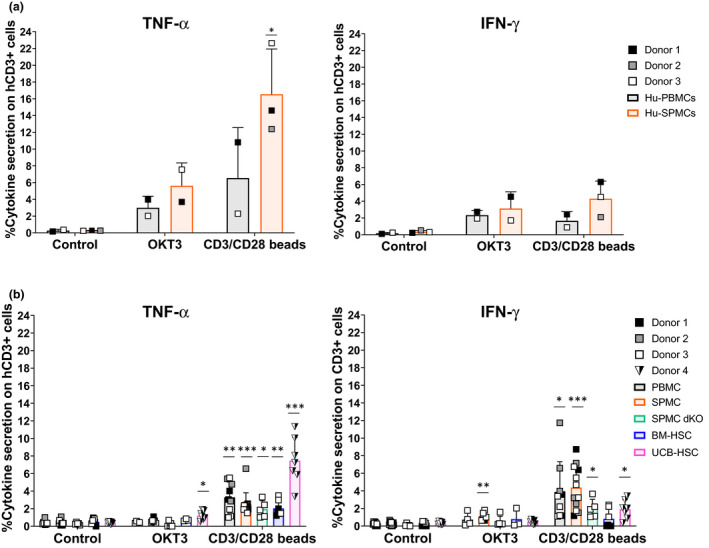
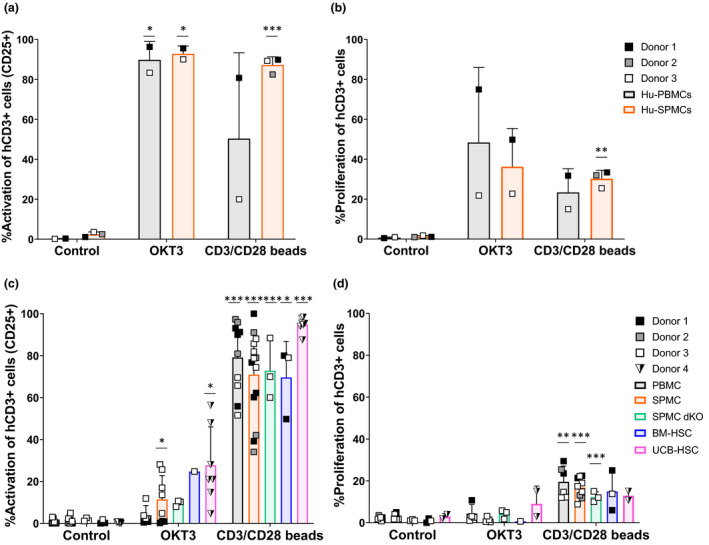
PBMC- and SPMC-reconstituted NSG mice showed short-term survival, with engrafted human T cells exhibiting mostly an effector memory phenotype. Survival in SPMC-reconstituted NSG-dKO mice was significantly longer. Conversely, both BM and UCB-HSC models showed longer survival, without demonstrable GvHD and a more naïve T-cell phenotype. PBMC- and SPMC-reconstituted mice, but not BM-HSC or UCB-HSC mice, experienced severe clinical signs of CRS upon administration of OKT3.
PBMC- and SPMC-reconstituted NSG mice better predict OKT3-mediated CRS. The SPMC model allows generation of large experimental groups, and the use of NSG-dKO mice mitigates the limitation of early GvHD.
人源化小鼠已成为免疫疗法安全性和有效性临床前测试的重要模型。鉴于现有多种模型,选择最合适的人源化小鼠模型在研究设计中至关重要。在此,我们旨在开发一种模型,用于预测细胞因子释放综合征(CRS),同时尽量减少移植物抗宿主病(GvHD)。
为克服供体诱导的变异性,我们直接比较了用人骨髓(BM)CD34造血干细胞(HSCs)、外周血单个核细胞(PBMCs)或来自同一人类供体的脾单个核细胞(SPMCs)重建的免疫缺陷NSG小鼠的免疫表型。还评估了将SPMC植入缺乏MHC I类和II类的NSG-dKO小鼠中作为限制GvHD的策略。另一组小鼠植入脐带血(UCB)CD34 HSCs。在给予抗CD3单克隆抗体OKT3后研究CRS的诱导情况。
PBMC和SPMC重建的NSG小鼠显示短期存活,植入的人T细胞大多表现为效应记忆表型。SPMC重建的NSG-dKO小鼠存活时间明显更长。相反,BM和UCB-HSC模型均显示存活时间更长,无明显的GvHD,且T细胞表型更幼稚。给予OKT3后,PBMC和SPMC重建的小鼠出现严重的CRS临床症状,而BM-HSC或UCB-HSC小鼠则未出现。
PBMC和SPMC重建的NSG小鼠能更好地预测OKT3介导的CRS。SPMC模型可生成大型实验组,使用NSG-dKO小鼠可减轻早期GvHD的限制。