Department of Physiology, Ningxia Medical University, Yinchuan, Ningxia 750004, P.R. China.
Department of Physiology, Ningxia Medical University, Yinchuan, Ningxia 750004, P.R. China.
Mol Med Rep. 2020 Dec;22(6):4763-4771. doi: 10.3892/mmr.2020.11559. Epub 2020 Oct 2.
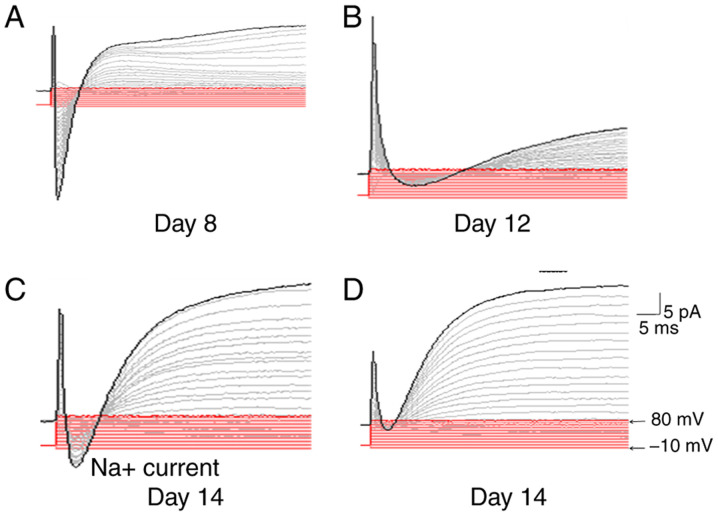
No effective treatment is currently available for neurodegenerative diseases, and existing pharmacotherapy is inconsistent with severe side effects. Cell replacement therapy is promising for neurodegenerative disease treatment, and the induction of neurons is an unmet need for such therapy. The present study investigated the potential of a combined medium composed of conditioned medium and eight small molecular compounds in reprogramming human foreskin fibroblasts (HFFs) into neurons. HFFs were cultured from foreskin and then induced by small molecules to generate neurons. The results demonstrated that the conditioned medium containing forskolin, RepSox, SP600125, CHIR99021, Go6983, Y‑27632, IXS9 and I‑BET151 effectively induced human fibroblasts to change into neurons in vitro. Following a 30‑day induction, the cells exhibited neuronal properties as determined by morphological and phenotypical alterations. The induced cells exhibited expression of neuronal markers, including class III β‑tubulin, microtubule‑associated protein 2, vesicular glutamate transporter 1 and γ‑aminobutyric acid, accompanied by increased expression of neuronal transcription factors, including neuronal differentiation 1 and achaete‑scute family bHLH transcription factor 1, and decreased expression levels of fibroblast‑specific genes. Furthermore, these cells also exhibited electrophysiological properties of neurons. Notably, the course of cell morphological alterations demonstrated the differentiation of fibroblasts into neurons. The present study provided a novel combination of existing small molecular compounds that efficiently reprogramed human fibroblasts into neurons.
目前,针对神经退行性疾病尚无有效的治疗方法,现有的药物治疗方法也存在严重的副作用。细胞替代疗法有望用于治疗神经退行性疾病,而诱导神经元分化是该疗法的一个未满足的需求。本研究探讨了由条件培养基和八种小分子化合物组成的复合培养基在将人包皮成纤维细胞(HFF)重编程为神经元中的潜力。从小鼠包皮中培养 HFF,然后用小分子诱导其分化为神经元。结果表明,含有福司可林、RepSox、SP600125、CHIR99021、Go6983、Y-27632、IXS9 和 I-BET151 的条件培养基可有效诱导人成纤维细胞体外向神经元转化。诱导 30 天后,细胞形态和表型改变表明其具有神经元特性。诱导的细胞表达神经元标志物,包括 III 类β-微管蛋白、微管相关蛋白 2、囊泡谷氨酸转运体 1 和γ-氨基丁酸,同时神经元转录因子的表达增加,包括神经元分化 1 和achaete-scute 家族 bHLH 转录因子 1,而成纤维细胞特异性基因的表达水平降低。此外,这些细胞还表现出神经元的电生理特性。值得注意的是,细胞形态改变的过程显示出成纤维细胞向神经元的分化。本研究提供了一种新的小分子化合物组合,可有效将人成纤维细胞重编程为神经元。