Department of Molecular Biology, University of Texas Southwestern Medical Center, 6000 Harry Hines Boulevard, Dallas, TX 75390, USA.
Nat Commun. 2013;4:2183. doi: 10.1038/ncomms3183.
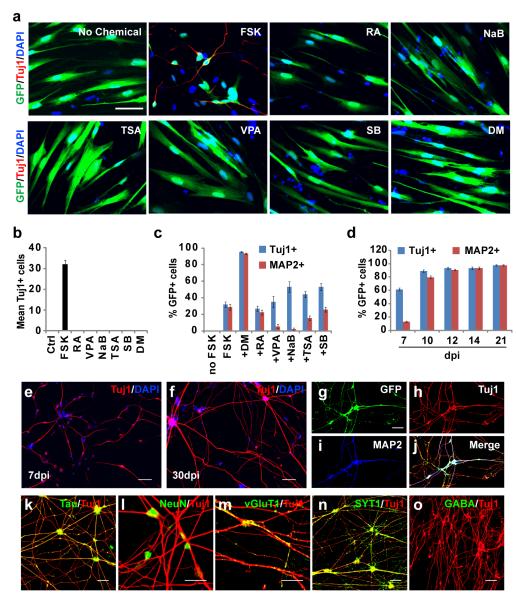
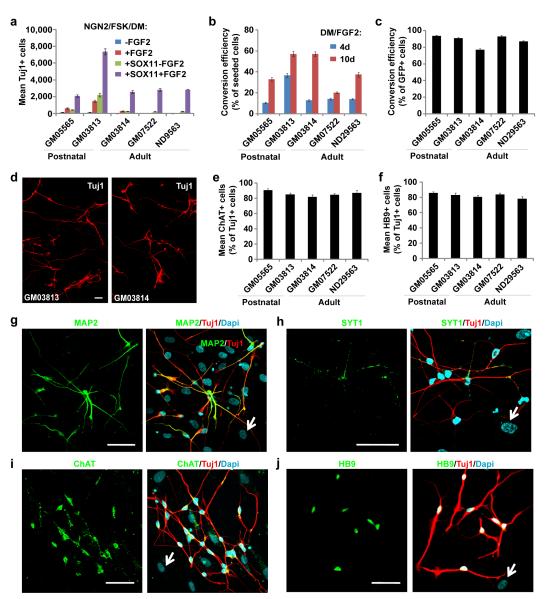
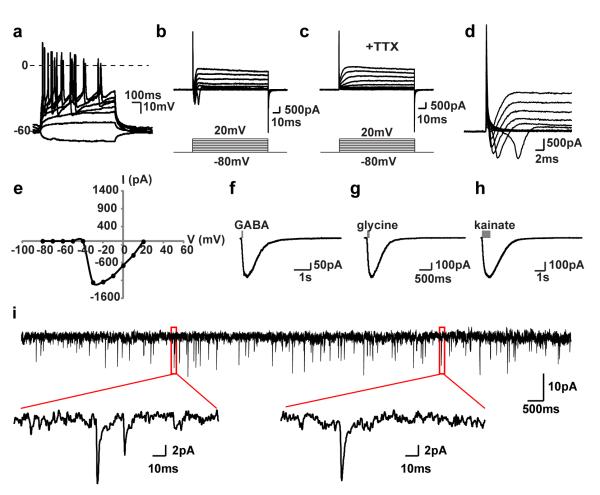
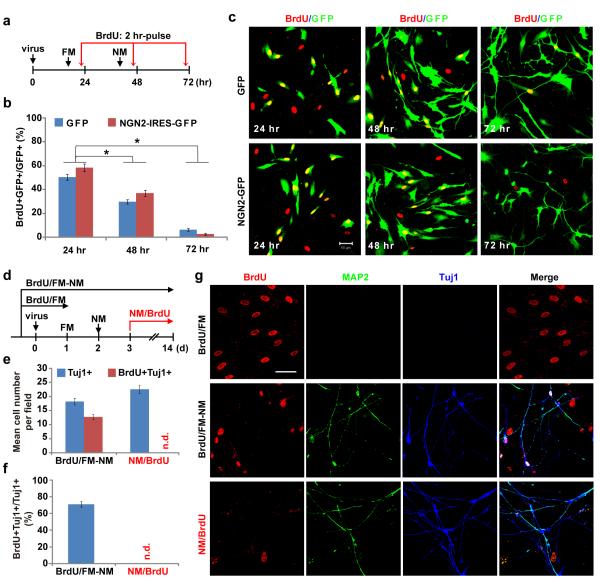
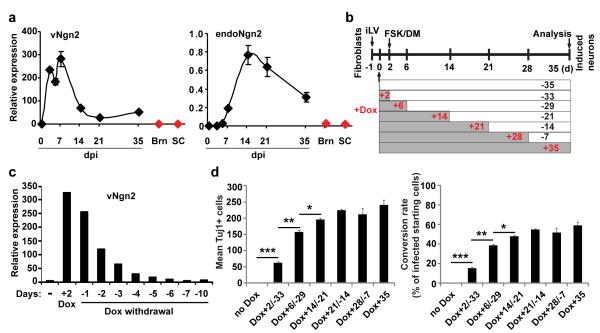
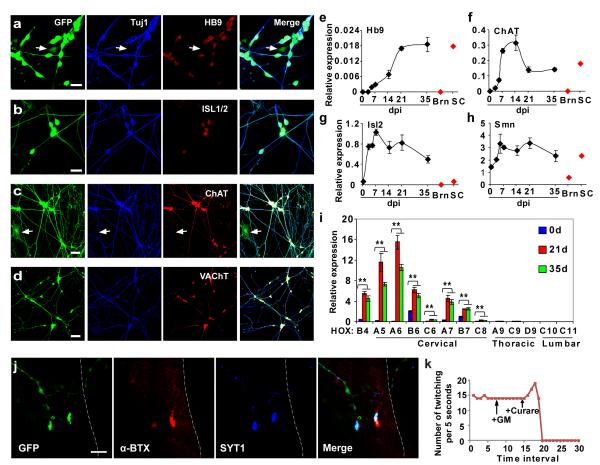
Cell fate can be reprogrammed by modifying intrinsic and extrinsic cues. Here we show that two small molecules (forskolin and dorsomorphin) enable the transcription factor Neurogenin 2 (NGN2) to convert human fetal lung fibroblasts into cholinergic neurons with high purity (>90%) and efficiency (up to 99% of NGN2-expressing cells). The conversion is direct without passing through a proliferative progenitor state. These human induced cholinergic neurons (hiCN) show mature electrophysiological properties and exhibit motor neuron-like features, including morphology, gene expression and the formation of functional neuromuscular junctions. Inclusion of an additional transcription factor, SOX11, also efficiently converts postnatal and adult skin fibroblasts from healthy and diseased human patients to cholinergic neurons. Taken together, this study identifies a simple and highly efficient strategy for reprogramming human fibroblasts to subtype-specific neurons. These findings offer a unique venue for investigating the molecular mechanisms underlying cellular plasticity and human neurodegenerative diseases.
细胞命运可以通过改变内在和外在的线索来重新编程。在这里,我们展示了两种小分子(佛司可林和 Dorsomorphin)能够使转录因子神经基因 2(NGN2)将人胎儿肺成纤维细胞转化为高纯度(>90%)和高效率(高达 99%的 NGN2 表达细胞)的胆碱能神经元。这种转化是直接的,不需要经过增殖前体细胞状态。这些人诱导的胆碱能神经元(hiCN)表现出成熟的电生理特性,并表现出运动神经元样的特征,包括形态、基因表达和功能性神经肌肉接头的形成。加入另一个转录因子 SOX11,也能有效地将来自健康和患病的人类患者的出生后和成年皮肤成纤维细胞转化为胆碱能神经元。总之,这项研究确定了一种简单而高效的策略,可将人成纤维细胞重编程为特定亚型的神经元。这些发现为研究细胞可塑性和人类神经退行性疾病的分子机制提供了一个独特的场所。