Barrett Paula Q, Guagliardo Nick A, Bayliss Douglas A
Department of Pharmacology, University of Virginia School of Medicine, Charlottesville, Virginia 22908, USA; email:
Annu Rev Physiol. 2021 Feb 10;83:451-475. doi: 10.1146/annurev-physiol-030220-113038. Epub 2020 Nov 11.
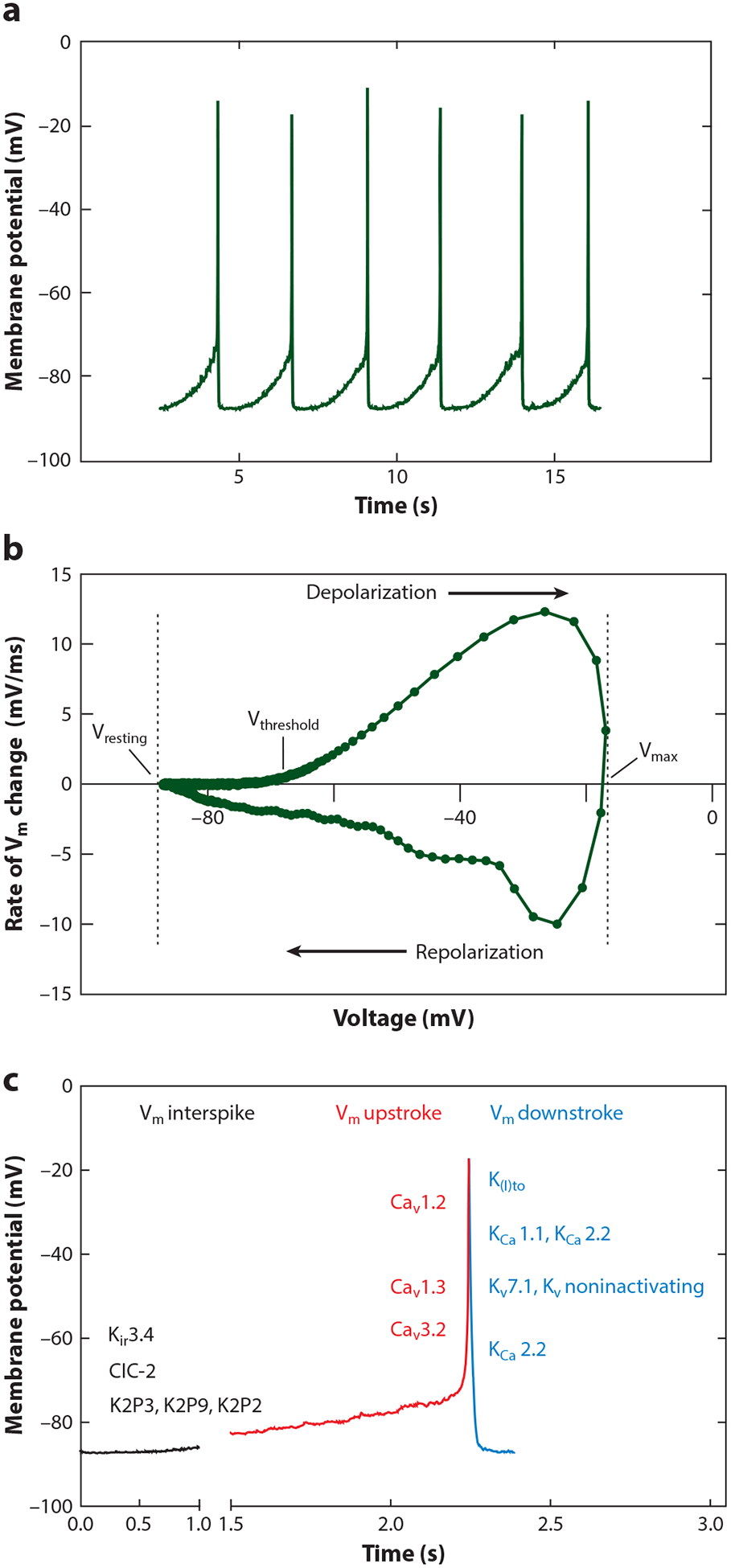
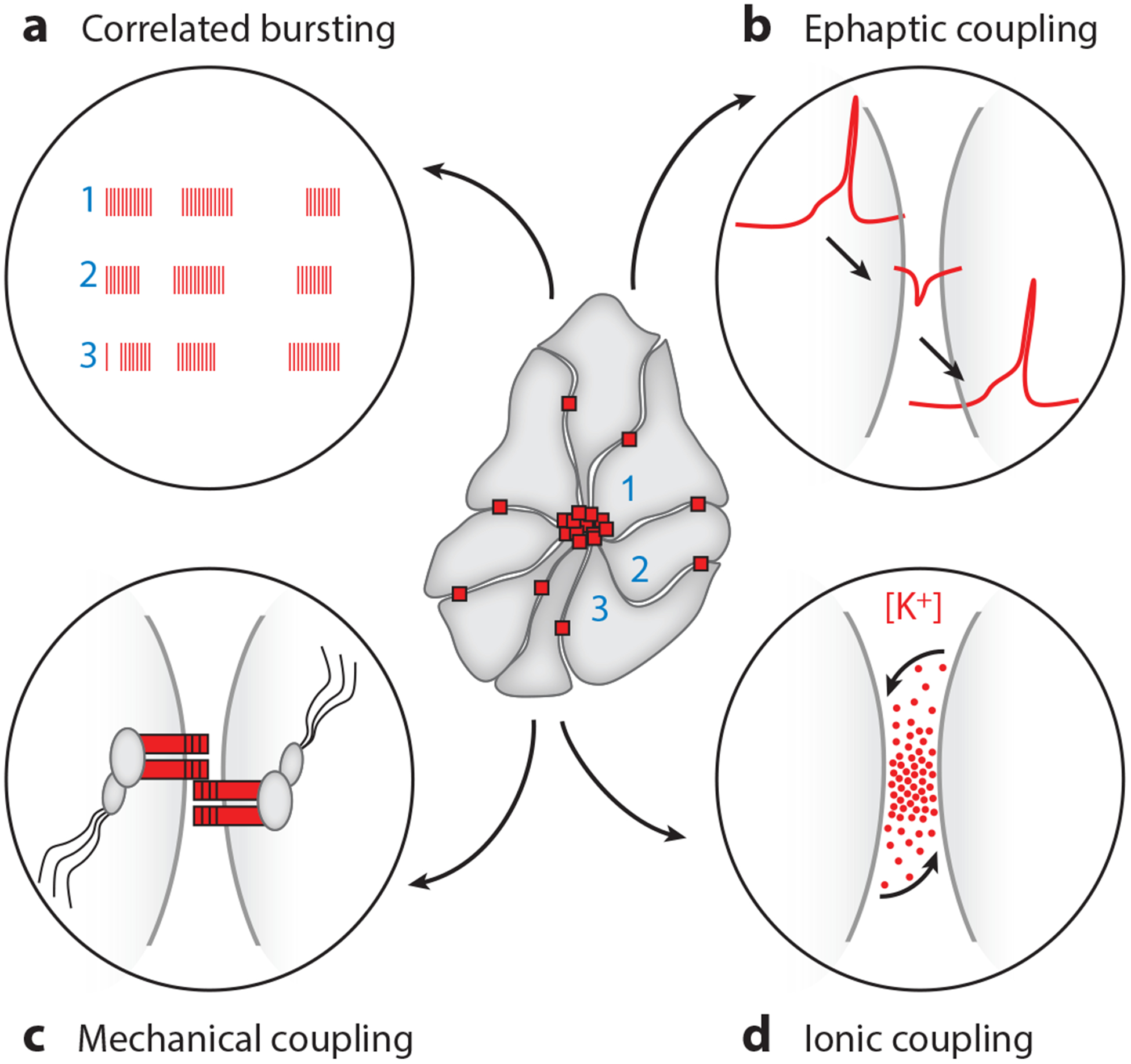
Aldosterone excess is a pathogenic factor in many hypertensive disorders. The discovery of numerous somatic and germline mutations in ion channels in primary hyperaldosteronism underscores the importance of plasma membrane conductances in determining the activation state of zona glomerulosa (zG) cells. Electrophysiological recordings describe an electrically quiescent behavior for dispersed zG cells. Yet, emerging data indicate that in native rosette structures in situ, zG cells are electrically excitable, generating slow periodic voltage spikes and coordinated bursts of Ca oscillations. We revisit data to understand how a multitude of conductances may underlie voltage/Ca oscillations, recognizing that zG layer self-renewal and cell heterogeneity may complicate this task. We review recent data to understand rosette architecture and apply maxims derived from computational network modeling to understand rosette function. The challenge going forward is to uncover how the rosette orchestrates the behavior of a functional network of conditional oscillators to control zG layer performance and aldosterone secretion.
醛固酮过多是许多高血压疾病的致病因素。原发性醛固酮增多症中离子通道大量体细胞和种系突变的发现,凸显了质膜电导在决定球状带(zG)细胞激活状态方面的重要性。电生理记录描述了分散的zG细胞的电静息行为。然而,新出现的数据表明,在原位天然玫瑰花结结构中,zG细胞具有电兴奋性,会产生缓慢的周期性电压尖峰和协调的钙振荡爆发。我们重新审视数据,以了解多种电导如何成为电压/钙振荡的基础,同时认识到zG层自我更新和细胞异质性可能使这项任务复杂化。我们回顾近期数据以了解玫瑰花结结构,并应用从计算网络模型得出的准则来理解玫瑰花结功能。未来面临的挑战是揭示玫瑰花结如何协调条件振荡器功能网络的行为,以控制zG层性能和醛固酮分泌。