Population Health Research Institute, St George's, University of London, Cranmer Terrace, London, SW17 0RE, UK.
School of Health Sciences, City, University of London, London, EC1V 0HB, UK.
BMC Psychiatry. 2020 Nov 11;20(1):534. doi: 10.1186/s12888-020-02923-3.
Peer support is being introduced into mental health services internationally, often in response to workforce policy. Earlier systematic reviews incorporate different modalities of peer support (i.e. group and one-to-one), offer inconsistent evidence of effectiveness, and also indicate substantial heterogeneity and issues of quality in the evidence base at that time. An updated review, focussed on one-to-one peer support, is timely given current policy interest. This study aims to systematically review evidence for the effectiveness of one-to-one peer support interventions for adults using mental health services, and to explore heterogeneity in peer support interventions.
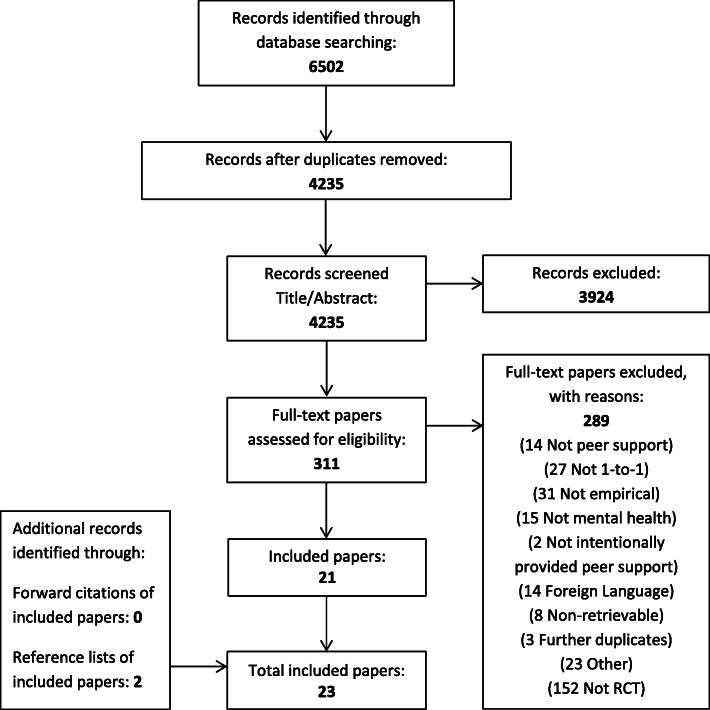
We searched MEDLINE, PsycINFO, Embase, CINAHL and Cochrane databases from inception until 13 June 2019. Included studies were assessed for risk of bias, and meta-analyses conducted where multiple trials provided usable data.
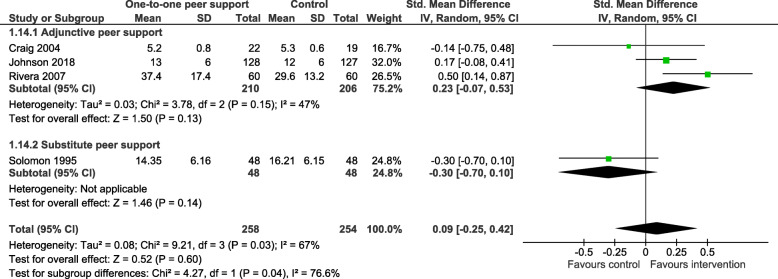
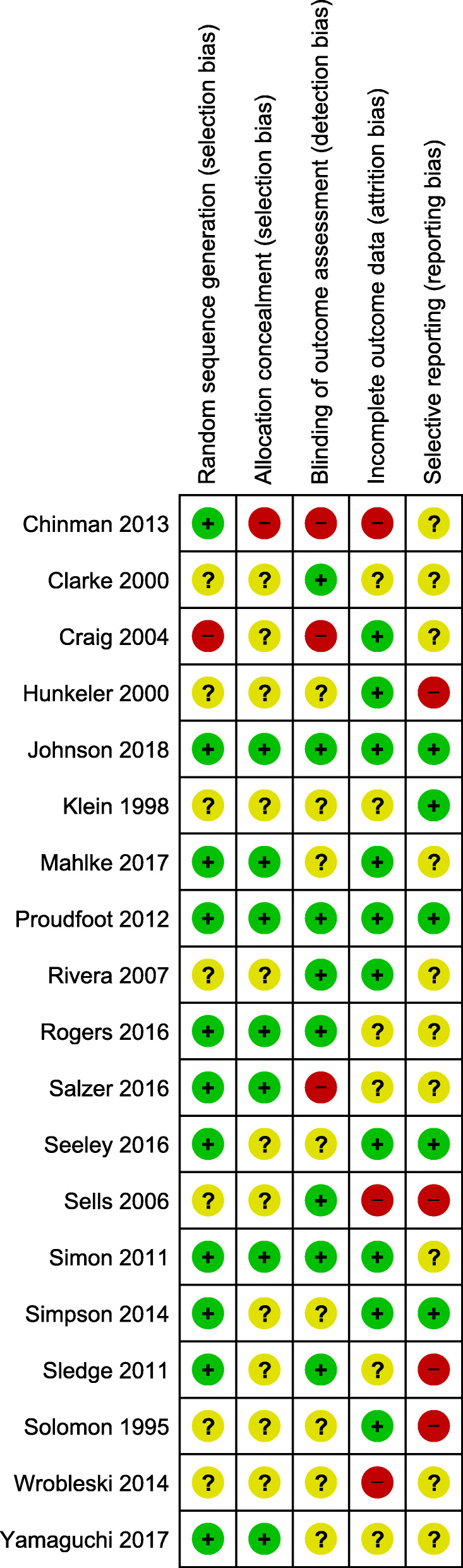
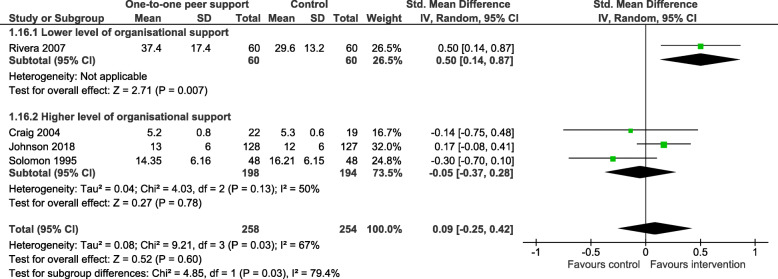
Twenty-three studies reporting nineteen trials were eligible, providing data from 3329 participants. While seven trials were of low to moderate risk of bias, incomplete reporting of data in many studies suggested bias in the evidence base. Peer support interventions included peer workers in paraclinical roles (e.g. case manager), providing structured behavioural interventions, or more flexible support for recovery. Meta-analyses were conducted for eleven outcomes, with evidence that one-to-one peer support may have a modest positive impact on self-reported recovery and empowerment. There was no impact on clinical symptoms or service use. Analyses of heterogeneity suggest that peer support might improve social network support.
One-to-one peer support in mental health services might impact positively on psychosocial outcomes, but is unlikely to improve clinical outcomes. In order to better inform the introduction of peer support into mental health services, improvement of the evidence base requires complete reporting of outcome data, selection of outcomes that relate to intervention mechanisms, exploration of heterogeneity in the implementation of peer support and focused reviews of specific types of one-to-one peer support.
Prospero identifier: CRD42015025621 .
同伴支持正在国际上的精神卫生服务中得到引入,通常是为了应对劳动力政策。早期的系统评价综合了不同模式的同伴支持(即小组和一对一),对其有效性的证据提供并不一致,同时也表明当时证据基础存在很大的异质性和质量问题。鉴于当前政策的关注,对重点关注一对一同伴支持的最新评价是及时的。本研究旨在系统评价针对使用精神卫生服务的成年人的一对一同伴支持干预措施的有效性证据,并探讨同伴支持干预措施的异质性。
我们从开始检索到 2019 年 6 月 13 日,检索了 MEDLINE、PsycINFO、Embase、CINAHL 和 Cochrane 数据库。纳入的研究评估了偏倚风险,并在多个试验提供了可用数据的情况下进行了荟萃分析。
有 23 项研究报告了 19 项试验符合条件,提供了 3329 名参与者的数据。虽然有 7 项试验的偏倚风险为低至中度,但许多研究中数据的不完整报告表明证据基础存在偏倚。同伴支持干预措施包括在辅助临床角色中的同伴工作者(如个案经理),提供结构化的行为干预,或更灵活的康复支持。对 11 项结果进行了荟萃分析,有证据表明一对一的同伴支持可能对自我报告的康复和赋权产生适度的积极影响。对临床症状或服务使用没有影响。异质性分析表明,同伴支持可能会改善社会网络支持。
精神卫生服务中的一对一同伴支持可能对心理社会结果产生积极影响,但不太可能改善临床结果。为了更好地为将同伴支持引入精神卫生服务提供信息,需要完整报告结果数据,选择与干预机制相关的结果,探索同伴支持实施中的异质性,并对特定类型的一对一同伴支持进行重点评价。
PROSPERO 标识符:CRD42015025621。