Bengoa Ana Agustina, Dardis Carolina, Gagliarini Nina, Garrote Graciela L, Abraham Analía G
Facultad de Ciencias Exactas, Centro de Investigación y Desarrollo en Criotecnología de Alimentos, Universidad Nacional de La Plata - Consejo Nacional de Investigaciones Científicas y Técnicas Centro Científico-Tecnológico La Plata - Comisión de Investigaciones Científicas de la Provincia de Buenos Aires, La Plata, Argentina.
Área Bioquímica y Control de Alimentos - Facultad de Ciencias Exactas, Universidad Nacional de La Plata, La Plata, Argentina.
Front Microbiol. 2020 Oct 16;11:583254. doi: 10.3389/fmicb.2020.583254. eCollection 2020.
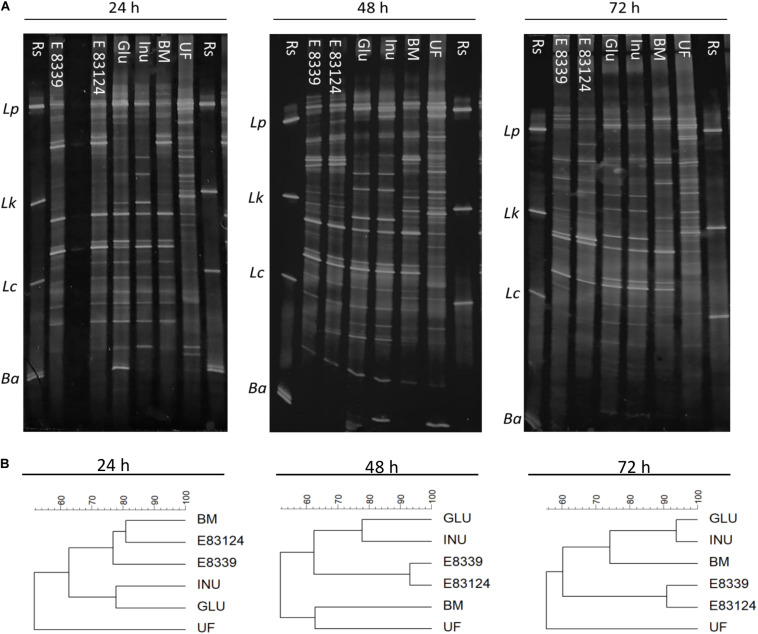
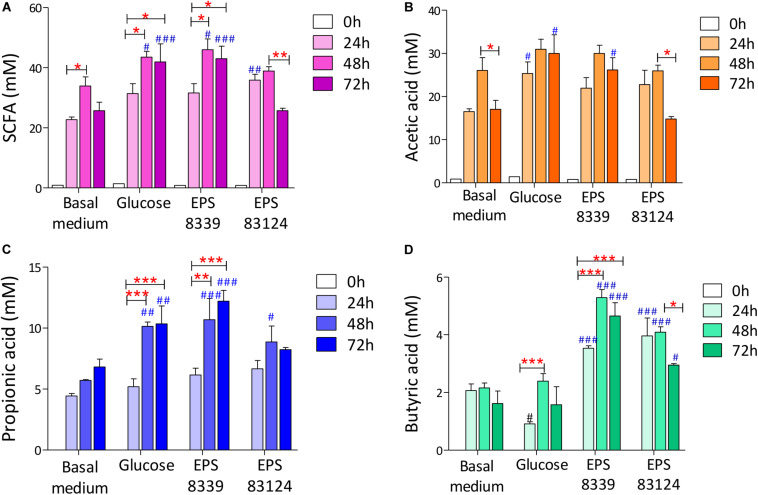
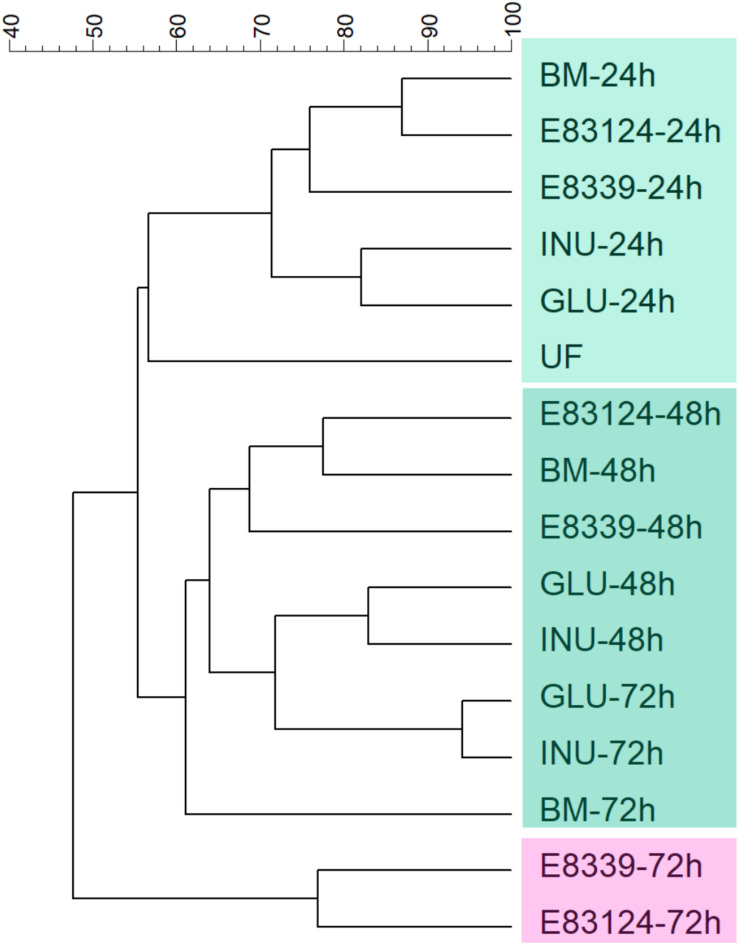
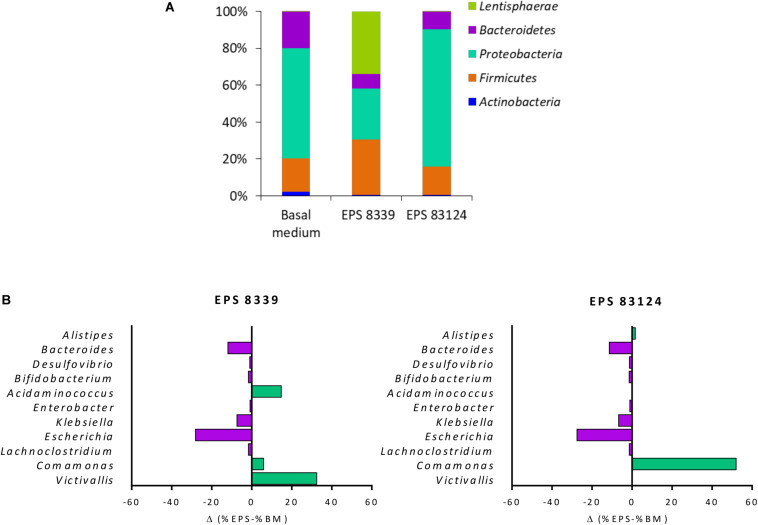
Microbiota coexists in true symbiosis with the host playing pivotal roles as a key element for well-being and health. Exopolysaccharides from lactic acid bacteria are an alternative as novel potential prebiotics that increase microbiota diversity. Considering this, the aim of the present work was to evaluate the capacity of the EPS produced by two strains isolated from kefir grains, to be metabolized by fecal microbiota producing short chain fatty acids. For this purpose, fecal samples from healthy children were inoculated in a basal medium with EPS and incubated in anaerobiosis at 37°C for 24, 48, and 72 h. DGGE profiles and the production of SCFA after fermentation were analyzed. Additionally, three selected samples were sequenced by mass sequencing analysis using Ion Torrent PGM. EPS produced by CIDCA 8339 (EPS) and CIDCA 83124 (EPS) are metabolized by fecal microbiota producing a significant increase in SCFA. EPS fermentation led to an increment of propionate and butyrate, while fermentation of EPS increased butyrate levels. Both EPS led to a profile of SCFA different from the ones obtained with inulin or glucose fermentation. DGGE profiles of 72 h fermentation demonstrated that both EPS showed a different band profile when compared to the controls; EPS profiles grouped in a cluster that have only 65% similarity with glucose or inulin profiles. Mass sequencing analysis demonstrated that the fermentation of EPS leads to an increase in the proportion of the genera , and and a significant drop in the proportion of enterobacteria. In the same direction, the fermentation of EPS also resulted in a marked reduction of Enterobacteriaceae with a significant increase in the genus . It was observed that the changes in fecal microbiota and SCFA profile exerted by both polymers are different probably due to differences in their structural characteristics. It can be concluded that EPS synthesized by both strains, could be potentially used as bioactive compound that modify the microbiota increasing the production of propionic and butyric acid, two metabolites highly associated with beneficial effects both at the gastrointestinal and extra-intestinal level.
微生物群与宿主以真正的共生关系共存,作为健康和福祉的关键要素发挥着关键作用。来自乳酸菌的胞外多糖作为一种新型潜在益生元,可增加微生物群的多样性。考虑到这一点,本研究的目的是评估从开菲尔粒中分离出的两株菌株产生的胞外多糖被粪便微生物群代谢产生短链脂肪酸的能力。为此,将健康儿童的粪便样本接种到含有胞外多糖的基础培养基中,在37℃厌氧条件下孵育24、48和72小时。分析发酵后的DGGE图谱和短链脂肪酸的产生情况。此外,使用Ion Torrent PGM通过大规模测序分析对三个选定的样本进行测序。CIDCA 8339(EPS)和CIDCA 83124(EPS)产生的胞外多糖被粪便微生物群代谢,导致短链脂肪酸显著增加。胞外多糖发酵导致丙酸和丁酸增加,而EPS发酵增加了丁酸水平。两种胞外多糖导致的短链脂肪酸谱与菊粉或葡萄糖发酵得到的不同。72小时发酵的DGGE图谱表明,与对照相比,两种胞外多糖均显示出不同的条带图谱;EPS图谱聚集在一个与葡萄糖或菊粉图谱仅有65%相似性的簇中。大规模测序分析表明,胞外多糖的发酵导致属、属和属的比例增加,肠杆菌的比例显著下降。同样,EPS的发酵也导致肠杆菌科显著减少,属显著增加。据观察,两种聚合物对粪便微生物群和短链脂肪酸谱的影响不同,这可能是由于它们结构特征的差异。可以得出结论,两株菌株合成的胞外多糖有可能用作生物活性化合物,改变微生物群,增加丙酸和丁酸的产生,这两种代谢物在胃肠道和肠外水平都与有益作用高度相关。