Department of Life Sciences, Imperial College London, London, United Kingdom.
Instituto Gulbenkian de Ciência, Oeiras, Portugal.
Front Immunol. 2020 Oct 8;11:589380. doi: 10.3389/fimmu.2020.589380. eCollection 2020.
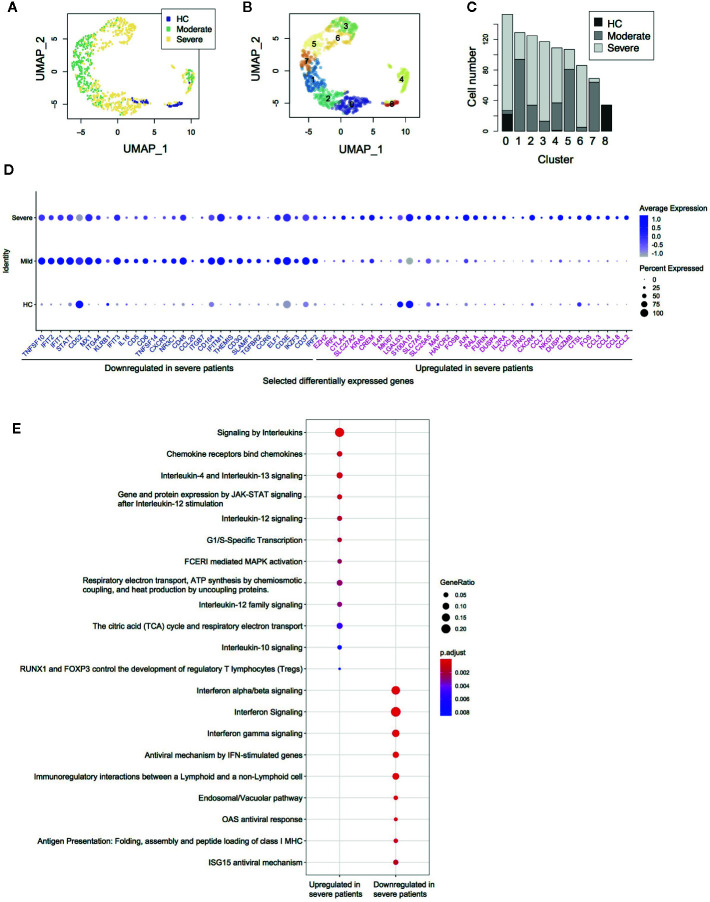
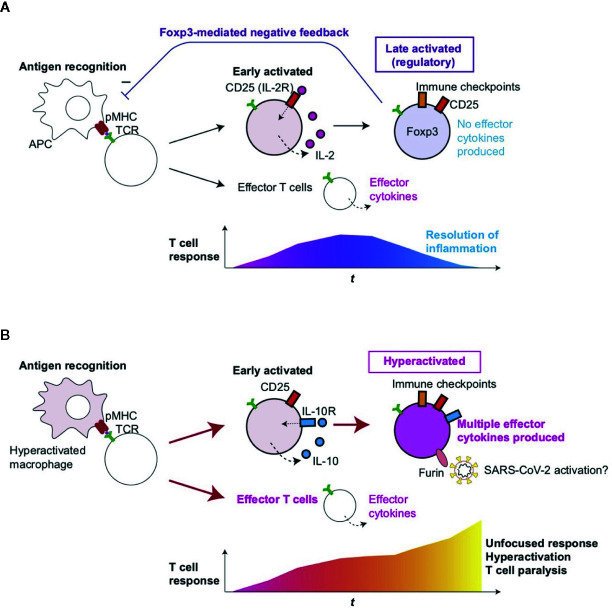
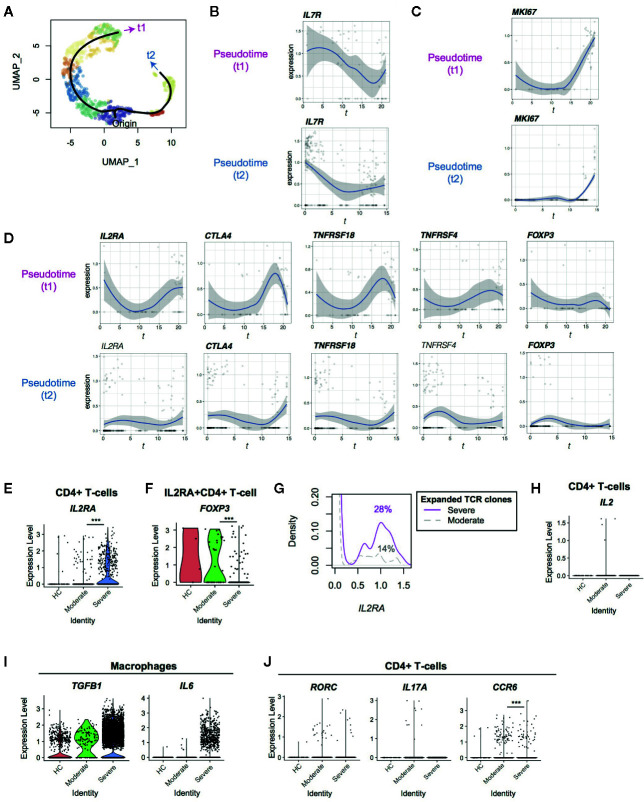
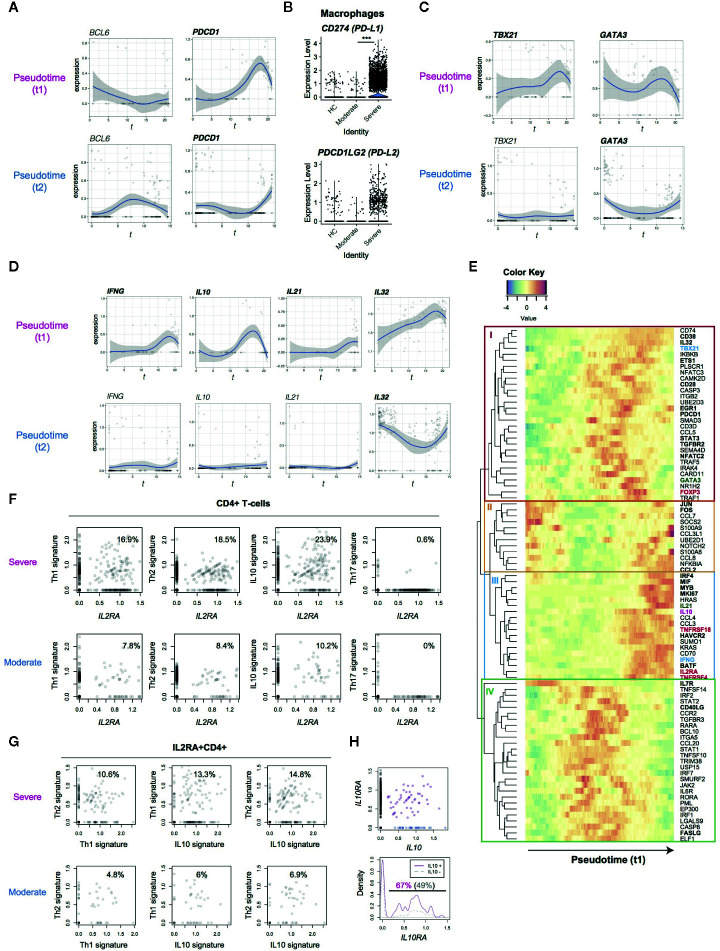
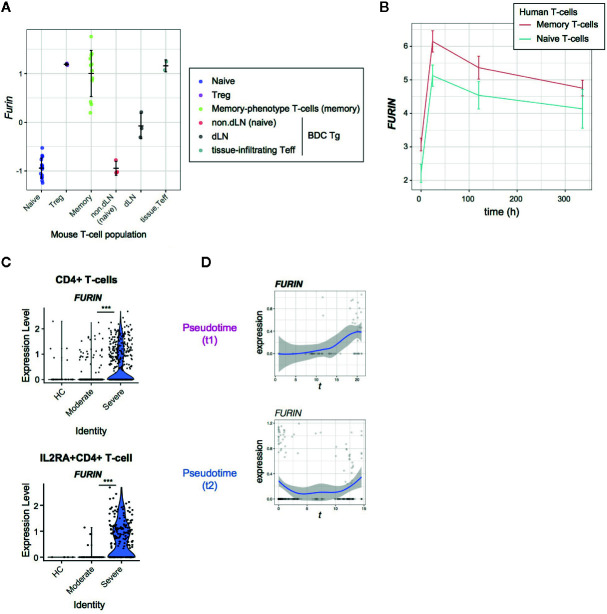
Severe COVID-19 patients show various immunological abnormalities including T-cell reduction and cytokine release syndrome, which can be fatal and is a major concern of the pandemic. However, it is poorly understood how T-cell dysregulation can contribute to the pathogenesis of severe COVID-19. Here we show single cell-level mechanisms for T-cell dysregulation in severe COVID-19, demonstrating new pathogenetic mechanisms of T-cell activation and differentiation underlying severe COVID-19. By sorting CD4+ T-cells from a single cell RNA-seq dataset, we found that CD4+ T-cells were highly activated and showed unique differentiation pathways in the lung of severe COVID-19 patients. Notably, those T-cells in severe COVID-19 patients highly expressed immunoregulatory receptors and CD25, whilst repressing the expression of FOXP3. Furthermore, we show that CD25 hyperactivated T-cells differentiate into multiple helper T-cell lineages, showing multifaceted effector T-cells with Th1 and Th2 characteristics. Lastly, we show that CD25-expressing hyperactivated T-cells produce the protease Furin, which facilitates the viral entry of SARS-CoV-2. Collectively, CD4 T-cells from severe COVID-19 patients are hyperactivated and FOXP3-mediated negative feedback mechanisms are impaired in the lung, which may promote immunopathology. Therefore, our study proposes a new model of T-cell hyperactivation and paralysis that drives immunopathology in severe COVID-19.
严重 COVID-19 患者表现出各种免疫异常,包括 T 细胞减少和细胞因子释放综合征,这可能是致命的,也是大流行的主要关注点。然而,人们对 T 细胞失调如何导致严重 COVID-19 的发病机制知之甚少。在这里,我们展示了严重 COVID-19 中 T 细胞失调的单细胞水平机制,证明了严重 COVID-19 中 T 细胞激活和分化的新发病机制。通过从单细胞 RNA-seq 数据集分选 CD4+ T 细胞,我们发现 CD4+ T 细胞在严重 COVID-19 患者的肺部高度激活,并表现出独特的分化途径。值得注意的是,严重 COVID-19 患者中的这些 T 细胞高度表达免疫调节受体和 CD25,同时抑制 FOXP3 的表达。此外,我们表明 CD25 过度激活的 T 细胞分化为多个辅助性 T 细胞谱系,表现出具有 Th1 和 Th2 特征的多方面效应 T 细胞。最后,我们表明表达 CD25 的过度激活的 T 细胞产生蛋白酶 Furin,这促进了 SARS-CoV-2 的病毒进入。总之,严重 COVID-19 患者的 CD4 T 细胞过度激活,肺中 FOXP3 介导的负反馈机制受损,这可能促进免疫病理学。因此,我们的研究提出了一种新的 T 细胞过度激活和麻痹模型,该模型驱动严重 COVID-19 中的免疫病理学。