NYU Grossman School of Medicine, Division of Movement Disorders, New York, NY, US.
Tremor Other Hyperkinet Mov (N Y). 2020 Oct 21;10:47. doi: 10.5334/tohm.560.
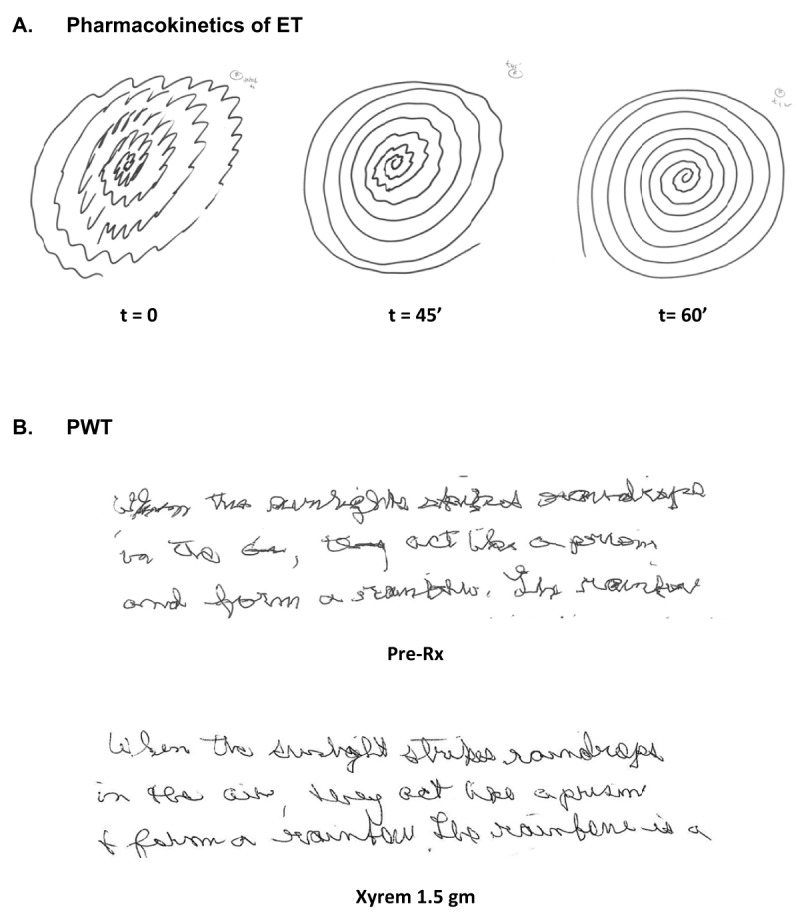
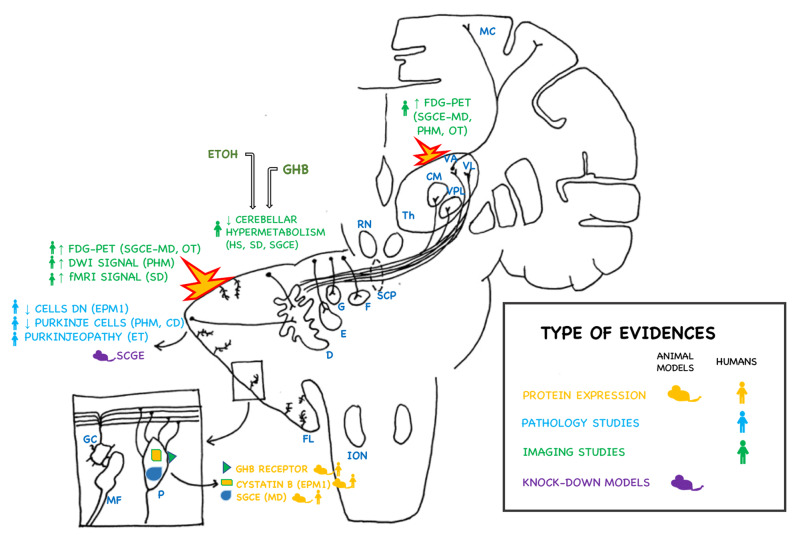
Patients with essential tremor, vocal tremor, torticollis, myoclonus-dystonia and posthypoxic myoclonus often benefit in a surprisingly rapid and robust manner from ingestion of a modest amount of alcohol (ethanol). Despite considerable investigation, the mechanism of ethanol's ability to produce this effect remains a mystery. In this paper, we review the pharmacology of ethanol and its analogue GHB (or sodium oxybate), summarize the published literature of alcohol-responsive hyperkinetic movement disorders, and demonstrate videos of patients we have treated over the last fifteen years with either an ethanol challenge or with chronic sodium oxybate therapy. We then propose a novel explanation for this phenomenon-namely, that ingestion of doses of ethanol (or sodium oxybate) normalizes the aberrant motor networks underling these disorders. We propose that alcohol and its analogues improve clinical symptoms and their physiologic correlate by restoring the normal firing pattern of the major outflow pathways of the cerebellum (the Purkinje cells and deep cerebellar nuclei), We present evidence to support this hypothesis in animal models and in affected patients, and suggest future investigations to test this model.
特发性震颤、声带震颤、痉挛性斜颈、肌阵挛-肌张力障碍和低氧后肌阵挛患者常通过摄入适量的酒精(乙醇)而令人惊讶地快速且显著地受益。尽管进行了大量研究,但乙醇产生这种效果的机制仍然是一个谜。在本文中,我们回顾了乙醇及其类似物 GHB(或羟丁酸钠)的药理学,总结了已发表的关于酒精反应性运动障碍的文献,并展示了我们在过去十五年中用乙醇挑战或慢性羟丁酸钠治疗的患者的视频。然后,我们提出了一种解释这种现象的新方法,即摄入适量的乙醇(或羟丁酸钠)可以使这些疾病的异常运动网络正常化。我们提出,酒精及其类似物通过恢复小脑(浦肯野细胞和小脑深部核)的主要传出通路的正常放电模式来改善临床症状及其生理相关性。我们提出了在动物模型和受影响患者中支持这一假设的证据,并提出了未来的研究来测试这一模型。