Wu Vincent W C, Ying Michael Tc, Kwong Dora Lw, Khong Pek-Lan, Wong Gary Kw, Tam Shing-Yau
Department of Health Technology and Informatics, Hong Kong Polytechnic University, Hung Hom, Kowloon, Hong Kong.
Department of Clinical Oncology, Li Ka Shing Faculty of Medicine, The University of Hong Kong, Pok Fu Lam, Hong Kong.
BJR Open. 2020 Sep 2;2(1):20200003. doi: 10.1259/bjro.20200003. eCollection 2020.
With regard to the intensity modulated radiotherapy (IMRT) of nasopharyngeal carcinoma (NPC) patients, this longitudinal study evaluated the radiation-induced changes in the parotid and submandibular glands in terms of gland size, echogenicity and haemodynamic parameters.
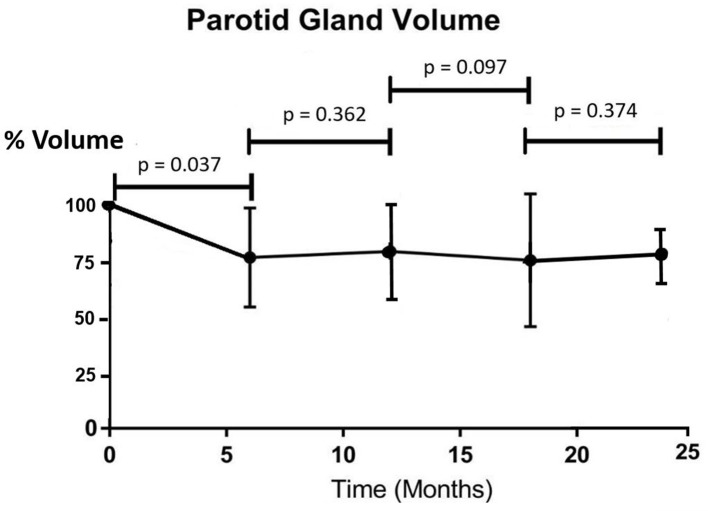
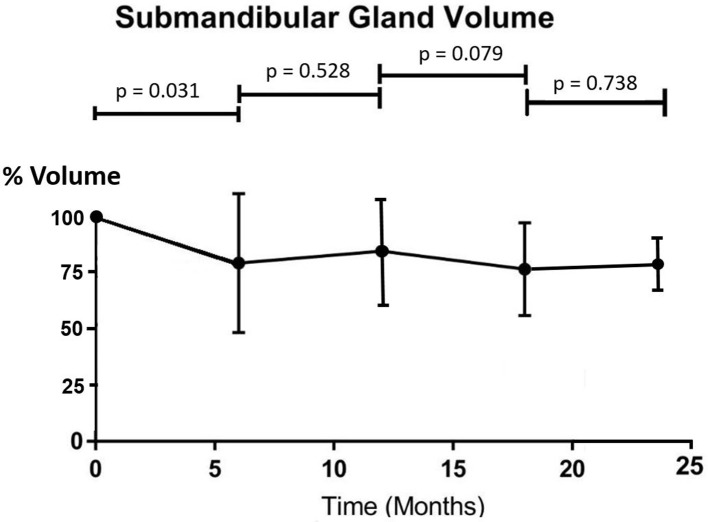
21 NPC patients treated by IMRT underwent MRI and ultrasound scans before radiotherapy, and at 6, 12, 18 and 24 months after treatment. Parotid and submandibular gland volumes were measured from the MRI images, whereas the parotid echogenicity and haemodynamic parameters including the resistive index, pulsatility index, peak systolic velocity and end diastolic velocity were evaluated by ultrasonography. Trend lines were plotted to show the pattern of changes. The correlations of gland doses and the post-RT changes were also studied.
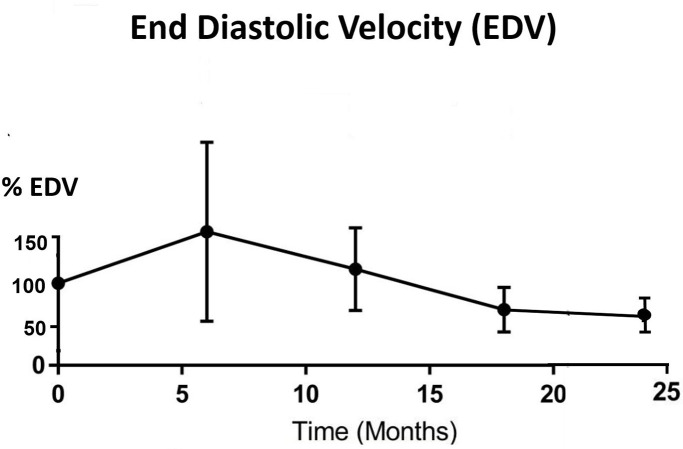
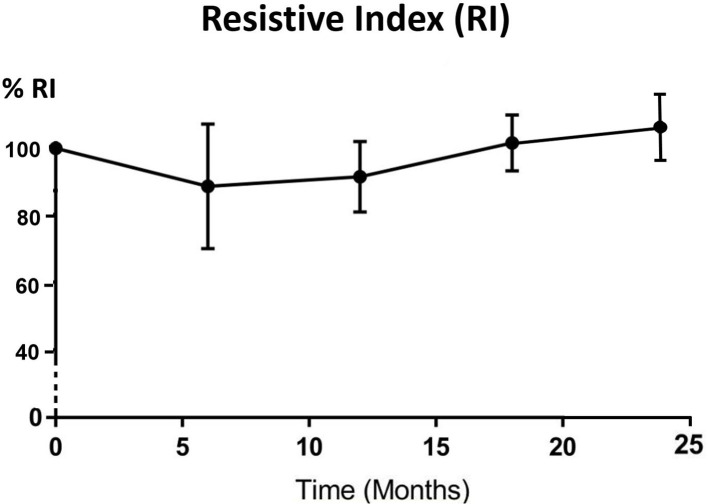
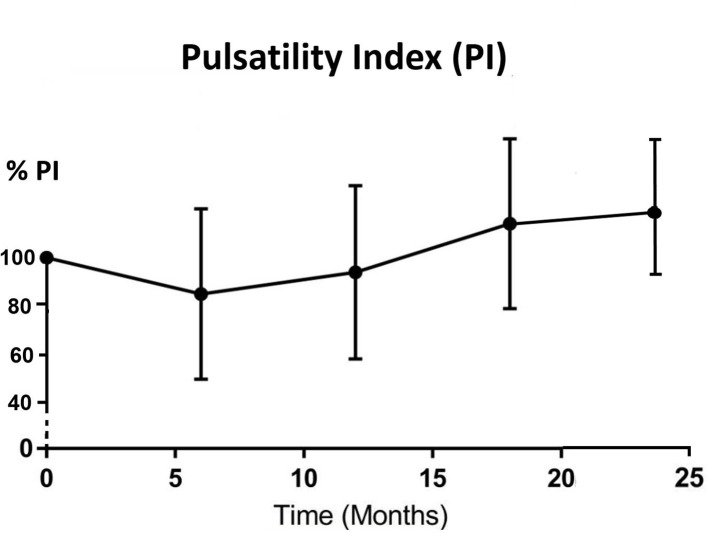
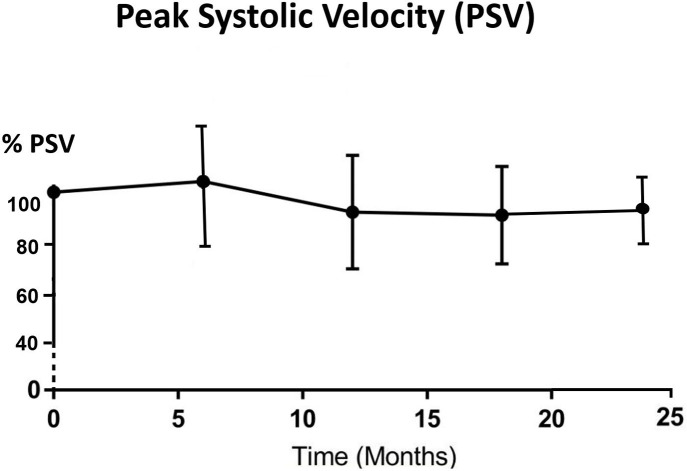
The volume of the parotid and submandibular glands demonstrated a significant drop from pre-RT to 6 months post-RT. The parotid gland changed from hyperechoic before RT to either isoechoic or hypoechoic after treatment. The resistive index and pulsatility index decreased from pre-RT to 6 month post-RT, then started to increase at 12 month time interval. Both peak systolic velocity and end diastolic velocity increased after 6 months post-RT then followed a decreasing trend up to 24 months post-RT. There was mild correlation between post-RT gland dose and gland volume, but not with haemodynamic changes.
Radiation from IMRT caused shrinkage of parotid and submandibular glands in NPC patients. It also changed the echogenicity and vascular condition of the parotid gland. The most significant changes were observed at 6 months after radiotherapy.
It is the first paper that reports on the longitudinal changes of salivary gland volume, echogenicity and haemodynamic parameters altogether in NPC patients after radiotherapy. The results are useful for the prediction of glandular changes that is associated with xerostomia, which help to provide timely management of the complication when the patients attend follow-up visits.
针对鼻咽癌(NPC)患者的调强放射治疗(IMRT),本纵向研究从腺体大小、回声性及血流动力学参数方面评估了腮腺和颌下腺的放射性变化。
21例行IMRT治疗的NPC患者在放疗前、治疗后6个月、12个月、18个月及24个月接受了MRI和超声扫描。从MRI图像测量腮腺和颌下腺体积,而通过超声检查评估腮腺回声性及包括阻力指数、搏动指数、收缩期峰值速度和舒张末期速度在内的血流动力学参数。绘制趋势线以显示变化模式。还研究了腺体剂量与放疗后变化的相关性。
腮腺和颌下腺体积从放疗前到放疗后6个月显著下降。腮腺在放疗前为高回声,治疗后变为等回声或低回声。阻力指数和搏动指数从放疗前到放疗后6个月下降,然后在12个月时间间隔开始增加。收缩期峰值速度和舒张末期速度在放疗后6个月后增加,然后在放疗后24个月前呈下降趋势。放疗后腺体剂量与腺体体积之间存在轻度相关性,但与血流动力学变化无关。
IMRT放疗导致NPC患者腮腺和颌下腺萎缩。它还改变了腮腺的回声性和血管状况。放疗后6个月观察到最显著的变化。
这是第一篇全面报道NPC患者放疗后唾液腺体积、回声性和血流动力学参数纵向变化的论文。这些结果有助于预测与口干相关的腺体变化,有助于在患者随访时及时处理并发症。