Department of Gastroenterology Endoscopy, Linyi Central Hospital, Linyi, Shandong 276400, P.R. China.
Department of Anorectal Surgery, The First Affiliated Hospital of University of South China, Hengyang, Hunan 421001, P.R. China.
Mol Med Rep. 2021 Jan;23(1). doi: 10.3892/mmr.2020.11669. Epub 2020 Nov 12.
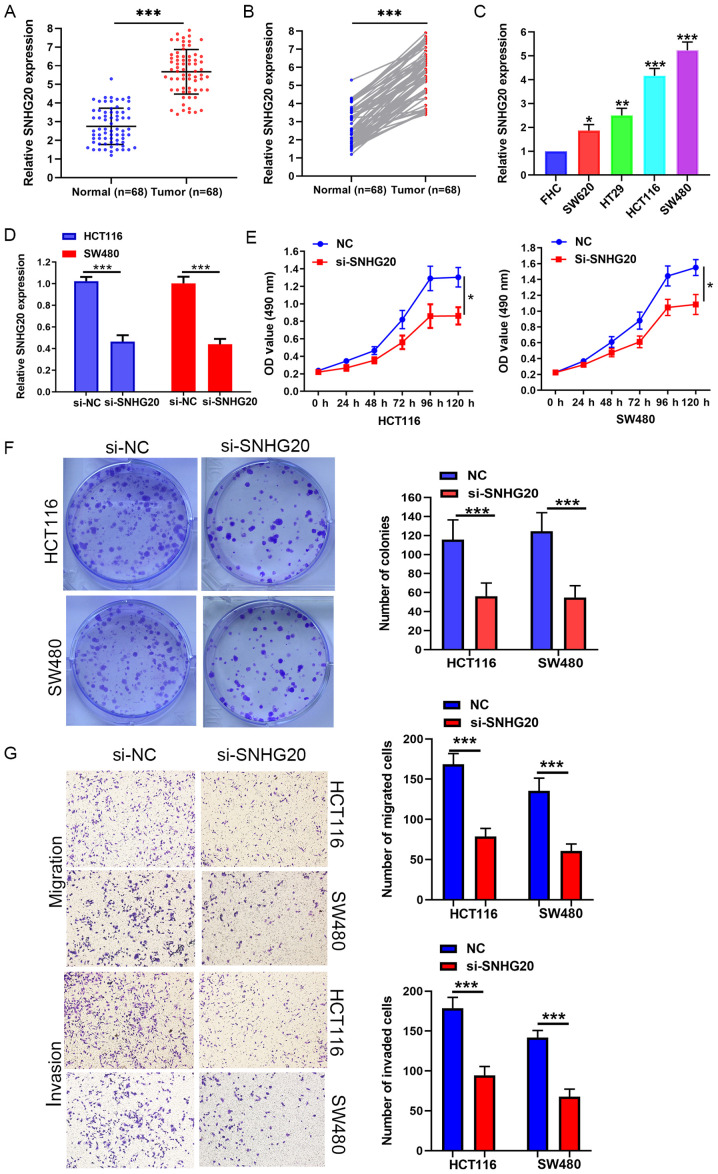
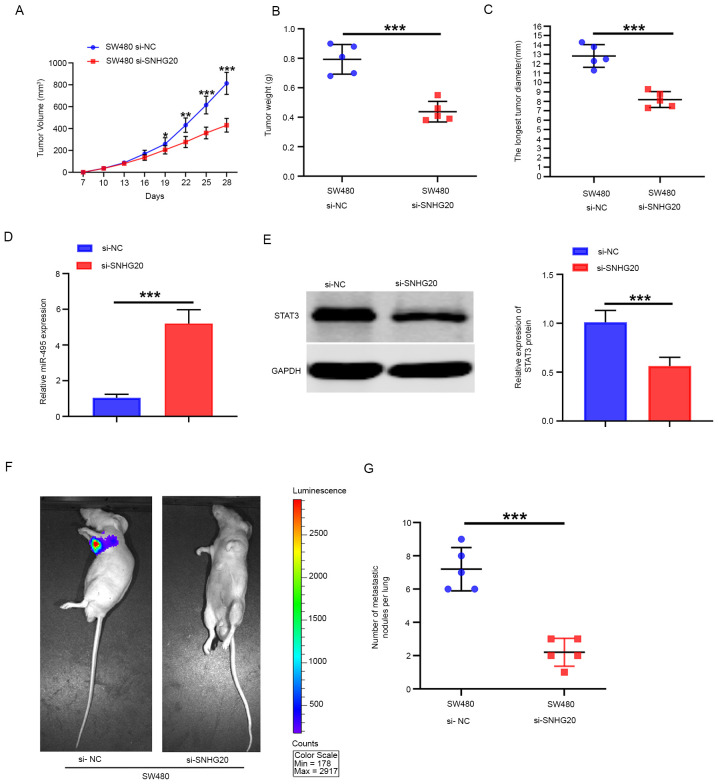
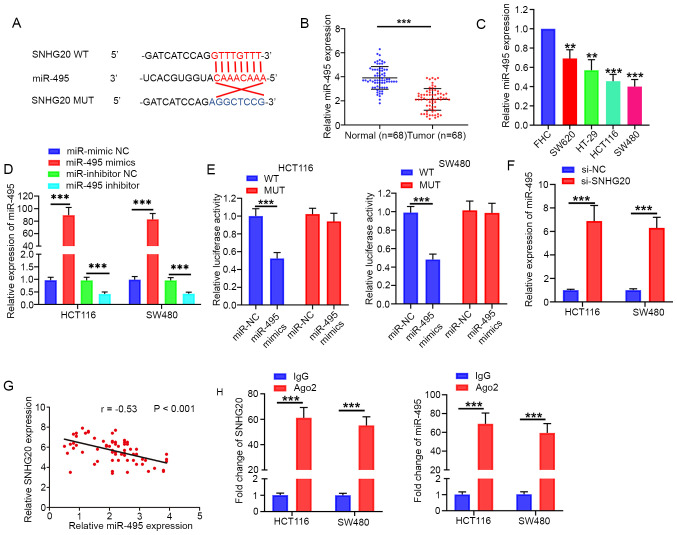
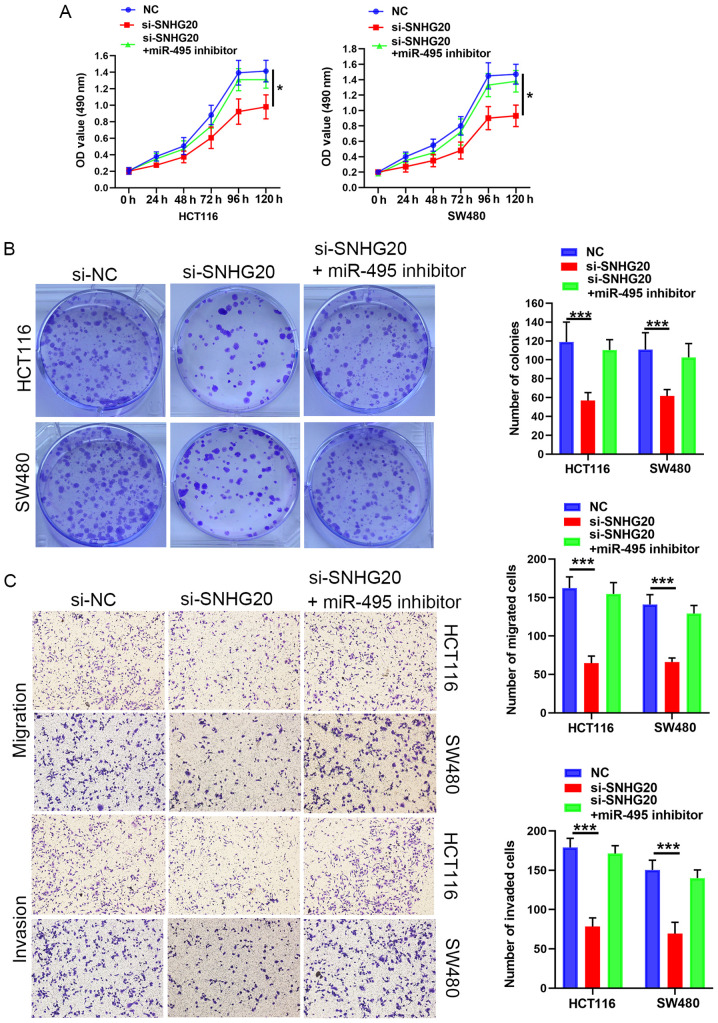
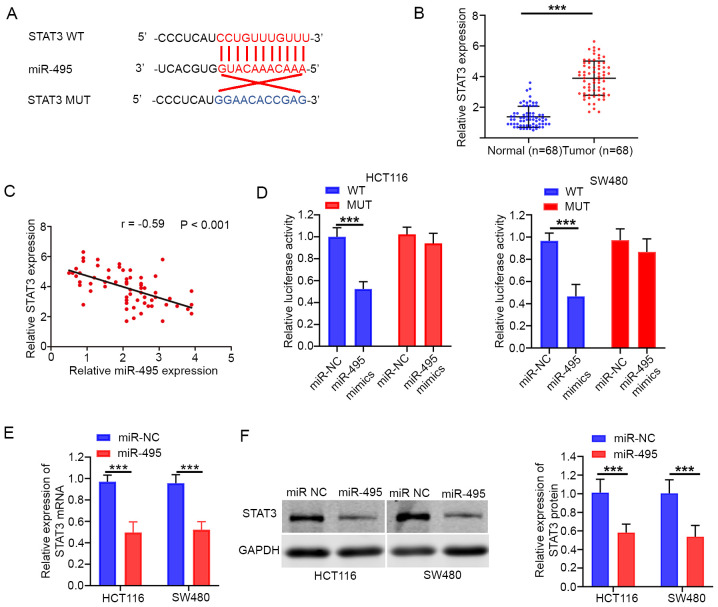
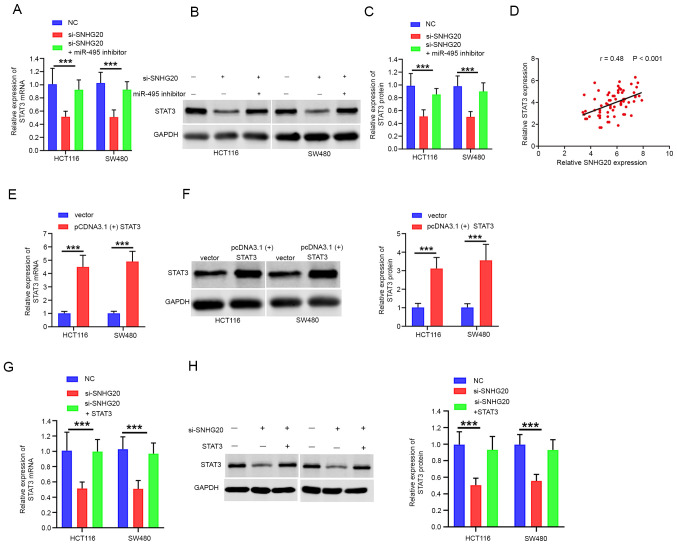
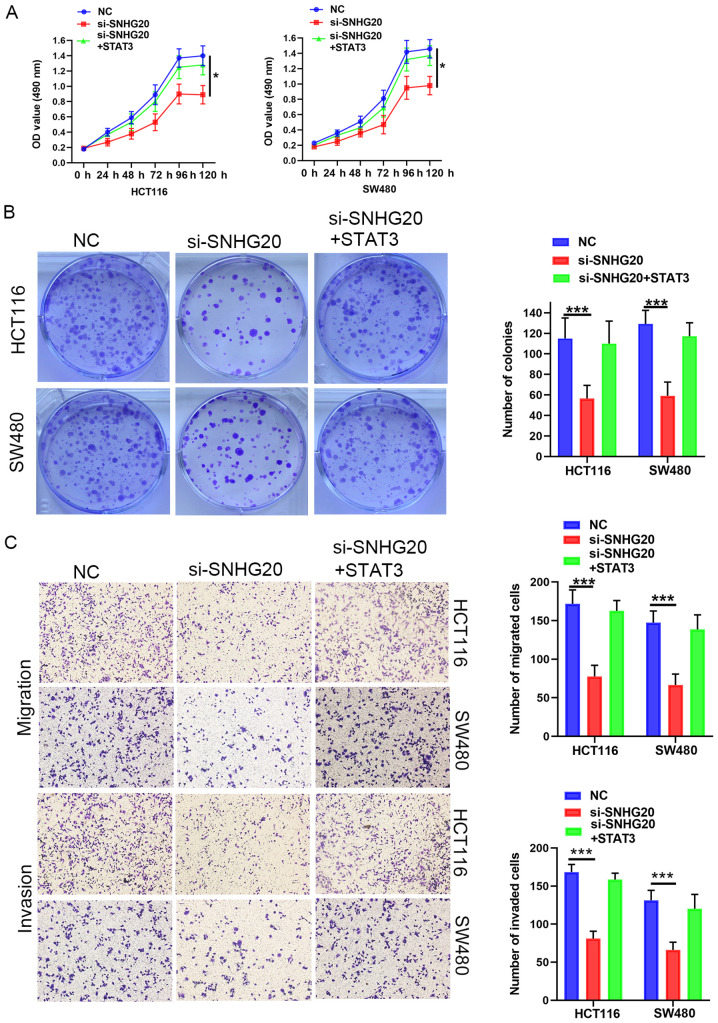
Colorectal cancer (CRC) is one of the primary causes of cancer‑associated mortality worldwide. However, the potential molecular mechanism of CRC progression remains unknown. Long non‑coding RNA small nucleolar RNA host gene 20 (SNHG20) has been demonstrated to be involved in the development and progression of a variety of tumors, including CRC. However, the involvement of SNHG20 in CRC progression remains unclear. The aim of the present study was to investigate the functional role and molecular mechanism of SNHG20 in CRC progression. In the present study, SNHG20 expression was found to be significantly upregulated in CRC tissues and cell lines. Association analysis indicated that high SNHG20 expression was significantly association with greater tumor size (P=0.014), tumor invasion depth (P=0.019), positive lymph node status (P=0.022), distant metastasis (P=0.017) and advanced tumor node metastasis stage (P=0.038). Loss‑of‑function experiments indicated that SNHG20 knockdown could significantly suppress proliferation, migration and invasion . Notably, SNHG20 knockdown significantly inhibited tumor growth and lung metastasis . Bioinformatics analysis and luciferase reporter assays confirmed that microRNA (miR)‑495 was a direct target of SNHG20. Rescue assays indicated that miR‑495 inhibitor reversed the suppressive effects of SNHG20 knockdown on CRC progression. Moreover, STAT3 was identified as a downstream target of miR‑495 in CRC. STAT3 overexpression partially rescued the inhibitory effects of SNHG20 knockdown on CRC progression. Taken together, the results revealed that SNHG20 facilitated CRC progression by regulating STAT3 expression and by sponging miR‑495.
结直肠癌(CRC)是全球癌症相关死亡的主要原因之一。然而,CRC 进展的潜在分子机制尚不清楚。长链非编码 RNA 小核仁 RNA 宿主基因 20(SNHG20)已被证明参与多种肿瘤的发生和发展,包括 CRC。然而,SNHG20 参与 CRC 进展的机制尚不清楚。本研究旨在探讨 SNHG20 在 CRC 进展中的功能作用和分子机制。本研究发现,SNHG20 在 CRC 组织和细胞系中的表达显著上调。关联分析表明,高 SNHG20 表达与肿瘤体积较大(P=0.014)、肿瘤浸润深度(P=0.019)、阳性淋巴结状态(P=0.022)、远处转移(P=0.017)和晚期肿瘤淋巴结转移分期(P=0.038)显著相关。功能丧失实验表明,SNHG20 敲低可显著抑制增殖、迁移和侵袭。值得注意的是,SNHG20 敲低显著抑制肿瘤生长和肺转移。生物信息学分析和荧光素酶报告基因实验证实,微小 RNA(miR)-495 是 SNHG20 的直接靶标。挽救实验表明,miR-495 抑制剂逆转了 SNHG20 敲低对 CRC 进展的抑制作用。此外,STAT3 被鉴定为 CRC 中 miR-495 的下游靶标。STAT3 过表达部分挽救了 SNHG20 敲低对 CRC 进展的抑制作用。综上所述,这些结果表明,SNHG20 通过调节 STAT3 表达和海绵 miR-495 促进 CRC 进展。