Department of Urban Engineering, Hanbat National University, Daejeon 34158, Korea.
Sensors (Basel). 2020 Nov 9;20(21):6374. doi: 10.3390/s20216374.
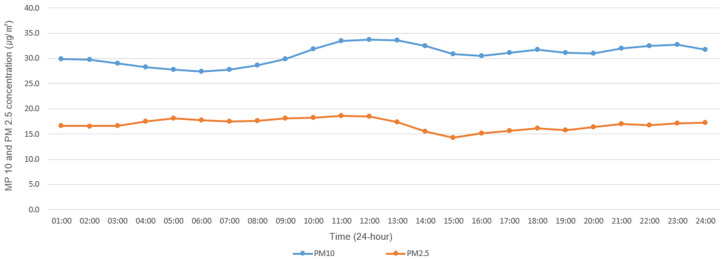
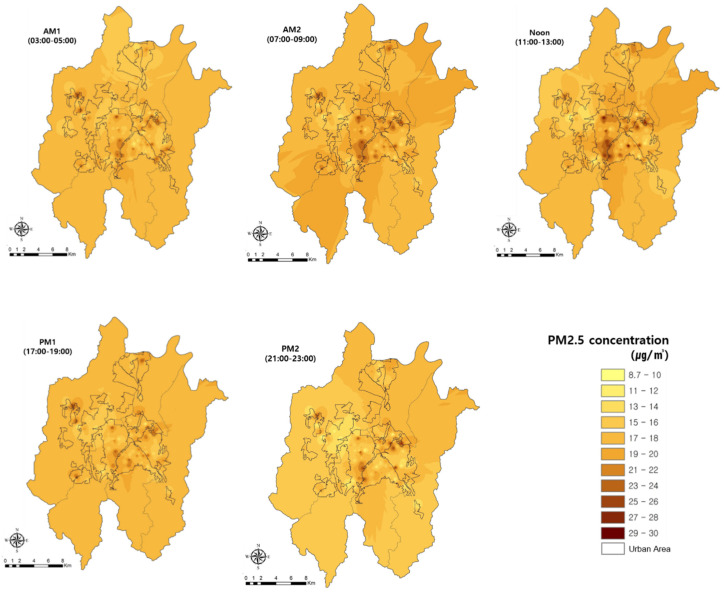
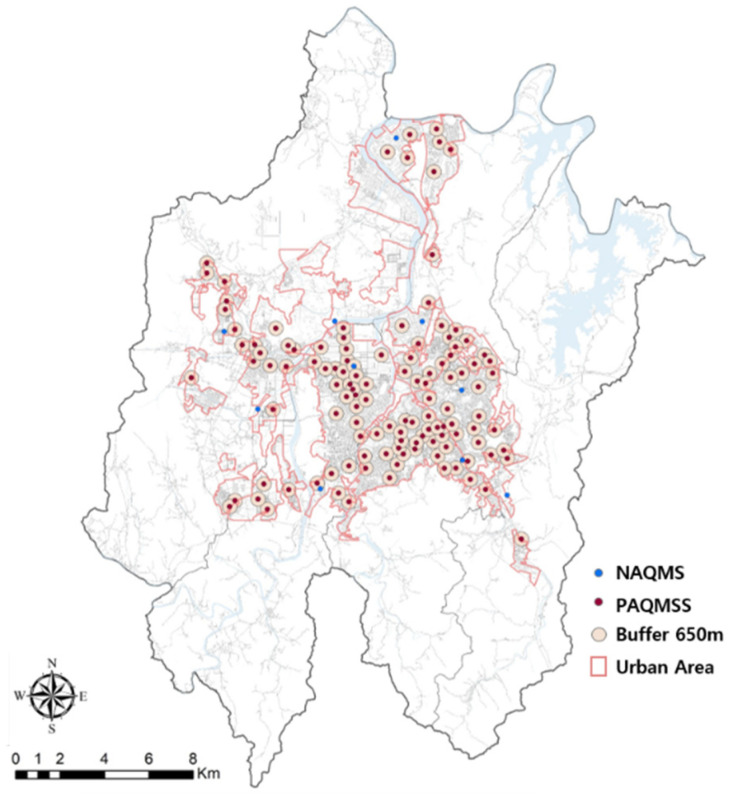
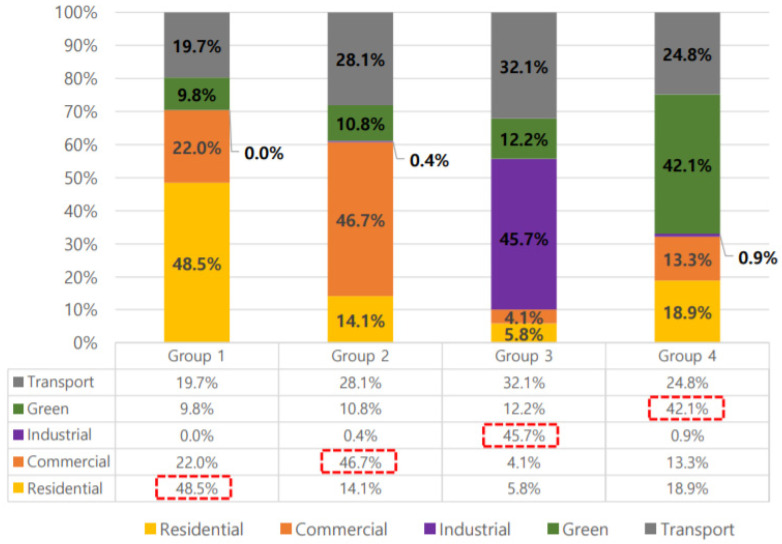
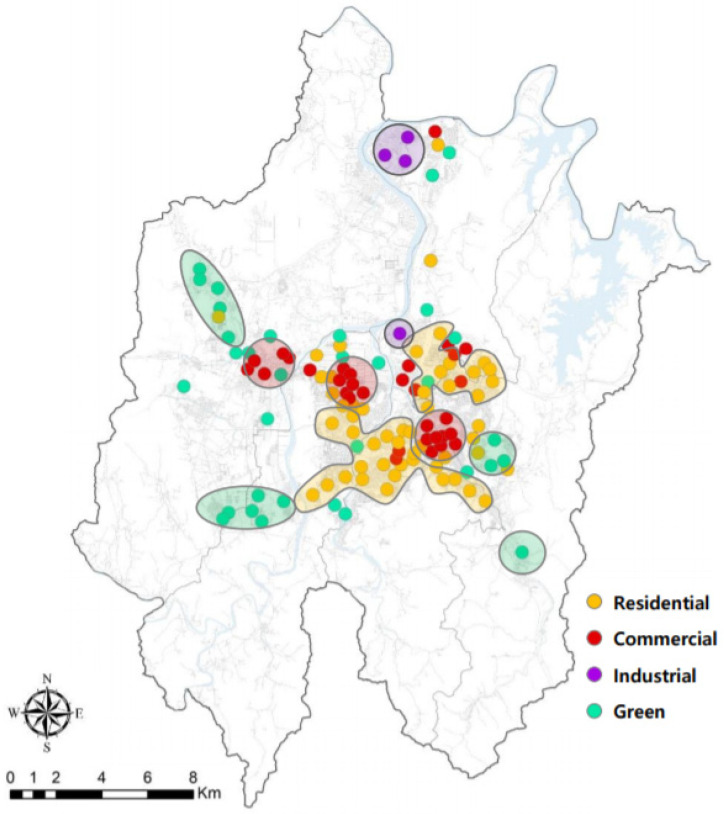
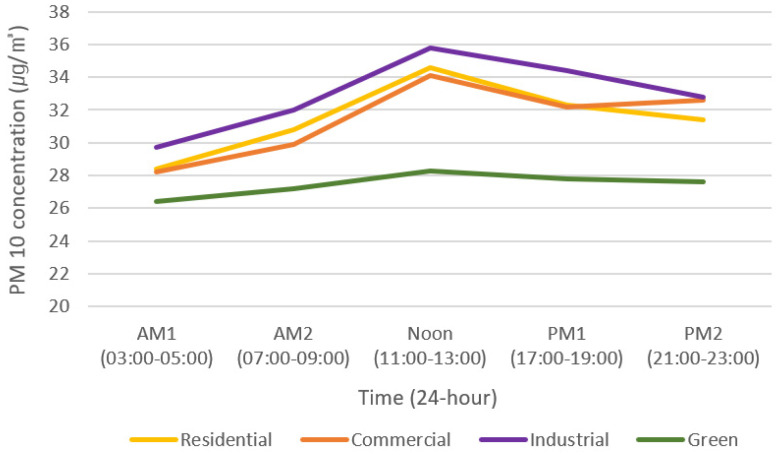
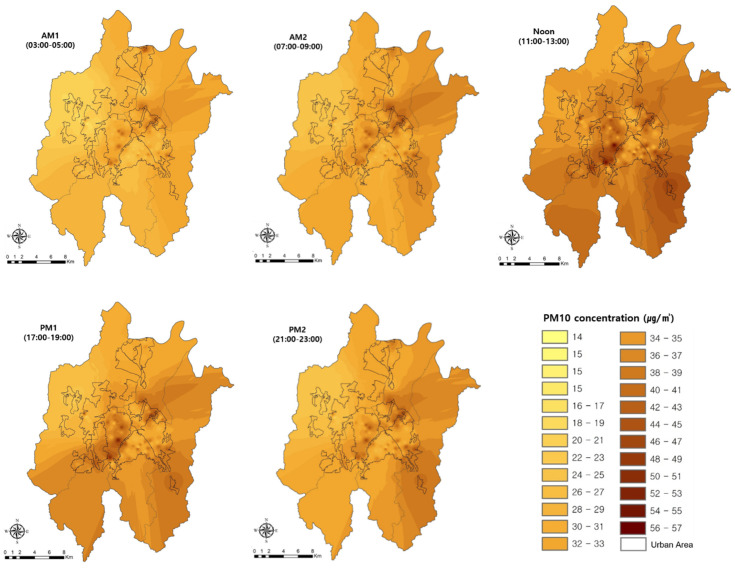
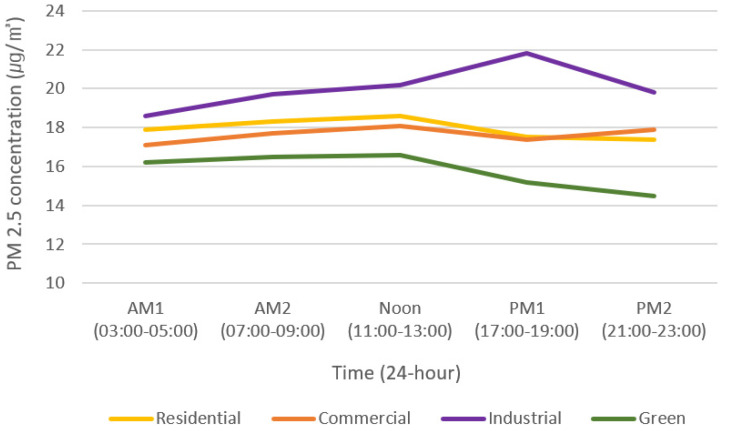
This study analyzed the changes in particulate matter concentrations according to land-use over time and the spatial characteristics of the distribution of particulate matter concentrations using big data of particulate matter in Daejeon, Korea, measured by Private Air Quality Monitoring Smart Sensors (PAQMSSs). Land-uses were classified into residential, commercial, industrial, and green groups according to the primary land-use around the 650-m sensor radius. Data on particulate matter with an aerodynamic diameter <10 µm (PM10) and <2.5 µm (PM2.5) were captured by PAQMSSs from September‒October (i.e., fall) in 2019. Differences and variation characteristics of particulate matter concentrations between time periods and land-uses were analyzed and spatial mobility characteristics of the particulate matter concentrations over time were analyzed. The results indicate that the particulate matter concentrations in Daejeon decreased in the order of industrial, housing, commercial and green groups overall; however, the concentrations of the commercial group were higher than those of the residential group during 21:00-23:00, which reflected the vital nighttime lifestyle in the commercial group in Korea. Second, the green group showed the lowest particulate matter concentration and the industrial group showed the highest concentration. Third, the highest particulate matter concentrations were in urban areas where commercial and business functions were centered and in the vicinity of industrial complexes. Finally, over time, the PM10 concentrations were clearly high at noon and low at night, whereas the PM2.5 concentrations were similar at certain areas.
本研究利用韩国大田市私人空气质量监测智能传感器(PAQMSS)测量的大气颗粒物大数据,分析了随时间推移的土地利用变化对颗粒物浓度的影响,以及颗粒物浓度的空间分布特征。根据传感器半径 650 米范围内的主要土地利用情况,将土地利用分为住宅、商业、工业和绿化组。PAQMSS 于 2019 年 9 月至 10 月(即秋季)期间捕获了空气动力学直径<10μm(PM10)和<2.5μm(PM2.5)的颗粒物数据。分析了不同时间段和土地利用类型之间颗粒物浓度的差异和变化特征,以及颗粒物浓度随时间的空间迁移特征。结果表明,大田市的颗粒物浓度总体上按工业、住房、商业和绿化组的顺序递减;然而,在 21:00-23:00 期间,商业组的浓度高于住宅组,反映了韩国商业组夜间活跃的生活方式。其次,绿化组显示出最低的颗粒物浓度,而工业组显示出最高的浓度。第三,颗粒物浓度最高的地区是商业和商业功能集中的城区,以及工业园区附近。最后,随着时间的推移,PM10 浓度在中午明显较高,晚上较低,而在某些地区 PM2.5 浓度相似。