Serra Marina, Columbano Amedeo, Perra Andrea, Kowalik Marta Anna
Unit of Oncology and Molecular Pathology, Department of Biomedical Sciences, University of Cagliari, 09042 Monserrato, Italy.
Cancers (Basel). 2020 Nov 10;12(11):3318. doi: 10.3390/cancers12113318.
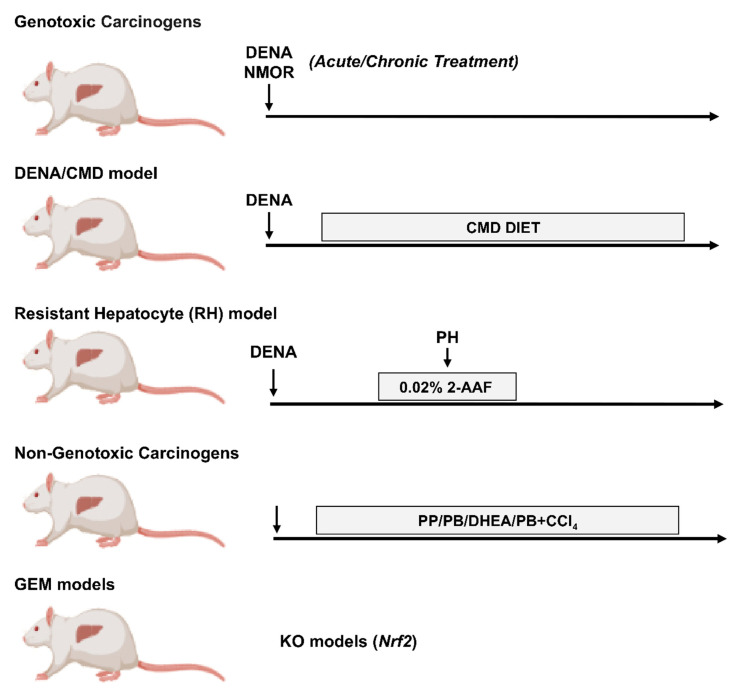
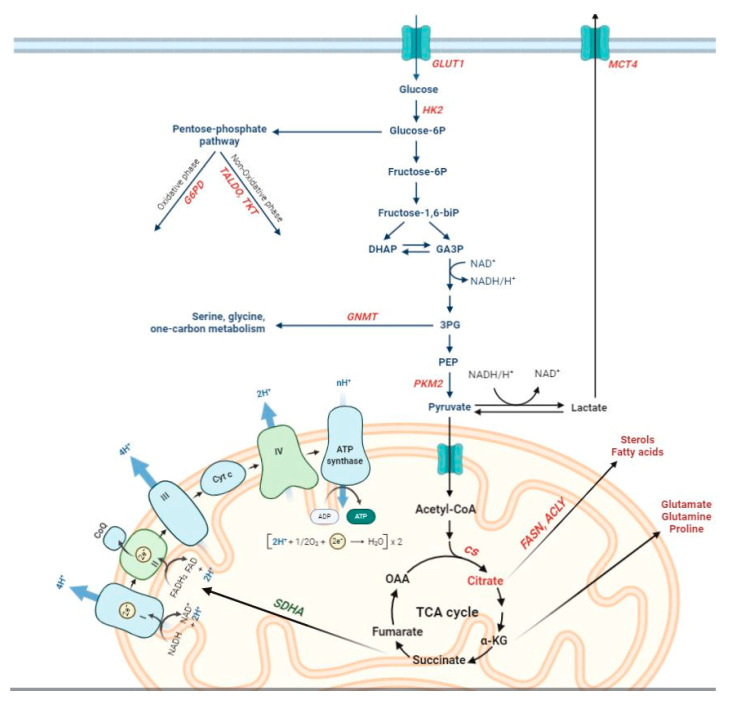
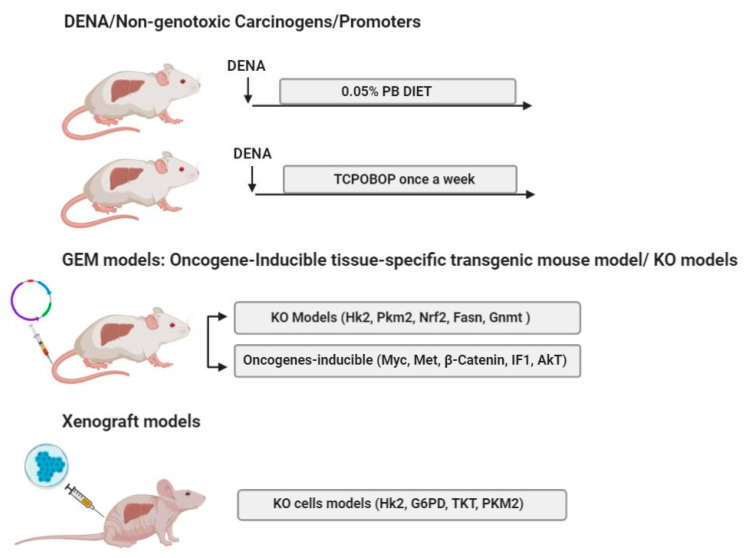
Hepatocellular carcinoma (HCC) is one the most frequent and lethal human cancers. At present, no effective treatment for advanced HCC exist; therefore, the overall prognosis for HCC patients remains dismal. In recent years, a better knowledge of the signaling pathways involved in the regulation of HCC development and progression, has led to the identification of novel potential targets for therapeutic strategies. However, the obtained benefits from current therapeutic options are disappointing. Altered cancer metabolism has become a topic of renewed interest in the last decades, and it has been included among the core hallmarks of cancer. In the light of growing evidence for metabolic reprogramming in cancer, a wide number of experimental animal models have been exploited to study metabolic changes characterizing HCC development and progression and to further expand our knowledge of this tumor. In the present review, we discuss several rodent models of hepatocarcinogenesis, that contributed to elucidate the metabolic profile of HCC and the implications of these changes in modulating the aggressiveness of neoplastic cells. We also highlight the apparently contrasting results stemming from different animal models. Finally, we analyze whether these observations could be exploited to improve current therapeutic strategies for HCC.
肝细胞癌(HCC)是人类最常见且致命的癌症之一。目前,尚无针对晚期HCC的有效治疗方法;因此,HCC患者的总体预后仍然很差。近年来,对参与HCC发生发展调控的信号通路有了更深入的了解,这使得人们能够识别出治疗策略的新潜在靶点。然而,目前治疗方案所带来的益处令人失望。在过去几十年中,癌症代谢改变已成为一个重新受到关注的话题,并且它已被纳入癌症的核心特征之中。鉴于越来越多的证据表明癌症中存在代谢重编程,人们利用了大量实验动物模型来研究HCC发生发展过程中的代谢变化,并进一步扩展我们对这种肿瘤的认识。在本综述中,我们讨论了几种肝癌发生的啮齿动物模型,这些模型有助于阐明HCC的代谢特征以及这些变化在调节肿瘤细胞侵袭性方面的意义。我们还强调了不同动物模型得出的明显相互矛盾的结果。最后,我们分析这些观察结果是否可用于改进当前的HCC治疗策略。