Tian Huining, Zhu Xiaoyu, Lv You, Jiao Yan, Wang Guixia
Department of Endocrinology and Metabolism, The First Hospital of Jilin University, Changchun 130021, Jilin, People's Republic of China.
Department of Nephrology, The First Hospital of Jilin University, Changchun 130021, Jilin, People's Republic of China.
Cancer Manag Res. 2020 Jul 17;12:5957-5974. doi: 10.2147/CMAR.S258196. eCollection 2020.
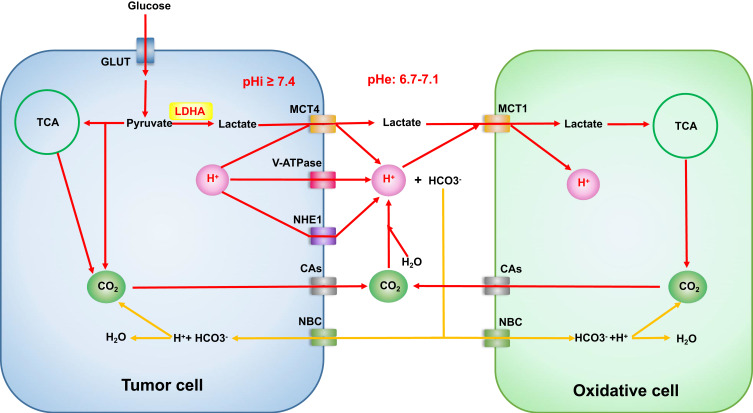
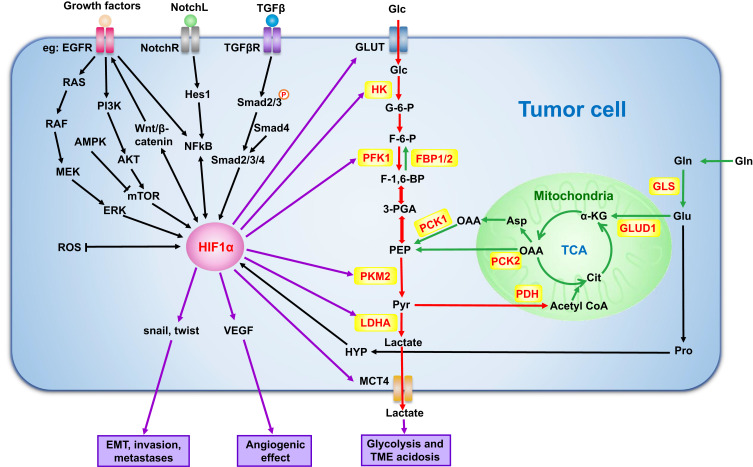
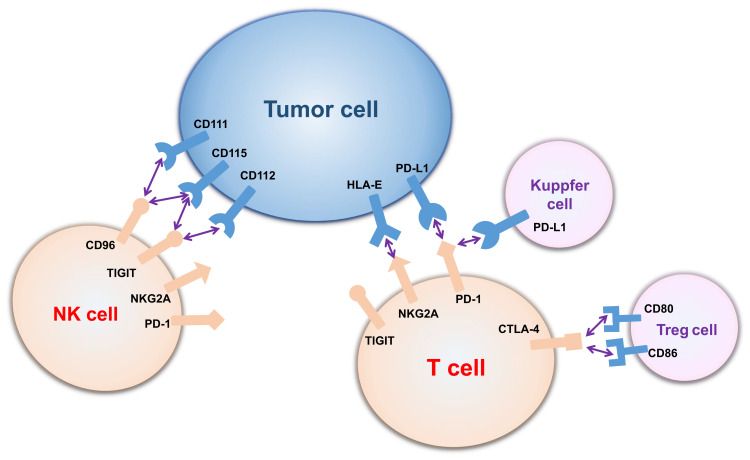
Hepatocellular carcinoma (HCC) is a tumor that exhibits glucometabolic reprogramming, with a high incidence and poor prognosis. Usually, HCC is not discovered until an advanced stage. Sorafenib is almost the only drug that is effective at treating advanced HCC, and promising metabolism-related therapeutic targets of HCC are urgently needed. The "Warburg effect" illustrates that tumor cells tend to choose aerobic glycolysis over oxidative phosphorylation (OXPHOS), which is closely related to the features of the tumor microenvironment (TME). The HCC microenvironment consists of hypoxia, acidosis and immune suppression, and contributes to tumor glycolysis. In turn, the glycolysis of the tumor aggravates hypoxia, acidosis and immune suppression, and leads to tumor proliferation, angiogenesis, epithelial-mesenchymal transition (EMT), invasion and metastasis. In 2017, a mechanism underlying the effects of gluconeogenesis on inhibiting glycolysis and blockading HCC progression was proposed. Treating HCC by increasing gluconeogenesis has attracted increasing attention from scientists, but few articles have summarized it. In this review, we discuss the mechanisms associated with the TME, glycolysis and gluconeogenesis and the current treatments for HCC. We believe that a treatment combination of sorafenib with TME improvement and/or anti-Warburg therapies will set the trend of advanced HCC therapy in the future.
肝细胞癌(HCC)是一种表现出糖代谢重编程的肿瘤,发病率高且预后较差。通常,HCC直到晚期才被发现。索拉非尼几乎是唯一一种有效治疗晚期HCC的药物,因此迫切需要有前景的与代谢相关的HCC治疗靶点。“瓦伯格效应”表明肿瘤细胞倾向于选择有氧糖酵解而非氧化磷酸化(OXPHOS),这与肿瘤微环境(TME)的特征密切相关。HCC微环境由缺氧、酸中毒和免疫抑制组成,并促进肿瘤糖酵解。反过来,肿瘤的糖酵解会加重缺氧、酸中毒和免疫抑制,并导致肿瘤增殖、血管生成、上皮-间质转化(EMT)、侵袭和转移。2017年,有人提出了糖异生作用抑制糖酵解并阻断HCC进展的潜在机制。通过增加糖异生来治疗HCC已引起科学家越来越多的关注,但很少有文章对此进行总结。在本综述中,我们讨论了与TME、糖酵解和糖异生相关的机制以及HCC的当前治疗方法。我们认为,索拉非尼与改善TME和/或抗瓦伯格疗法的联合治疗将引领未来晚期HCC治疗的趋势。