Elma Muthia, Mujiyanti Dwi Rasy, Ismail Noor Maizura, Bilad Muhammad Roil, Rahma Aulia, Rahman Sazila Karina, Rakhman Arief, Rampun Erdina Lulu Atika
Chemical Engineering Department, Faculty of Engineering Lambung Mangkurat University, Banjarbaru, South Kalimantan 70714, Indonesia.
Materials and Membranes Research Group (M2ReG), Lambung Mangkurat University, Banjarbaru, South Kalimantan 70714, Indonesia.
Polymers (Basel). 2020 Nov 10;12(11):2644. doi: 10.3390/polym12112644.
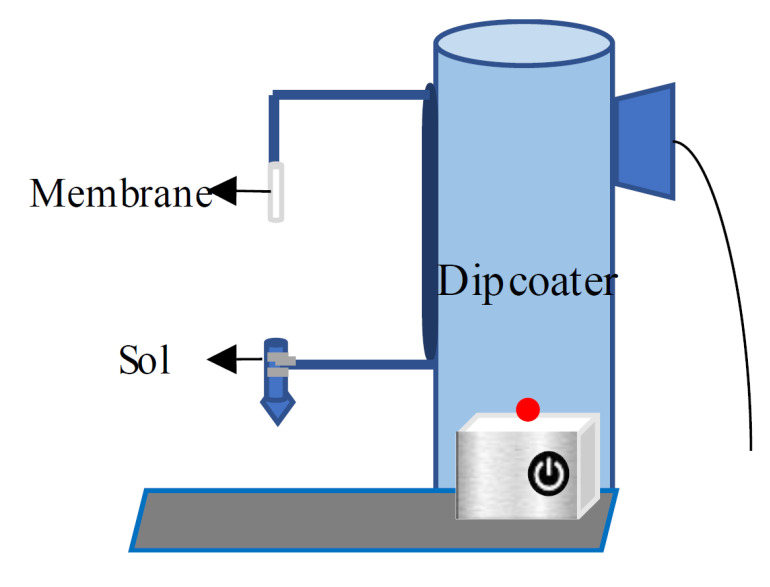
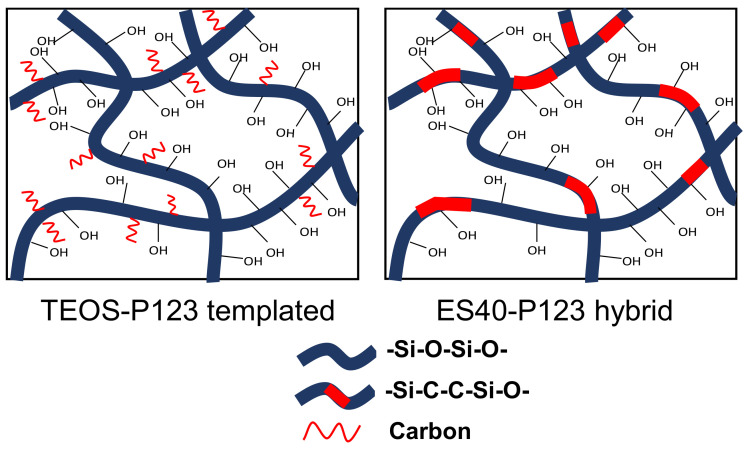
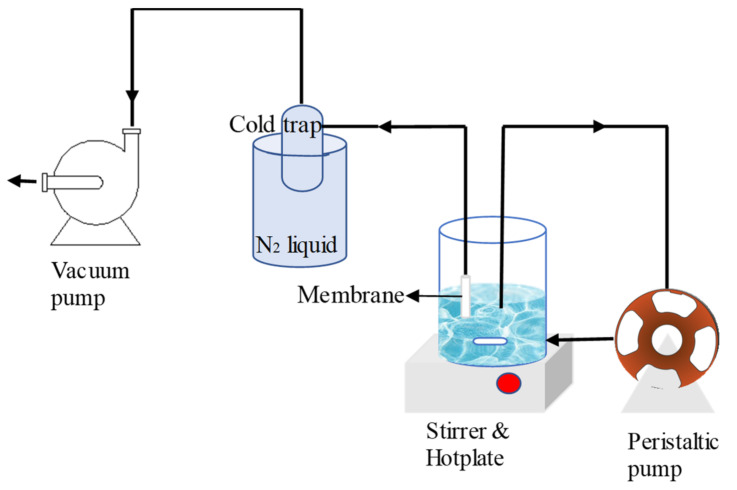
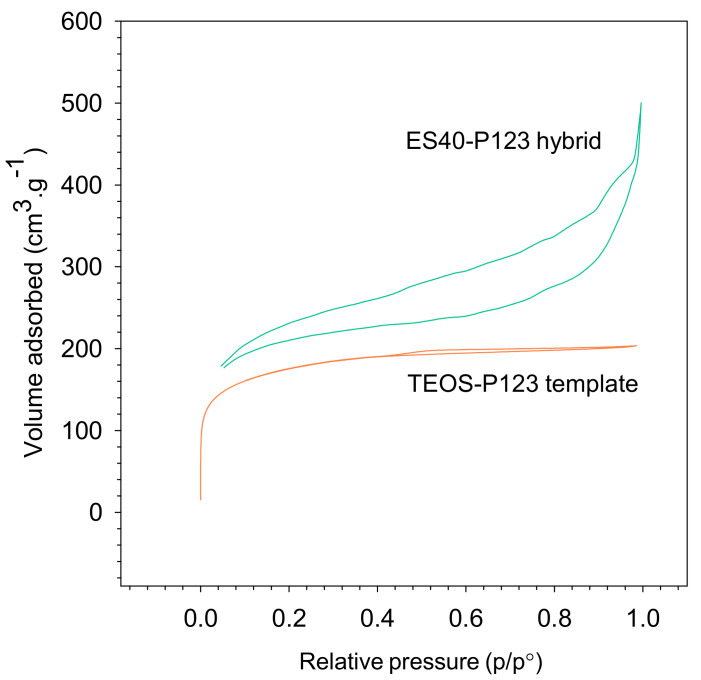
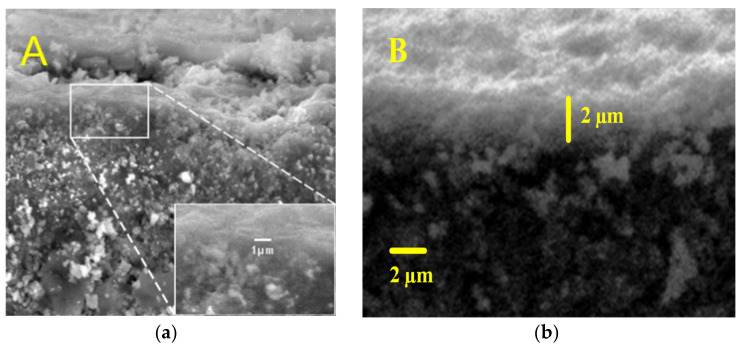
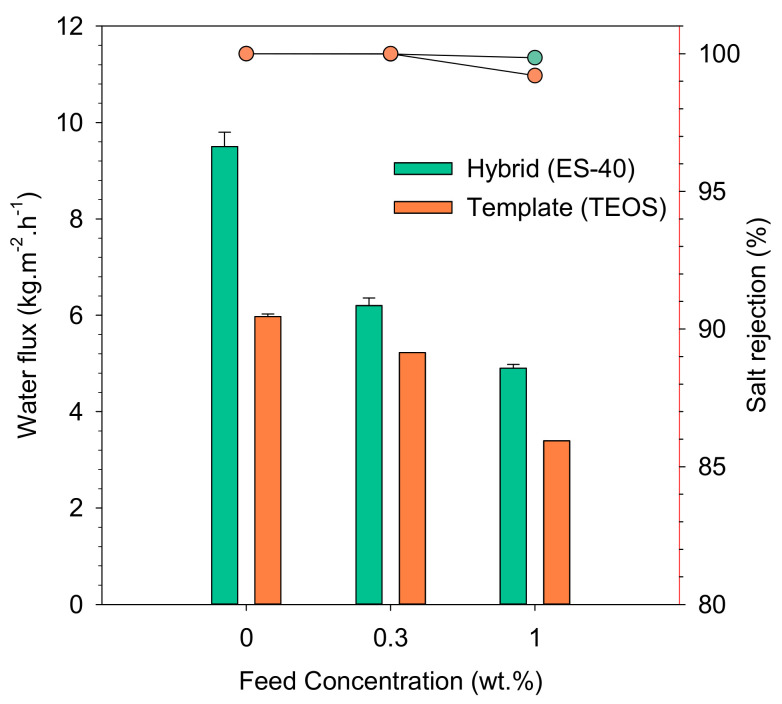
Water scarcity is still a pressing issue in many regions. The application of membrane technology through water desalination to convert brackish to potable water is a promising technology to solve this issue. This study compared the performance of templated TEOS-P123 and ES40-P123 hybrid membranes for brackish water desalination. The membranes were prepared by the sol-gel method by employing tetraethyl orthosilicate (TEOS) for the carbon-templated silica (soft template) and ethyl silicate (ES40) for the hybrid organo-silica. Both sols were templated by adding 35 wt.% of pluronic triblock copolymer (P123) as the carbon source. The silica-templated sols were dip-coated onto alumina support (four layers) and were calcined by using the RTP (rapid thermal processing) method. The prepared membranes were tested using pervaporation set up at room temperature (~25 °C) using brackish water (0.3 and 1 wt.%) as the feed. It was found that the hybrid membrane exhibited the highest specific surface area (6.72 m·g), pore size (3.67 nm), and pore volume (0.45 cm·g). The hybrid ES40-P123 was twice thicker (2 μm) than TEOS-P123-templated membranes (1 μm). Lastly, the hybrid ES40-P123 displayed highest water flux of 6.2 kg·m·h. Both membranes showed excellent robustness and salt rejections of >99%.
水资源短缺在许多地区仍然是一个紧迫的问题。通过海水淡化应用膜技术将微咸水转化为饮用水是解决这一问题的一项有前景的技术。本研究比较了模板化的TEOS-P123和ES40-P123复合膜用于微咸水淡化的性能。这些膜通过溶胶-凝胶法制备,使用正硅酸乙酯(TEOS)制备碳模板二氧化硅(软模板),使用硅酸乙酯(ES40)制备复合有机硅。两种溶胶都通过添加35 wt.%的普朗尼克三嵌段共聚物(P123)作为碳源进行模板化。将二氧化硅模板化的溶胶浸涂在氧化铝载体(四层)上,并通过快速热处理(RTP)方法进行煅烧。使用渗透蒸发装置在室温(约25°C)下以微咸水(0.3 wt.%和1 wt.%)作为进料对制备的膜进行测试。结果发现,复合膜表现出最高的比表面积(6.72 m²·g⁻¹)、孔径(3.67 nm)和孔体积(0.45 cm³·g⁻¹)。复合ES40-P123膜比TEOS-P123模板化膜(1μm)厚两倍(2μm)。最后,复合ES40-P123膜表现出最高的水通量,为6.2 kg·m⁻²·h⁻¹。两种膜都表现出优异的稳定性,脱盐率均>99%。