Alharthi Sitah, Ziora Zyta M, Janjua Taskeen, Popat Amirali, Moyle Peter M
School of Pharmacy, The University of Queensland, Pharmacy Australia Centre of Excellence, Woolloongabba, QLD 4102, Australia.
Department of Pharmaceutical Science, School of Pharmacy, Shaqra University, Riyadh 11961, Saudi Arabia.
Pharmaceutics. 2022 May 4;14(5):986. doi: 10.3390/pharmaceutics14050986.
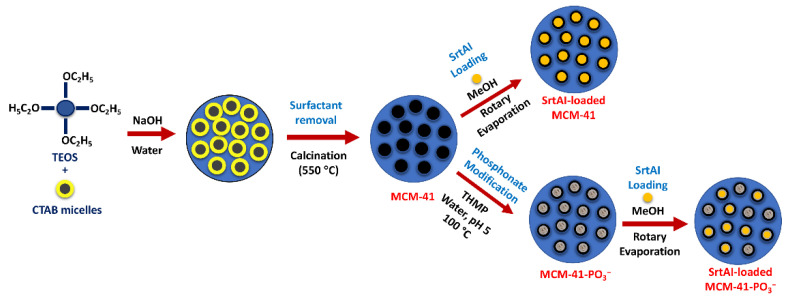
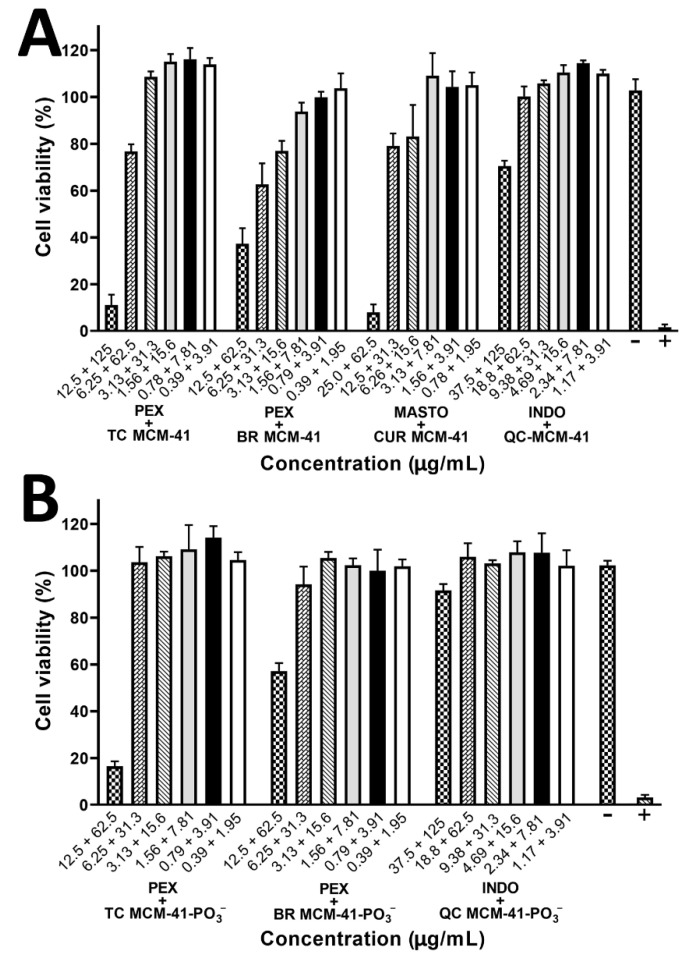
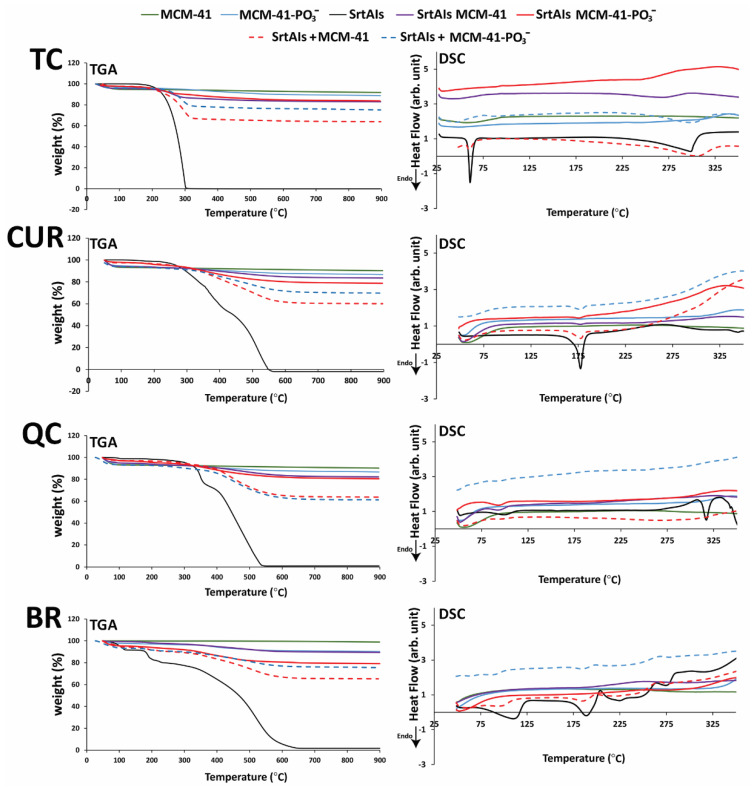
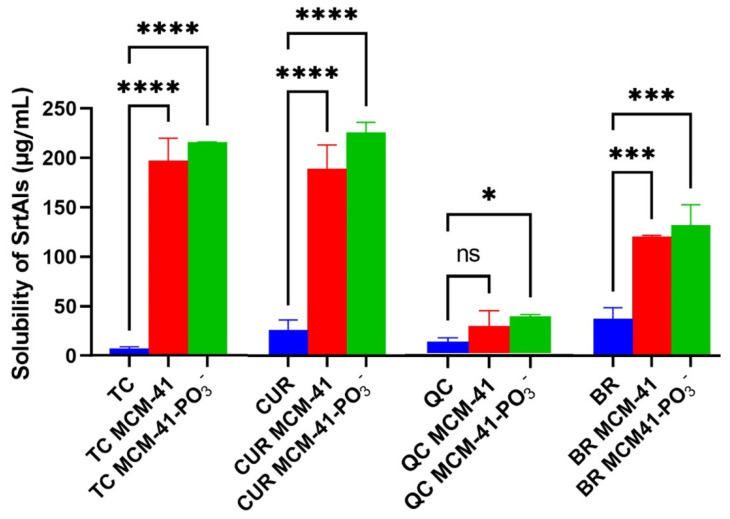
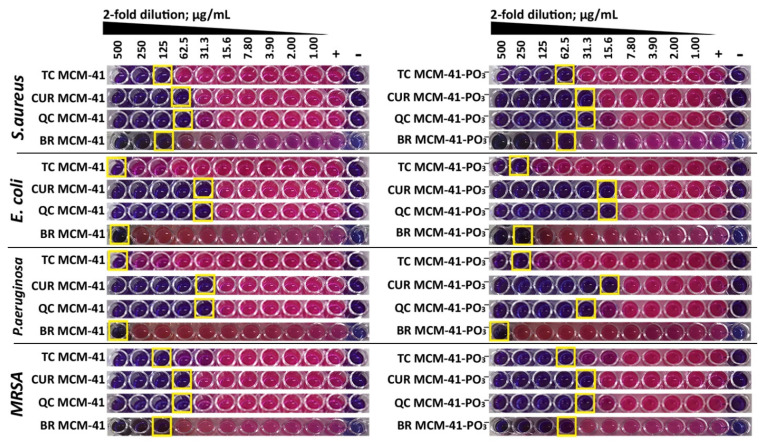
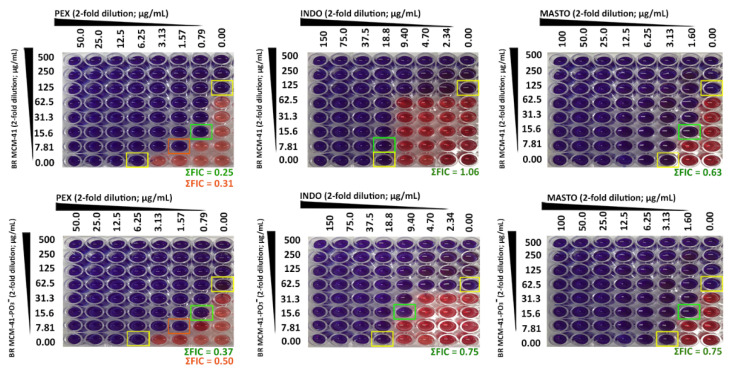
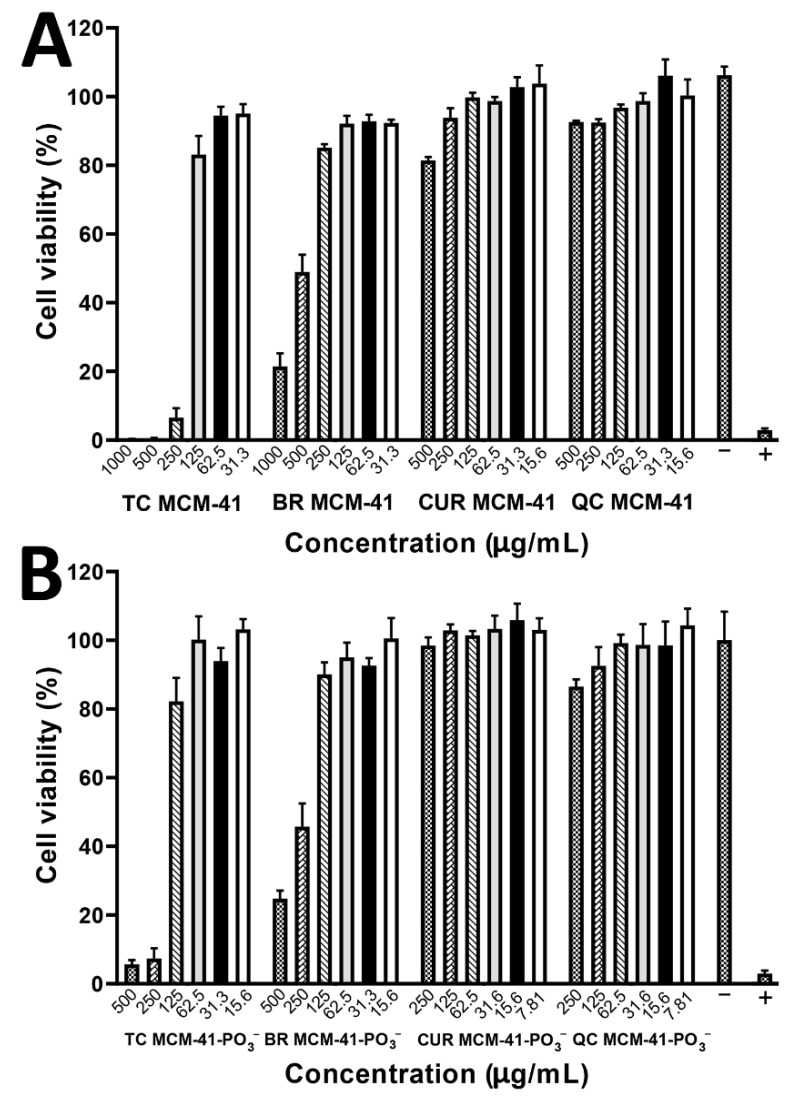
This study aimed to develop synergistic therapies to treat superbug infections through the encapsulation of sortase A inhibitors (SrtAIs; -chalcone (TC), curcumin (CUR), quercetin (QC), or berberine chloride (BR)) into MCM-41 mesoporous silica nanoparticles (MSNs) or a phosphonate-modified analogue (MCM-41-PO) to overcome their poor aqueous solubility. A resazurin-modified minimum inhibitory concentration (MIC) and checkerboard assays, to measure SrtAI synergy in combination with leading antimicrobial peptides (AMPs; pexiganan (PEX), indolicidin (INDO), and [I5, R8] mastoparan (MASTO)), were determined against methicillin-sensitive (MSSA) and methicillin-resistant (MRSA) , , and . The results demonstrated that the MCM-41 and MCM-41-PO formulations significantly improved the aqueous solubility of each SrtAI. The MICs for SrtAI/MCM-41-PO formulations were lower compared to the SrtAI/MCM-41 formulations against tested bacterial strains, except for the cases of BR/MCM-41 and QC/MCM-41 against . Furthermore, the following combinations demonstrated synergy: PEX with TC/MCM-41 (against all strains) or TC/MCM-41-PO (against all strains except ); PEX with BR/MCM-41 or BR/MCM-41-PO (against MSSA and MRSA); INDO with QC/MCM-41 or QC/MCM-41-PO (against MRSA); and MASTO with CUR/MCM-41 (against ). These combinations also reduced each components' toxicity against human embryonic kidney cells. In conclusion, MCM-41 MSNs provide a platform to enhance SrtAI solubility and demonstrated antimicrobial synergy with AMPs and reduced toxicity, providing novel superbug treatment opportunities.
本研究旨在通过将分选酶A抑制剂(SrtAIs;-查耳酮(TC)、姜黄素(CUR)、槲皮素(QC)或氯化小檗碱(BR))封装到MCM-41介孔二氧化硅纳米颗粒(MSNs)或膦酸酯改性类似物(MCM-41-PO)中,开发协同疗法来治疗超级细菌感染,以克服它们较差的水溶性。采用刃天青修饰的最低抑菌浓度(MIC)和棋盘法,测定SrtAI与主要抗菌肽(AMPs;pexiganan(PEX)、吲哚杀菌素(INDO)和[I5,R8]蜂毒肽(MASTO))联合使用时对甲氧西林敏感(MSSA)和耐甲氧西林(MRSA)的协同作用。结果表明,MCM-41和MCM-41-PO制剂显著提高了每种SrtAI的水溶性。与SrtAI/MCM-41制剂相比,SrtAI/MCM-41-PO制剂对受试菌株的MIC较低,但BR/MCM-41和QC/MCM-41对的情况除外。此外,以下组合表现出协同作用:PEX与TC/MCM-41(对所有菌株)或TC/MCM-41-PO(对除以外的所有菌株);PEX与BR/MCM-41或BR/MCM-41-PO(对MSSA和MRSA);INDO与QC/MCM-41或QC/MCM-41-PO(对MRSA);以及MASTO与CUR/MCM-41(对)。这些组合还降低了各组分对人胚肾细胞的毒性。总之,MCM-41 MSNs提供了一个提高SrtAI溶解度的平台,并与AMPs表现出抗菌协同作用且降低了毒性,为新型超级细菌治疗提供了机会。