Department of Child and Adolescent Psychiatry/Psychology, Erasmus University Medical Center Rotterdam, Rotterdam, the Netherlands.
Lady Davis Institute for Medical Research, Jewish General Hospital, Montreal, QC, Canada.
Transl Psychiatry. 2020 Nov 12;10(1):398. doi: 10.1038/s41398-020-01058-z.
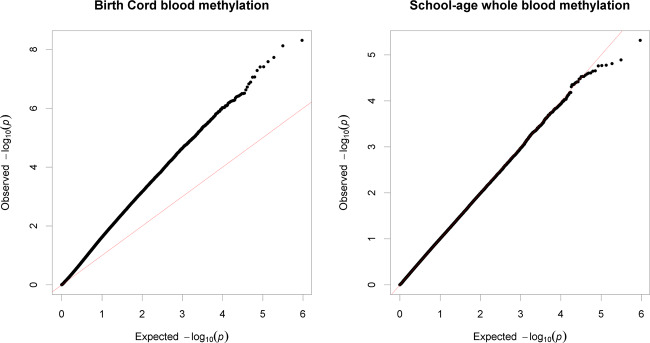
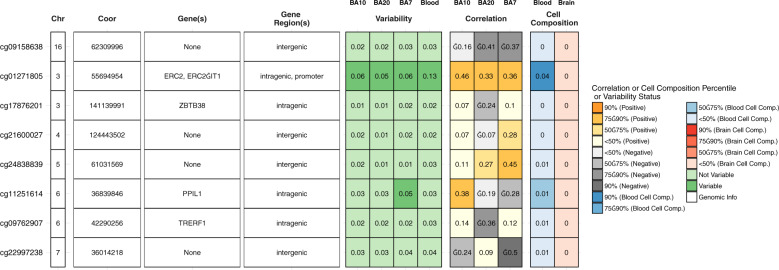
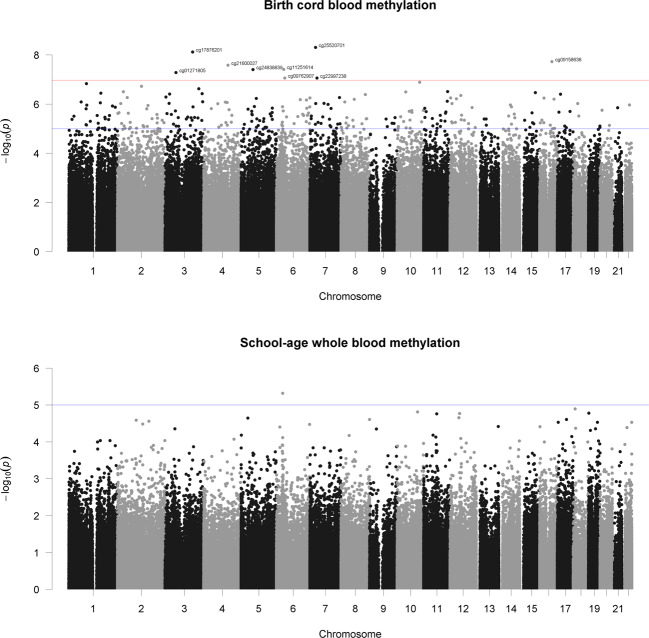
Attention-deficit and hyperactivity disorder (ADHD) is a common childhood disorder with a substantial genetic component. However, the extent to which epigenetic mechanisms play a role in the etiology of the disorder is unknown. We performed epigenome-wide association studies (EWAS) within the Pregnancy And Childhood Epigenetics (PACE) Consortium to identify DNA methylation sites associated with ADHD symptoms at two methylation assessment periods: birth and school age. We examined associations of both DNA methylation in cord blood with repeatedly assessed ADHD symptoms (age 4-15 years) in 2477 children from 5 cohorts and of DNA methylation at school age with concurrent ADHD symptoms (age 7-11 years) in 2374 children from 9 cohorts, with 3 cohorts participating at both timepoints. CpGs identified with nominal significance (p < 0.05) in either of the EWAS were correlated between timepoints (ρ = 0.30), suggesting overlap in associations; however, top signals were very different. At birth, we identified nine CpGs that predicted later ADHD symptoms (p < 1 × 10), including ERC2 and CREB5. Peripheral blood DNA methylation at one of these CpGs (cg01271805 in the promoter region of ERC2, which regulates neurotransmitter release) was previously associated with brain methylation. Another (cg25520701) lies within the gene body of CREB5, which previously was associated with neurite outgrowth and an ADHD diagnosis. In contrast, at school age, no CpGs were associated with ADHD with p < 1 × 10. In conclusion, we found evidence in this study that DNA methylation at birth is associated with ADHD. Future studies are needed to confirm the utility of methylation variation as biomarker and its involvement in causal pathways.
注意缺陷多动障碍(ADHD)是一种常见的儿童期疾病,具有重要的遗传成分。然而,表观遗传机制在该疾病发病机制中的作用程度尚不清楚。我们在妊娠和儿童表观遗传学(PACE)联盟内进行了全基因组关联研究(EWAS),以确定与 ADHD 症状相关的 DNA 甲基化位点,这些症状是在两个甲基化评估期(出生和学龄期)内评估的。我们检查了脐带血中 DNA 甲基化与来自 5 个队列的 2477 名儿童(4-15 岁)中反复评估的 ADHD 症状(年龄 4-15 岁)的关联,以及来自 9 个队列的 2374 名儿童(7-11 岁)的在校年龄与 ADHD 症状(年龄 7-11 岁)的关联,其中 3 个队列在两个时间点均参与了研究。在任何一个 EWAS 中具有显著意义(p < 0.05)的 CpG 在时间点之间存在相关性(ρ = 0.30),这表明关联存在重叠;然而,主要信号却非常不同。在出生时,我们鉴定了九个可以预测后来的 ADHD 症状的 CpG(p < 1×10),包括 ERC2 和 CREB5。这些 CpG 中的一个(位于 ERC2 启动子区域的 cg01271805)的外周血 DNA 甲基化之前与大脑甲基化有关。另一个(位于 CREB5 基因体中的 cg25520701)之前与神经突生长和 ADHD 诊断有关。相比之下,在校年龄时,没有 CpG 与 ADHD 相关,p < 1×10。总之,本研究发现出生时的 DNA 甲基化与 ADHD 有关。需要进一步的研究来确认甲基化变化作为生物标志物的效用及其在因果途径中的参与。