Department of Biochemistry & Molecular Medical Center, Zhejiang University School of Medicine, Hangzhou, 310058, China.
School of Pharmaceutical and Materials Engineering & Institute for Advanced Studies, Taizhou University, 1139 Shifu Avenue, Taizhou, 318000, China.
Nat Commun. 2020 Nov 12;11(1):5731. doi: 10.1038/s41467-020-19547-6.
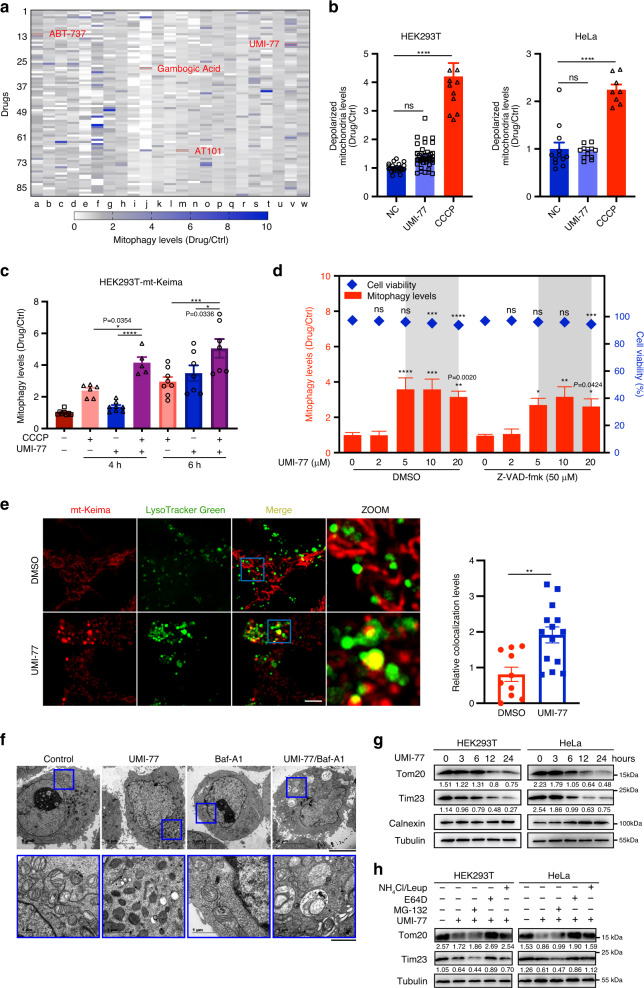
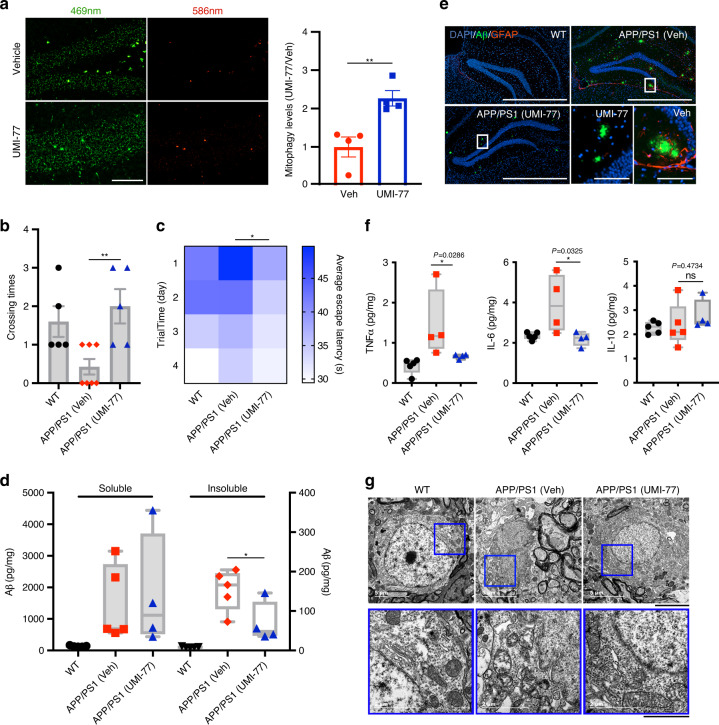
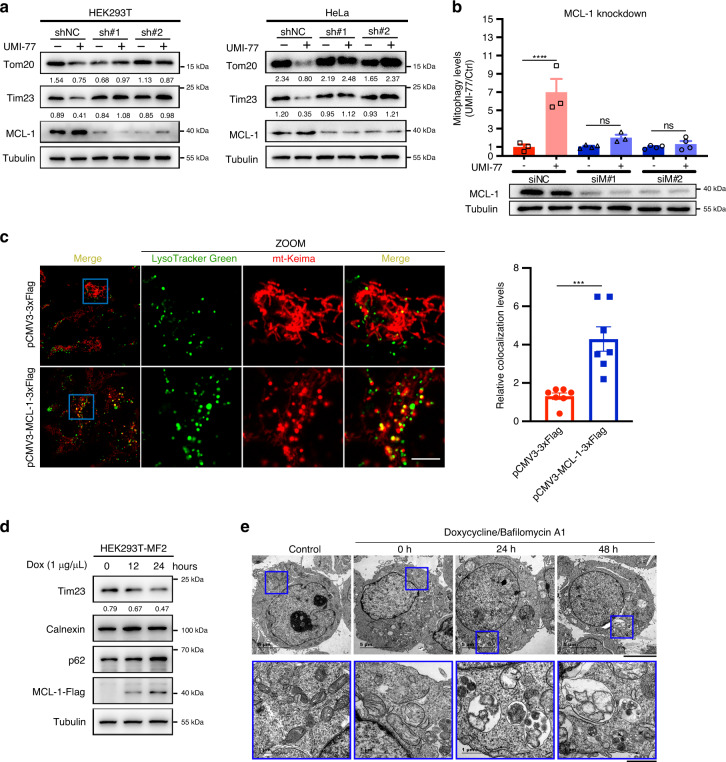
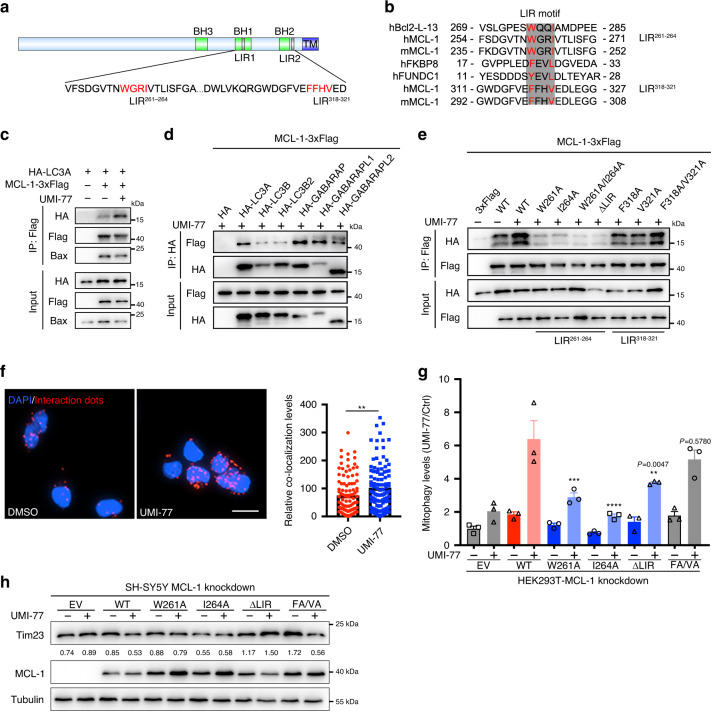
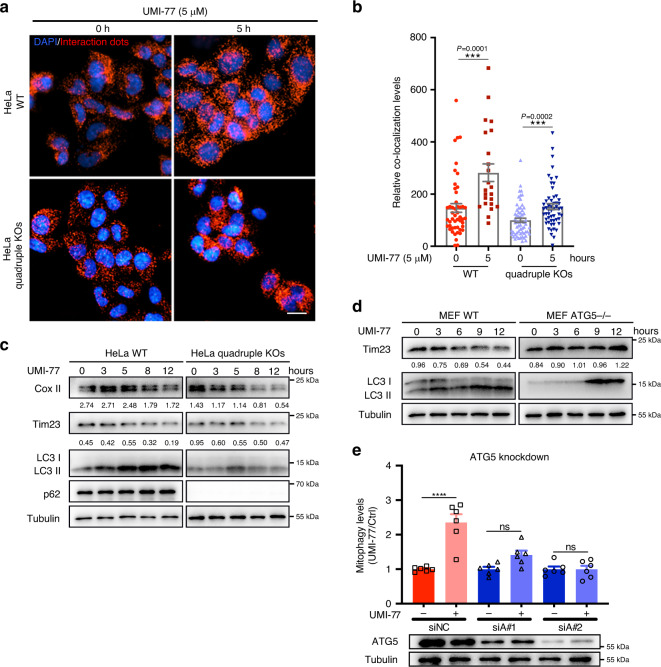
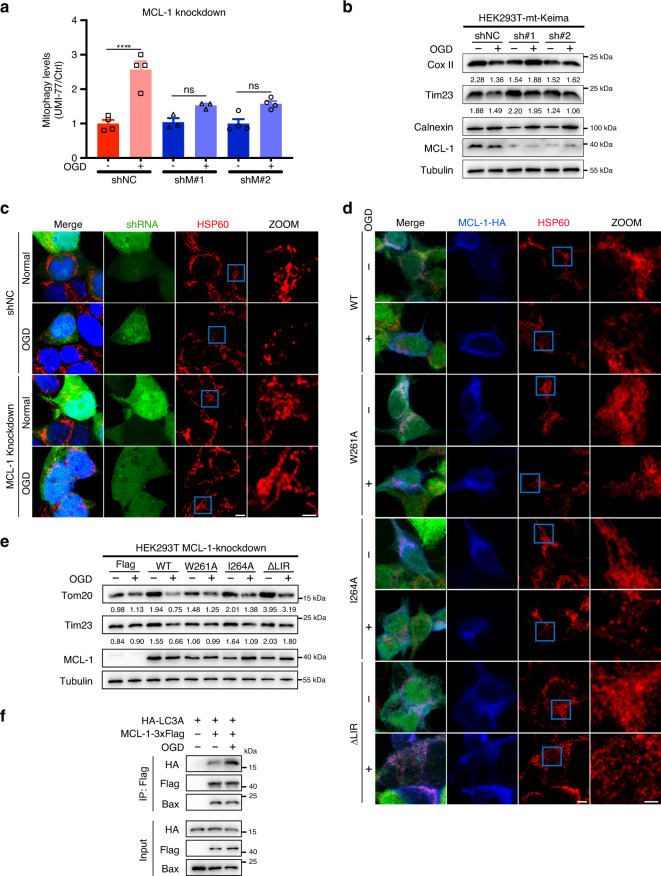
There is increasing evidence that inducing neuronal mitophagy can be used as a therapeutic intervention for Alzheimer's disease. Here, we screen a library of 2024 FDA-approved drugs or drug candidates, revealing UMI-77 as an unexpected mitophagy activator. UMI-77 is an established BH3-mimetic for MCL-1 and was developed to induce apoptosis in cancer cells. We found that at sub-lethal doses, UMI-77 potently induces mitophagy, independent of apoptosis. Our mechanistic studies discovered that MCL-1 is a mitophagy receptor and directly binds to LC3A. Finally, we found that UMI-77 can induce mitophagy in vivo and that it effectively reverses molecular and behavioral phenotypes in the APP/PS1 mouse model of Alzheimer's disease. Our findings shed light on the mechanisms of mitophagy, reveal that MCL-1 is a mitophagy receptor that can be targeted to induce mitophagy, and identify MCL-1 as a drug target for therapeutic intervention in Alzheimer's disease.
越来越多的证据表明,诱导神经元细胞自噬可以作为阿尔茨海默病的治疗干预手段。在这里,我们筛选了一个包含 2024 种 FDA 批准的药物或候选药物的文库,发现 UMI-77 是一种意想不到的自噬激活剂。UMI-77 是一种用于 MCL-1 的已确立的 BH3 模拟物,旨在诱导癌细胞凋亡。我们发现,在亚致死剂量下,UMI-77 能够强有力地诱导自噬,而不依赖于细胞凋亡。我们的机制研究发现,MCL-1 是一种自噬受体,并且可以直接与 LC3A 结合。最后,我们发现 UMI-77 可以在体内诱导自噬,并有效逆转 APP/PS1 阿尔茨海默病小鼠模型中的分子和行为表型。我们的研究结果揭示了自噬的机制,表明 MCL-1 是一种自噬受体,可以作为靶点来诱导自噬,并确定 MCL-1 是治疗阿尔茨海默病的药物靶点。